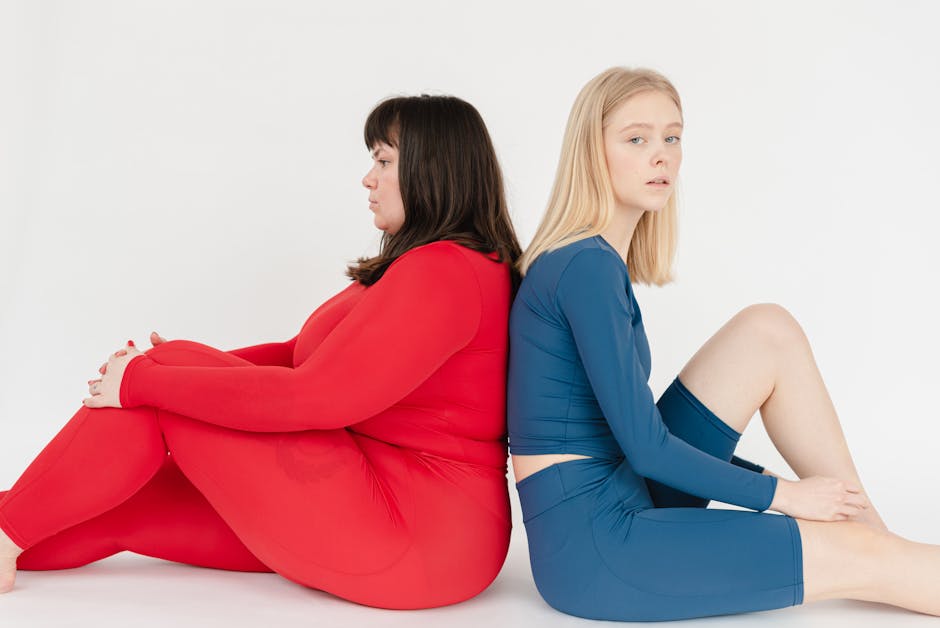


For decades, plus-size clothing lived in the back corner of the store, near the clearance racks or banished to online-only catalogs. That geography is changing. Over the past year or two, major retailers have folded extended sizes into their core assortments, expanded size ranges, and reported climbing sales in larger sizes. A sharper question has followed: is this a structural shift, or a passing experiment?
The answer matters because the moves are recent and ongoing. Floor space is being reallocated season by season, and the industry is watching closely to see whether inclusion holds once the headlines fade. What follows traces how plus-size fashion traveled from the margins toward the center, and what still stands between momentum and permanence.
Where the Clothes Live Tells the Story
The most honest signal of a brand’s priorities isn’t its marketing copy.
 Photo by
 It’s the floor plan. The Library of Congress notes that shoppers needing plus-size and other nonstandard sizes have historically had limited options, with many excluded from the main sales floor altogether [Library of Congress].
That origin point makes the recent shift striking. Where retailers once tucked larger sizes into a far corner, several chains have begun integrating them into core displays alongside straight sizes. The change shows up in silhouette variety, fuller size runs, and curated displays that treat plus-size shoppers as a primary customer rather than an afterthought.
Much of this pressure came from online shopping. Shoppers who found broad selection digitally began expecting the same texture, color, and proportion options in store. Retailers that failed to match that breadth risked losing foot traffic to those that did.
The Forces That Pushed the Shift
 Photo by
 Floor space didn’t move on its own. A convergence of cultural and commercial forces made exclusion harder to justify.
Three drivers stand out:
-
Body-positive advocacy on social platforms gave plus-size shoppers a louder collective voice and created real reputational risk for brands that ignored them.
-
Celebrity and editorial visibility normalized fuller figures on red carpets, magazine covers, and runways, expanding what aspirational imagery could look like.
-
Demographic reality simply caught up with the assortment, as a large share of shoppers had long been underserved.
Industry guidance now frames understanding underserved groups like plus-size wearers as a path to “new fashion business opportunities” rather than a charitable add-on [Library of Congress]. That reframing matters: it positions inclusion as commercial logic, not a favor.
The Numbers Make the Case
The business argument is hard to ignore.
 Photo by
 The global plus-size clothing market is valued at over USD 282 billion and is projected to reach about USD 426 billion by 2030 [Curvy]. Set against a global apparel market of roughly USD 1.8 trillion [Statista], that’s a substantial and growing slice.
Growth of this scale exposes how long bias overrode plain business sense. A segment this large was treated as niche for years, while standard sizes claimed the bulk of shelf space and design attention.
Recent anxiety over GLP-1 weight-loss drugs, medications that suppress appetite and have driven rapid weight loss in millions of users, prompted some brands to question the category’s future. One commentator pushed back sharply.
“The plus size fashion market isn’t disappearing” and the panic “reveals they never understood their customer to begin with.”
A durable customer base doesn’t vanish on a trend cycle. The GLP-1 panic, in that sense, was a stress test the market passed.
Design Has to Change Too
Adding a larger size tag isn’t the same as designing for it.
 Photo by
 Genuine inclusion starts at the drawing table.
Forward-thinking brands now develop garments on plus-size fit models rather than scaling up straight-size patterns. That shortcut produces poor fit and high return rates. Proportion is rethought from the first sketch.
Construction follows. Reinforced seams, stretch-woven blends, and adjusted hem allowances built into initial production runs deliver garments that drape and move well across a fuller size range. This is the difference between a curated collection designed for real bodies and a hasty extension that erodes trust.
What Lasting Inclusion Requires
Momentum is real, but permanence asks more of the industry than a good season.
Two benchmarks separate structural change from a performative gesture:
- Pricing equity. When identical styles cost more in larger sizes, the inclusion message rings hollow. Parity at the price tag is a basic test.
- Year-round depth. Assortments that shrink outside of peak moments signal experiment rather than commitment. Consistency across seasons builds genuine loyalty.
Budgets vary widely, and not every shopper wants to spend the same. An inclusive store offers range across price points, not just across sizes, so that personal style stays within reach for more people.
Plus-size fashion’s move to the main floor rests on solid market data, real cultural momentum, and evolving design practice. The leap from symbolic gesture to settled norm depends on unglamorous work: pricing parity, year-round assortment, and fit built for all bodies from the start. Where a store places its extended sizes, how it prices them, and whether they survive the off-season say more than any campaign. Lasting change looks less like a trend and more like quietly making room for everyone, season after season.