
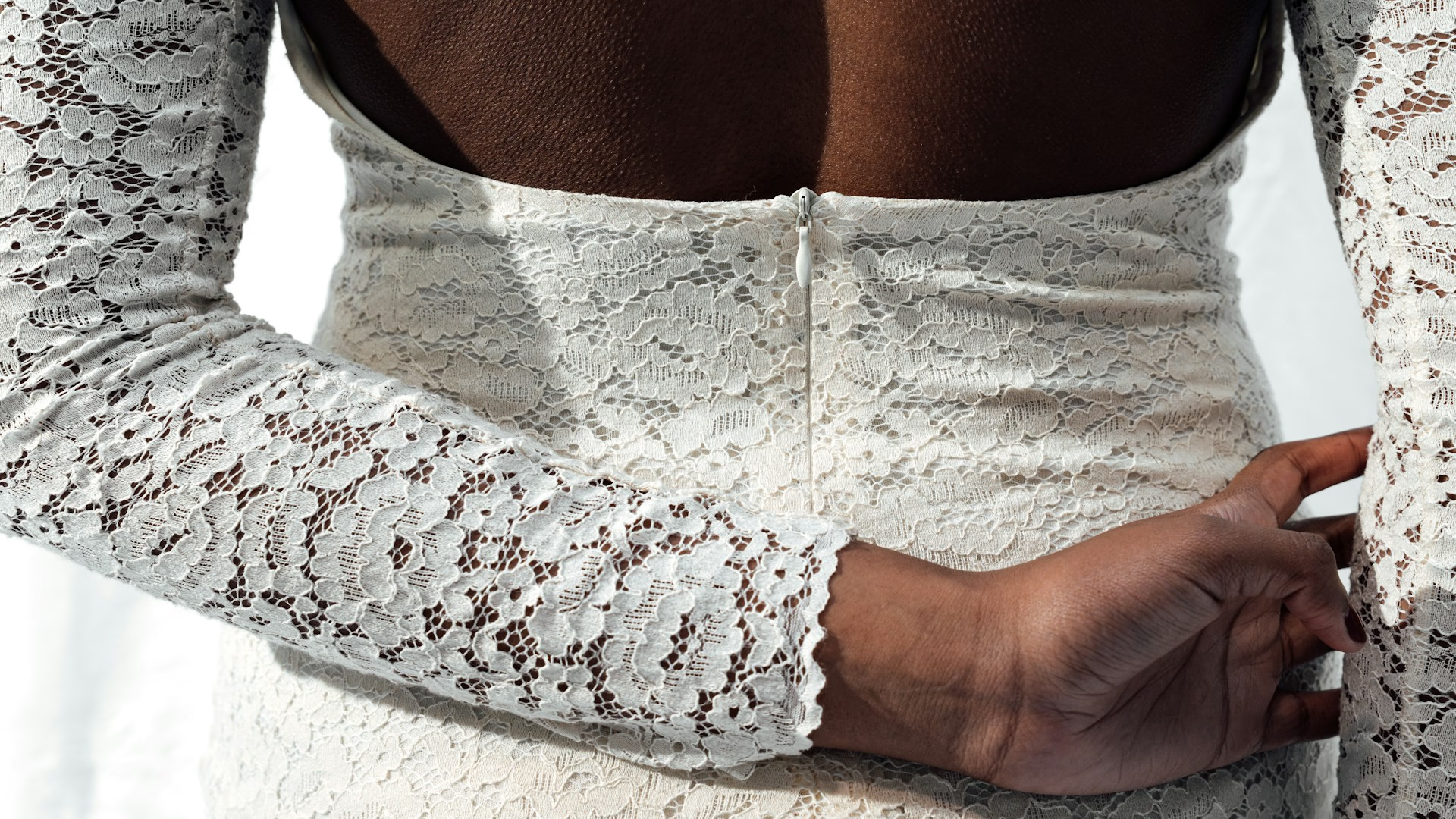
A woman wheels into a fitting room and pulls a blouse from the rack. The buttons run straight down the back. She can reach none of them. She hangs it up and leaves, not because the style was wrong, but because the garment never considered her. That small, quiet exit happens countless times a day in stores that imagine only one way of getting dressed.
A Fitting Room Moment Worth Examining
For many people, getting dressed is a daily negotiation with clothes built for a narrow range of motion.
 Photo by
 Buttons at the back. Stiff waistbands. Tops that only pull over the head. None of these feel like decisions, but each one is, and each one quietly leaves someone behind.
The fitting room is where that gap becomes visible. A garment can be the right color, the right price, the right cut, and still fail the one test that matters: can the person wearing it actually put it on, alone, with dignity? That moment of almost, the blouse that nearly works, is where the conversation about adaptive clothing begins.
What Standard Sizing Has Always Missed
Conventional sizing was built around a statistical average drawn from a narrow slice of bodies.
 Photo by
 It assumes you stand upright, that your two sides are symmetrical, and that both hands move freely. In plain terms, the clothes were designed for one kind of body and quietly treated everyone else as an exception.
That assumption shows up in real ways:
-
Seated wear bunches at the front, while back panels ride up and waistbands dig in.
-
Asymmetrical bodies fight cuts made for perfect mirror-image shapes.
-
Sensory sensitivities, common with autism and some chronic conditions, mean a scratchy tag or a hard seam can make a garment unwearable.
The average the industry designed for was never truly average. For many shoppers, that ordinary fitting-room frustration was never a personal failing. It was built into the pattern.
Industries and Brands Bridging the Gap
 Photo by
 The shift didn’t start as charity. It started when designers and retailers began treating access as a design problem worth solving well. In 2021, designer Faduma Farah showed an adaptive collection made for disabled Muslim women at London Fashion Week, the first line created specifically for wheelchair users to appear on that stage [Hyphen Online].
Larger players followed. Performance labels now build adaptive features straight into everyday wear: magnetic closures engineered for one-handed dressing, trousers that zip off into shorts, and sensory-conscious fabrics offered across inclusive sizing [BetterMe]. Community runway shows have featured adaptive collections from mainstream names like Kohl’s and Tommy Hilfiger, with every garment modeled by people with disabilities [The Arc].
This is not a passing niche. The global adaptive clothing market is projected to reach roughly USD 30.31 billion by 2034, with North America already holding about 34.9 percent of it [Fortune]. When access reaches that scale, it stops being a workaround and becomes a standard offering.
Designers Who Listen Differently
The most effective adaptive work comes from designers who treat lived experience as a material equal to fabric or thread.
 Photo by
 They co-create with the people who will wear the clothes.
“Fashion, Disability, and Co-design shows how collaborative, inclusive design techniques can produce garments and accessories that increase access.” (New School Library Guides)
That collaboration changes the garment itself, not just the photo shoot around it. A magnetic placket hidden behind a normal-looking button band. A side zip on a pair of trousers. A longer back rise cut for someone who sits all day. These solutions only appear when someone asks the right question early, during the design, not after.
Features built for accessibility also tend to make life easier for everyone, the same way a curb cut helps a parent with a stroller. Listening to disabled wearers doesn’t narrow a collection. It deepens it.
Back in the Fitting Room, Something Has Shifted
Return to that fitting room. The blouse on the rack still looks ordinary, with a clean front placket and what appear to be regular buttons. But it opens with a single motion, no mirror, no help needed, because the closures are magnetic underneath.
The trousers beside it are cut with a softer front and a longer back, invisible to the eye and genuinely useful in a chair. The frustration that once ended in a garment hung back up now, increasingly, ends in a purchase and in the quieter satisfaction of clothes that simply fit.
Adaptive fashion didn’t begin on a runway. It began in a fitting room, in the small, repeated experience of a garment that almost worked. The most striking thing about the change is how little of it you can see. A magnetic button looks exactly like a sewn one. The difference lives entirely in the hand that fastens it, in whether that hand can manage it alone. Next time you reach for something on a rack without a second thought, that ease is the whole point, and it’s quietly becoming available to far more people than before.
Sources
- Fortune Business Insights, adaptive clothing market projections through 2034
- Hyphen Online, on Faduma Farah’s adaptive collection at London Fashion Week
- BetterMe, adaptive performance wear with magnetic closures and inclusive sizing
- The Arc Westchester, adaptive fashion show featuring mainstream adaptive lines


