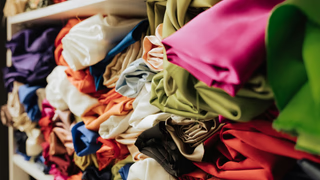


Before a jacket reaches a rack, dozens of hands have shaped it. They cut, sew, press, and finish. Those same hands are increasingly raised together in meetings, petitions, and the patient work of collective demand. The labor organizing moving through fashion’s supply chain is doing something larger than adjusting paychecks. A garment has always held the skill of the people who made it. Now it holds their solidarity, too.
Hands That Make the Garment
A single structured jacket can pass through more than seventy pairs of hands before it’s done.
 Photo by
 Each operation is small and specific: setting a sleeve, easing a collar, pressing a lapel so it rolls just so. That density of human contact disappears at the point of sale, hidden behind a price tag and a clean storefront.
Most of those hands belong to women, many of them migrants, whose speed and dexterity are real craft and yet are routinely undervalued in wage structures. The physical knowledge held in sewing, the feel for tension and grain and how a fabric wants to behave, is something no machine has fully learned to copy. A person who has sewn for years knows things about cloth that an algorithm does not. Every garment is a quiet record of that knowledge.
Organizing by the Numbers
Worker organizing has produced changes you can measure, not just sentiment.
 Photo by
 Sustained bargaining in producing countries has won real wage increases across recent cycles, and those gains ripple outward into how brands source and how they price.
The shift also shows up in physical infrastructure. After the 2013 Rana Plaza factory collapse in Bangladesh, organizing pressure helped build a binding safety accord that now covers well over a thousand factories and millions of workers. Safety negotiated on paper becomes the building people actually stand in each day.
Conditions remain uneven. Workers at a factory in Mauritius producing for international brands reported in 2023 that they faced long shifts without proper overtime pay and had their passports held by management [IndustriALL]. Documenting that kind of treatment is itself part of the organizing work.
How Solidarity Rewrites Norms
When workers connect across factories and borders, they set new expectations for what the industry is allowed to demand.
 Photo by
 Solidarity networks linking workers in different countries have begun coordinating the timing of actions so that pressure on a shared brand arrives all at once.
A second change is who holds the pen. Worker-led monitoring, where the people on the floor document their own conditions, tends to surface problems that brand-commissioned audits historically smoothed over. When workers describe their own workplace, the picture sharpens.
Out of all this comes a simple idea now entering mainstream negotiations: the true cost of a garment has to include a living wage. A shirt priced as if labor were free was never really cheap. Someone was absorbing the difference.
What Consumers Now Carry
Knowing this doesn’t have to arrive as guilt.
 Photo by
 It tends to arrive as a fuller sense of what an object is. Shoppers who learn about supply-chain organizing often describe their clothes differently afterward, as things with social histories and not only aesthetic ones.
That expanded meaning shows up in how people treat what they own:
-
Keeping a well-made piece longer instead of replacing it each season
-
Repairing a hem or a button rather than discarding the whole garment
-
Choosing secondhand, which honors the work already inside the cloth
None of this requires a bigger budget. Often it asks for less spending, not more. Extending a garment’s life is, in its own small way, a form of respect for the people who built it.
Attending to What You Wear
There’s a quiet practice that costs nothing and changes how a garment lands. Notice the hand-finishing on a collar. Run a thumb along a topstitch and see whether it holds an even line. Feel the weight of the cloth and how the seams sit.
Fashion educators and labor advocates alike describe this kind of slow looking as a way to connect the pleasure of clothes to an awareness of how they came to be. You can admire a jacket and remember the worker at the same time.
A single topstitch run evenly across a collar represents minutes of practiced human attention, the steady hand of someone who has done this thousands of times. Garment organizing isn’t a story happening somewhere far from fashion. It’s happening inside the clothes themselves, in the same hands that sew and negotiate and insist their work has worth. When you notice that even seam, you’re seeing labor and solidarity stitched together.