The logo on the door stays exactly the same when a new creative director takes over a storied fashion house. Something quieter shifts behind it. A handoff is rarely about a single collection. It’s about who gets to decide what elegance looks like next, and how much of the old answer survives the change.
The Quiet Art of Passing Power
A luxury handoff looks like a clean break from the outside, but inside the house it’s closer to a careful negotiation.
 Photo by
 The outgoing designer leaves behind mood boards, fabric libraries, and silhouette codes that the newcomer inherits as unspoken rules. When Anthony Vaccarello succeeded Hedi Slimane at Saint Laurent in 2016, Kering backed a gradual evolution rather than a reset. By 2023, the house’s revenue had passed €3 billion [Reuters]. The pace of a handoff signals confidence. A phased transition protects what the house has built.
Then there are the people no announcement ever names: the petites mains, the atelier specialists who hand-sew linings and press seams. They carry techniques passed down across decades, knowledge no creative brief can fully capture. A designer can change the vision, but the hands that build it often stay. That human continuity shapes the result as much as any headline appointment.
The Industries Pulling the Strings
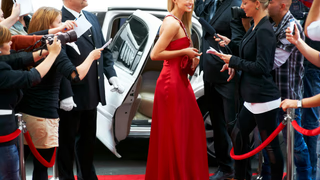
Fashion handoffs are never purely internal.
 Photo by
 They’re reviewed against revenue forecasts, because most great houses now sit inside conglomerates, the large parent groups like LVMH, Kering, and Richemont that own dozens of luxury brands. When LVMH completed its $15.8 billion acquisition of Tiffany in 2021, it moved quickly to replace the CEO and overhaul the brand’s image [Reuters]. A creative change at this scale ripples across fragrance lines, retail partnerships, and licensing deals all at once.
The stakes show up plainly when a debut stumbles. Gucci’s first-quarter 2024 revenues fell 21 percent on a comparable basis after a muted reception for its new creative direction [Reuters]. One analyst captured how deep these resets now run:
“The group is in the midst of a profound transition… it’s no longer just a question of changing designers, but of reinventing the brand.”
Other industries quietly steer the mood too. Luxury hotels and fashion houses court the same clientele, and the restrained, calm opulence of resort design has echoed through ready-to-wear for years. Film and streaming costumes now work like extra runways, shaping how a house reads to the public during a transition. The same person who books the suite buys the coat, and that overlap decides which directions even feel possible.
What Loyal Fans Carry Forward
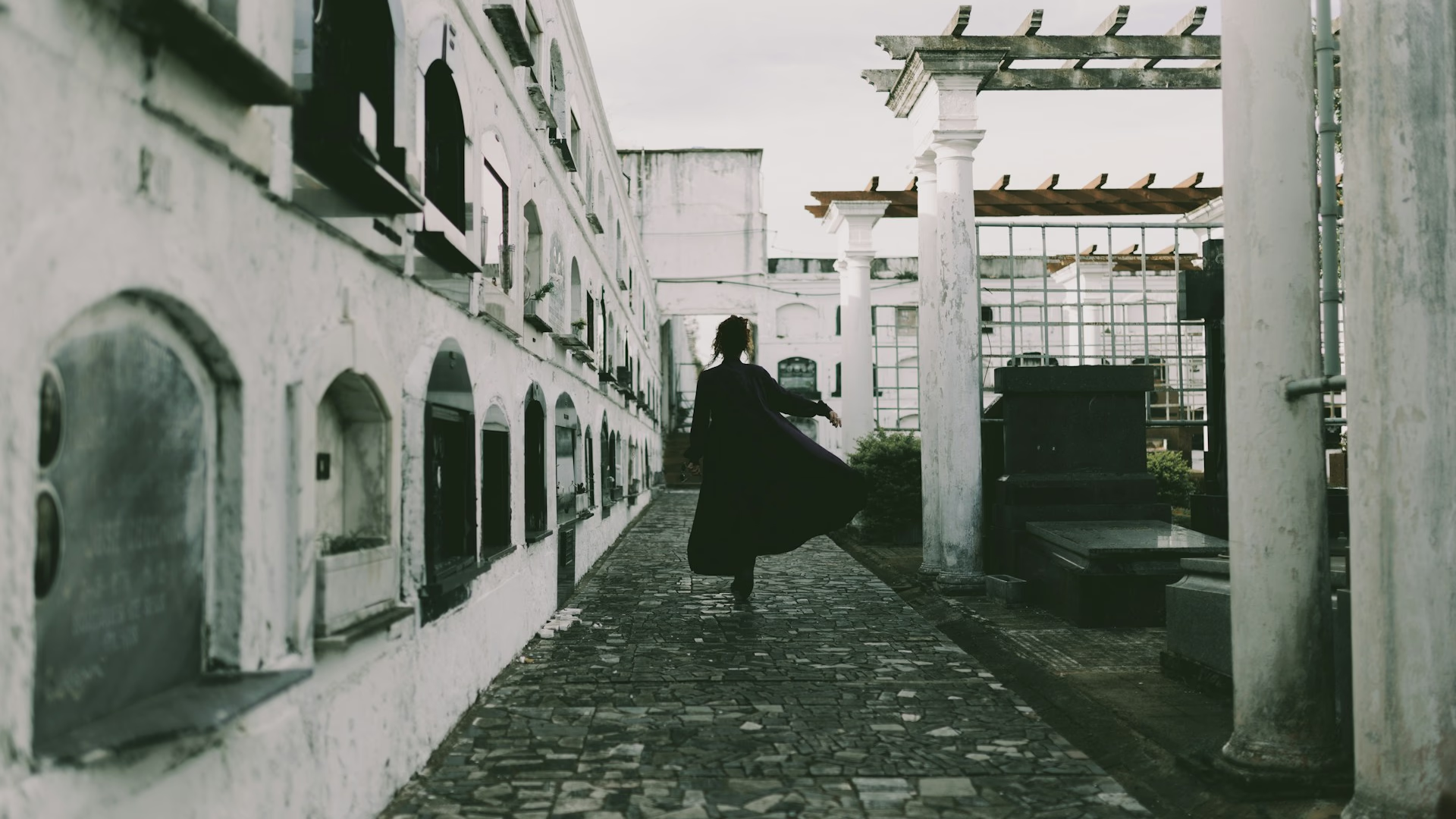
Devoted customers do something the house cannot manufacture: they become its living archive.
 Photo by
 A long-term client often owns pieces from several creative eras and wears them together in combinations no single designer ever planned. That’s active reinterpretation, a personal kind of curating.
Three threads tend to outlast any leadership change:
-
The signature scent. A house fragrance frequently survives every upheaval above it, staying the most stable mark of identity a fan can hold.
-
The proportion language. The cut of a lapel or the height of a heel gets internalized and carried into a person’s own style long after the designer has gone.
-
The combinations. Old and new worn side by side, a quiet record of everything the house has been.
A customer who still reaches for a jacket from a previous era keeps a version of the house alive that no new collection can overwrite. The next time a famous house announces a new creative director, look past the runway and toward the closet. The most faithful keeper of what a house means is rarely the person who just took the job. It’s the customer who bought a coat years ago and still pulls it on, carrying a whole era forward without being asked to.