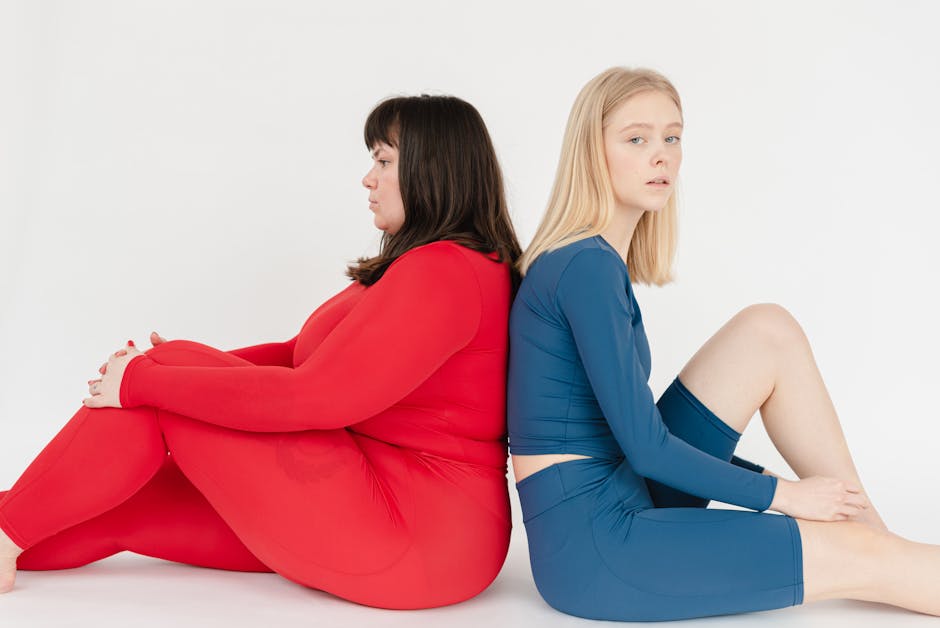
Two size 8 dresses hang from the same rack. Same brand, same season. One skims the waist. The other gapes open by a full inch. Nothing about the body wearing them changed between the first hanger and the second, and the number on the tag stayed put too. What shifted, quietly, is the whole set of assumptions behind those numbers.
The Fitting Room Moment
That gap between two identical tags is something you can feel with your hands.
 Photo by
 Shoppers increasingly notice a labeled size fitting differently in a brand’s current collection compared with older stock. The clothes did not lie. The measuring stick behind them moved.
Tailors notice the same shift from the other side of the pin cushion. More clients ask to take in a waist while the shoulders and hips stay exactly as drafted. A garment cut for a fuller frame suddenly needs surgery in one spot and nowhere else. That mismatch traces back to a change happening long before clothes reach the rack, at the level of the sample size, the single body a garment is first designed around.
Sample Sizes Are Shrinking
As GLP-1 drugs (a class of weight-loss medications, including Ozempic, originally developed for diabetes and now widely used for shedding pounds) have spread, brands have begun redrawing their idea of an average customer.
 Photo by
 The evidence shows up in sales data.
Apparel in sizes XL and above fell by 9% between 2024 and 2025, while smaller sizes climbed [New York Post]. Retailers are reacting to those numbers. Analysts estimate that more than 400 million clothing units could be misaligned by 2027, putting roughly $5 billion of plus-size inventory at risk as customers shift toward smaller garments [New York Post].
That matters because the sample size is the baseline every other size gets scaled from. As it drifts smaller, the size 6 you buy this year may be cut from a different template than the size 6 you bought three years ago.
Sizing Down Doesn’t Solve Everything
It’s tempting to read all this as fit problems solving themselves: slimmer customers, smaller racks, fewer awkward gaps.
 Photo by
 The relief is real, but only partial.
A smaller number on the tag does nothing for proportion, torso length, or the way weight leaves a body unevenly. Loose fabric on a rapidly slimmed frame can look like a good fit while hiding drafting flaws in the shoulders and rise. Stylists report more clients needing dart and shoulder adjustments even as the overall garment gets smaller. The size shrank. The shape underneath it stayed complicated.
Bodies Still Change Unevenly
Rapid weight loss redistributes volume in ways no size chart anticipates.
 Photo by
 Fat can leave the face and midsection while hips or shoulders stay broad. Skin laxity changes how fabric drapes even when the numeric size holds steady.
The wider population never became uniform in the first place. A 2024 US survey found that 54.4% of American women wear plus sizes, with size 16 the most common dress size nationally [The Curvy]. Meanwhile, plus-size bodies appeared in only]0.6% of nearly 9,600 looks across 230 runway shows] in one recent season [The Curvy].
The gap between who exists and who gets dressed was already enormous. The shrinking racks reflect a slice of shoppers, not the whole room.
Finding Real Fit
Lasting fit comes from recognizing individual proportion, not chasing a slimmer average that erases difference. A few practical touchstones can help:
-
Brands offering genuine size ranges with more than one fit block tend to serve customers better than those built around a single slimmer model.
-
Knowing your own shoulder slope, rise, and torso length matters more than any trend in average sizing.
- A tag number is a starting point for alterations, not a verdict on your body.
That self-knowledge is what actually closes the gap the fitting room first revealed.
Back in that dressing room, the two size 8 dresses still hang differently, and now the reason is clearer. Bodies didn’t get simpler. They never stopped being diverse, even as the label on the rack got smaller. The tag says one number. Shoulders, waist, and hips still tell three different stories, and the dress that actually fits is the one cut to hear all three.