
Opera Parallèle’s 2024 staging of 『Doubt』 in San Francisco stripped the proscenium entirely and dropped spectators right beside the cast. One critic called it an effort to “create an intimate and immersive experience.” That instinct has since become a movement. With the 2026 to 2027 season explicitly framing productions as immersive, multi-venue experiences, opera’s quiet experiment is becoming its new normal.
Opera Leaves the Stage Behind
For years, immersive opera lived on the fringes: a warehouse production here, a forest staging there.
 Photo by
 Now companies are abandoning conventional venues on purpose, dissolving the line between performer and audience.
The shift is spatial and structural. Directors are redesigning staging so no fixed front-of-house perspective exists. Audiences move freely or are guided through scenes, meaning every attendee leaves with a slightly different version of the same work. If you’ve enjoyed the wander-anywhere freedom of immersive theatre like 『Meanwhile Park』, where you arrive early, roam, and chat with performers, this hits very similar notes.
What changes when the grand hall disappears:
-
Performances move into factories, historic buildings, and outdoor spaces
-
Audience sizes shrink to preserve intimacy and sensory intensity
-
There’s no “best seat,” so you build your own vantage point
It’s opera trading gilded balconies for environments that surround you.
What Immersive Opera Actually Feels Like
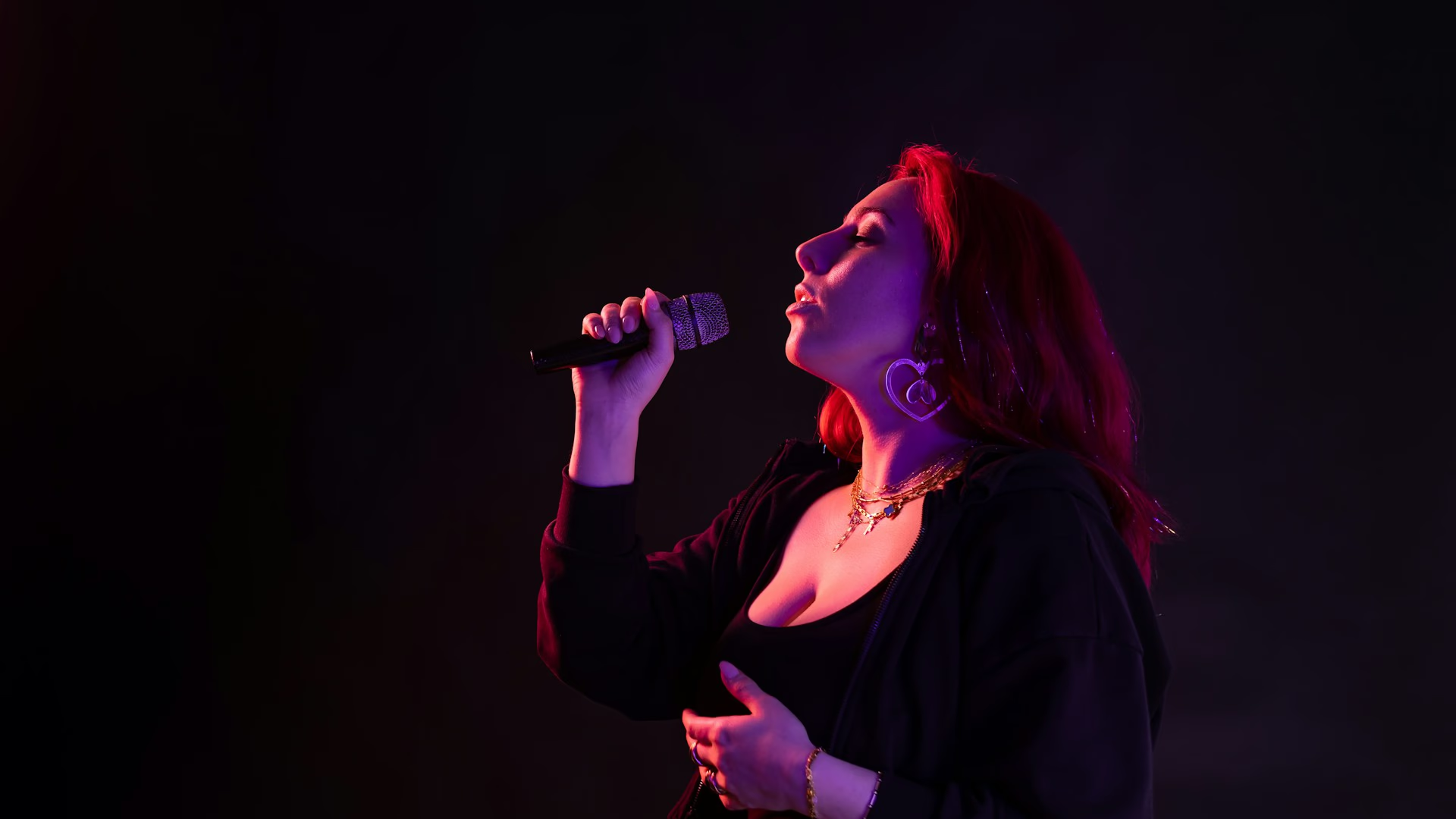
Standing close enough to catch a soprano’s breath transforms the emotional connection from aesthetic to visceral.
 Photo by
 That proximity is the whole point.
Sound design shifts dramatically too. In low-ceiling rooms or open air, amplification falls away, and an unamplified voice can feel startlingly powerful. Singers describe adapting their technique to project differently in these spaces. It’s a captivating, almost overwhelming intimacy you simply can’t get from row M of an opera house.
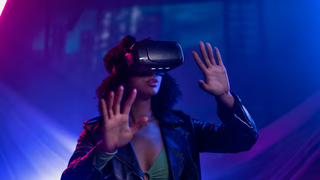
Technology is widening the canvas further. The Finnish National Opera built a real-time, game-engine-based virtual production platform enabling large-scale immersive projections and mixed-reality staging, partly to draw in younger crowds [Immersive Tech].
“Hannu Järvensivu (Finnish National Opera) and Marta Genova (Philharmonia Orchestra) show what it actually takes to bring younger audiences into classical music and opera through immersive technologies.” [Immersive Tech]
The result is a deeply personal experience. Passive observation gives way to full sensory participation.
Why Society Is Embracing This Now
 Photo by
 The appetite is measurable. In a 2024 cultural participation survey across Europe, 21% of respondents said they were interested in attending immersive or interactive performing arts events, including opera and theatre [Hacnumedia].
After years of screen-mediated entertainment, that hunger for physically present culture makes sense. Money is following too. France’s national immersive arts fund, Fonds XR, allocated roughly €3 million in 2024, rising to €4.4 million in 2025 [Hacnumedia]. U.S. industry analysis projects steady theatre revenue growth through 2026, driven partly by experiential and immersive formats [AnythingResearch].
Established opera houses aren’t abandoning core repertoire. They’re launching immersive satellite programs to stay culturally relevant and reach audiences who crave involvement over spectatorship.
Opera is moving from monumental stages into intimate, enveloping spaces. Driven by post-pandemic hunger for embodied culture, growing public funding, and younger audiences demanding participation, immersive opera proves the form’s enduring adaptability. Seek out a site-specific or immersive production near you. When the soprano sings directly to you, opera stops being history and becomes something happening right now.