
Opera is abandoning the grand hall for factories, forests, and historic buildings - putting audiences beside the cast instead of watching from a distance. Immersive formats are no longer a fringe experiment. They are becoming the industry’s new normal, backed by growing public funding and measurable audience demand.
What Immersive Opera Actually Feels Like
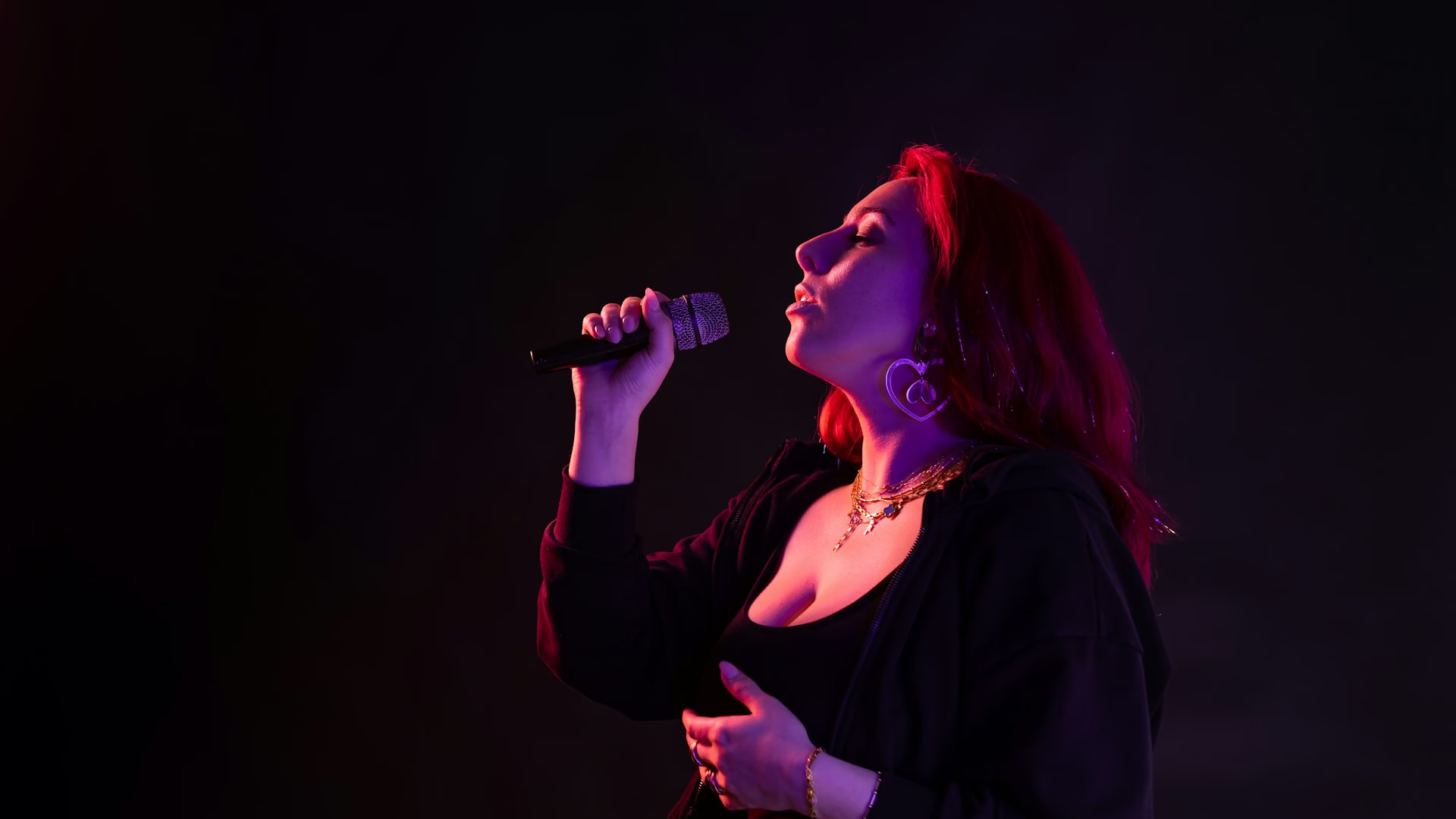
Standing close enough to catch a soprano’s breath changes everything. The emotional connection shifts from aesthetic to visceral, and that proximity is the whole point.
Sound design transforms too. In low-ceiling rooms or open air, amplification falls away. An unamplified voice can feel startlingly powerful, and singers adapt their technique to project differently in each space. There is no row M here - you build your own vantage point.
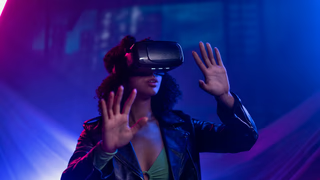
The Finnish National Opera built a real-time, game-engine-based virtual production platform enabling large-scale immersive projections and mixed-reality staging, partly to draw in younger crowds.Why Society Is Embracing This Now
The appetite is measurable. In a 2024 cultural participation survey across Europe, 21% of respondents said they were interested in attending immersive or interactive performing arts events, including opera and theatre.
After years of screen-mediated entertainment, the hunger for physically present culture makes sense. France’s national immersive arts fund grew from roughly 3 million euros in 2024 to 4.4 million in 2025. Established opera houses are not abandoning core repertoire - they are launching immersive satellite programs to reach audiences who crave participation over spectatorship.