
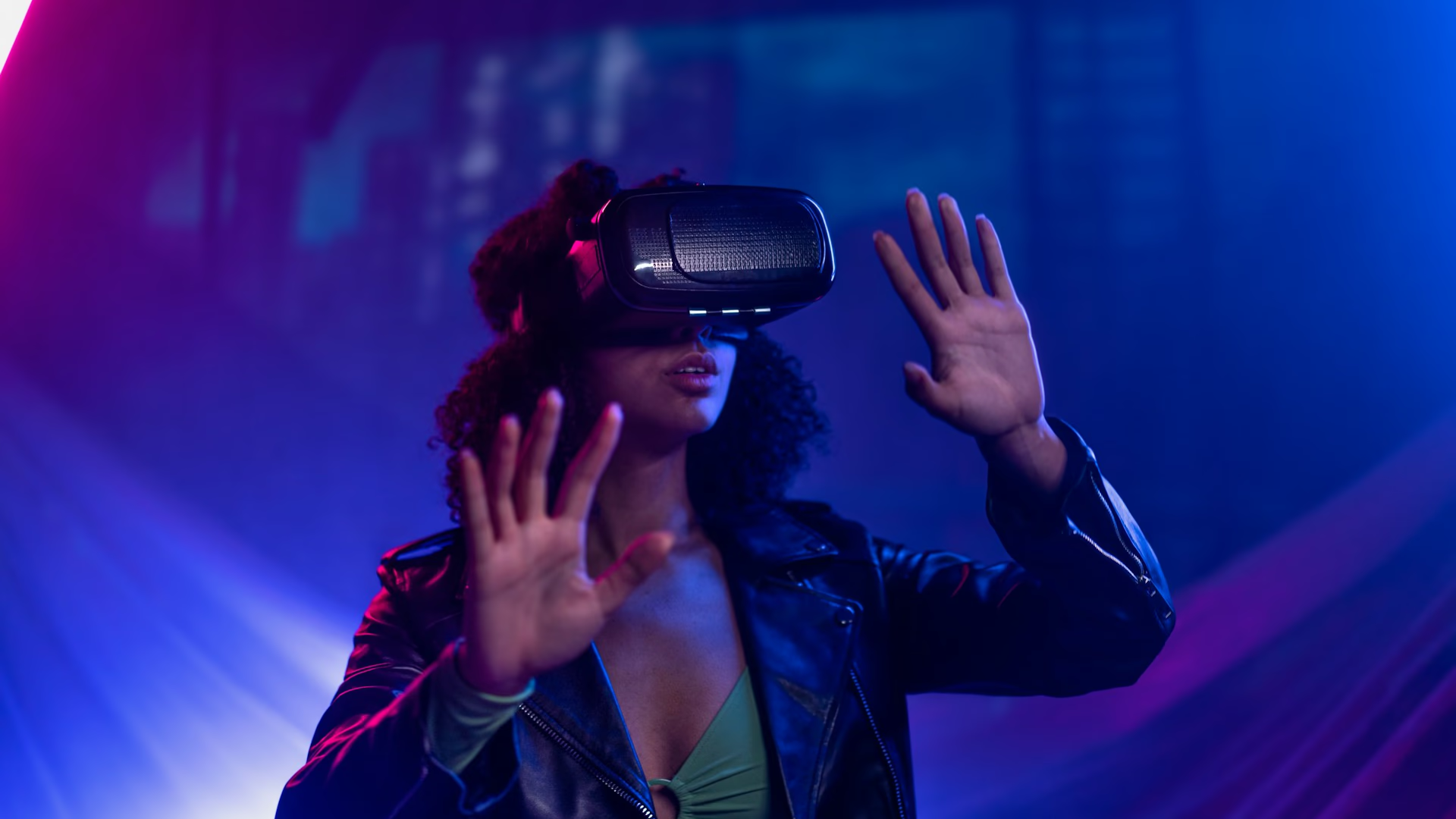
A wheelchair user in rural Montana can now attend a Broadway premiere as a genuinely present participant, with interactive sight lines and real-time engagement. That is not a future promise. It is a 2026 reality. As post-pandemic infrastructure matures and VR/AR integration accelerates across production platforms like those showcased at ISE 2026, hybrid performances are dismantling longstanding barriers in live arts. They are expanding access for disabled, remote, and underserved audiences while reshaping how artists and venues define the stage itself. With hybrid events moving from the margins toward the mainstream of live programming, this shift is not a novelty. It is the new baseline.
Why Hybrid Performances Are Rising Fast
A convergence of forces is driving this surge.
 Photo by
 Venue investment in hybrid-ready infrastructure has grown dramatically since 2023, covering affordable multi-camera rigs, broadband expansion, and spatial audio systems. Mid-size theaters that once could not consider streaming now treat it as standard practice.
Post-pandemic audiences normalized remote attendance, and that habit stuck. Even with in-person options fully available, many audiences still prefer a digital path to the show. Arts funding bodies have noticed: grant programs in the US and UK increasingly require hybrid access plans for eligibility, turning what was once optional into a structural expectation.
The economics reinforce the trend. Spending on VR and AR live concerts keeps climbing, and revenue from metaverse and virtual concerts has grown into a real market of its own. Technology, audience habits, and funding policy have converged to make hybrid the new industry standard.
Inclusion Gains for Diverse Audiences
Hybrid formats are delivering real inclusion wins for people previously locked out of live arts.
 Photo by
 The gains break down across three key barriers:
-
Physical accessibility: Deaf and hard-of-hearing audiences benefit from integrated real-time captioning and sign-language overlays embedded directly into hybrid streams. Festivals like Primavera Sound have already pushed forward with improved accessibility features, including viewing platforms and sensory-friendly spaces [Ticketfairy].
-
Geographic access: Rural and international audiences can attend world-class performances without travel costs. A digital ticket erases the distance between a small town and a major cultural hub.
-
Economic access: Tiered hybrid ticketing models offer low-cost digital entry points, making premium live arts experiences available to audiences who could never afford in-person seats.
These are not abstract improvements. They are turning geographic, physical, and economic barriers into solvable design problems.“VR works best to extend the festival beyond its physical limits, reaching fans who couldn’t attend or providing new angles to relive the experience.” [Ticketfairy]
Artists Embracing the Dual Stage
Artists are not treating the digital stream as a compromise.
 Photo by
 They are using it as a distinct creative canvas. Choreographers design dual-perspective works where camera angles reveal movement invisible to the in-person audience. Musicians layer spatial audio into hybrid streams, giving remote listeners an immersive sonic experience that differs meaningfully from the concert hall.
Theater directors may be the boldest adopters. Some script direct-to-camera moments that acknowledge the digital audience as its own presence in the room. The result is that no two audiences, physical or digital, experience the same show in quite the same way. If you appreciated the multi-angle creativity of Tomorrowland’s digital festival content [Ticketfairy], this dual-stage philosophy hits similar notes across theater and dance.
What the 2026 Shift Signals
This is not a temporary accommodation.
 Photo by
 Major arts institutions are hiring dedicated hybrid experience directors as permanent staff. Audience metrics now routinely combine in-person and digital attendance, changing what a “sold-out” performance even means.
Hybrid revenue streams are helping smaller arts organizations survive financial pressures that would have shuttered them a decade ago. Tomorrowland’s digital festival and documentary content, for instance, created entirely new revenue streams that sustained the brand well beyond its physical footprint .
Hybrid performance has evolved from an accessibility feature into the economic and creative backbone of sustainable live arts. For creators, funders, or anyone who loves a great show, this is the shift worth watching.
Hybrid performances are rising on the strength of technology, policy, and genuine creative ambition. They are expanding inclusion for disabled, remote, and lower-income audiences while giving artists expressive tools that did not exist five years ago. In 2026, they have become the structural norm. Next time you attend a live performance, look for its hybrid counterpart and consider sharing the link with someone who could not be there in person. The best seat in the house may no longer require a seat at all.


