

The BBC ran a two-hour broadcast delay and still aired a racial slur unedited to millions of viewers. During the February 2026 BAFTA Film Awards, a guest with Tourette syndrome involuntarily uttered the slur on stage [LA Times]. Days later, BAFTA issued a formal apology, the BBC launched an internal review, and the backlash kept building. The incident exposed a structural gap the awards industry has ignored for decades. As both organizations scramble to respond, their next moves could reshape how every major live ceremony handles the unpredictable reality of human beings on stage.
The Moment That Stopped the Room
The episode unfolded during a live on-stage segment with no pre-recorded buffer.
 Photo by
 Social media erupted within seconds, clips circulating before any official network statement appeared. Audience reaction split sharply: empathy for the individual on one side, confusion about the broadcast’s lack of response on the other.
John Davidson, the guest at the center of the incident, left the auditorium midway through the ceremony to watch from a screen backstage [Wuft]. He later expressed deep regret:
“I am and always have been deeply mortified if anyone considers my involuntary tics to be intentional or to carry any meaning.” [Variety]
BAFTA’s on-air acknowledgment tried to thread the needle:
“The tics you have heard tonight are involuntary. That means the person who has Tourette syndrome has no control over their language and we apologize if it has caused offense.” [LA Times]
Tourette’s advocates pointed out something important: the moment highlighted how rarely live TV accounts for neurodivergent participants on stage. This wasn’t a failure of one person. It was a failure of preparedness.
Live TV’s Editing Blind Spots Laid Bare
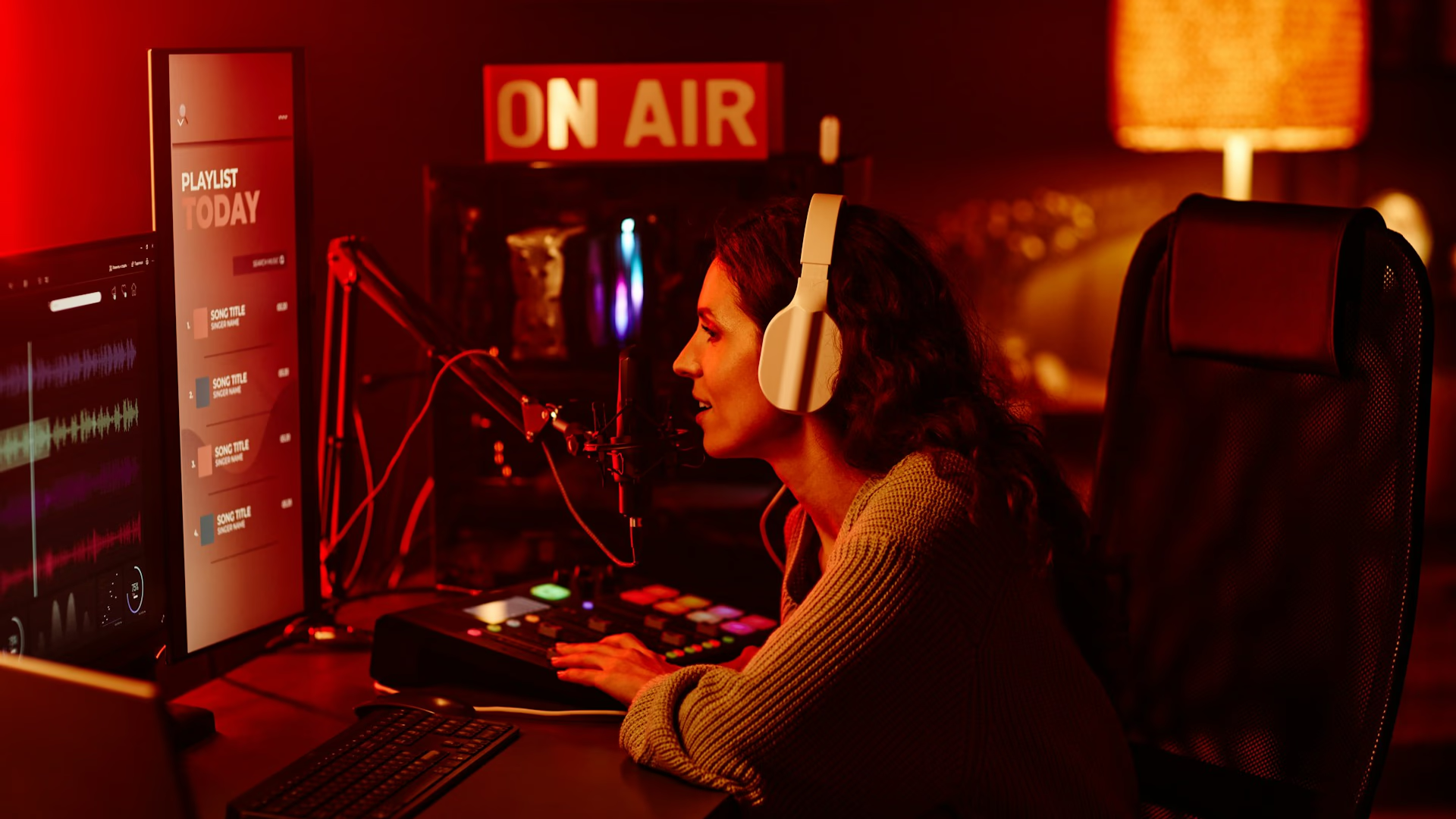
The BBC broadcast ran on a two-hour delay and still failed to edit out the slur initially [LA Times]. That’s not a five-second buffer fumble. That’s a systemic oversight with hours of runway. Photo by
 Most major awards shows use a short broadcast delay built primarily for censorship compliance, not for handling complex disability-related moments. Production runbooks rarely include guidance beyond “cut to commercial” for off-script events.
International simulcasting compounds the problem:
-
Different regional feeds operate on different delay tolerances
-
Editorial standards vary by country and network
-
A moment edited for UK audiences may air uncut on U.S. or Australian streams seconds later
As one commentator noted on CBS News, this is “really one of the most acute examples of where something that is a disability can cause quite understandably huge amounts of offense” [CBS News]. The tools to bleep or cut exist. Nobody had a protocol for when, or whether, to use them here.
Balancing Safety With Authenticity
The core question going forward isn’t just technical.
 Photo by
 It’s cultural. How do awards shows protect individuals on stage without sanitizing the spontaneous energy that makes live ceremonies worth watching?
Two competing views are emerging:
The production-first view argues for better pre-show coordination. Theatre and live performance industries have long used backstage medical liaisons, a model awards shows have largely ignored. Pre-event conversations about accessibility needs could reduce on-stage surprises without scripting the event.
The authenticity-first view worries that over-preparation risks turning live TV sterile. The unpredictability is precisely what audiences tune in for.
The most practical path forward likely combines both:
-
Pre-show accessibility coordination with participants
-
Crew training in disability awareness and compassionate live response
-
AI-assisted monitoring tools that can flag anomalies faster than human directors
BAFTA’s apology acknowledged the gap plainly: “We take full responsibility for putting our guests in a very difficult situation and we apologise to all” [LA Times]. That admission is a start. The real test is what follows.
Three uncomfortable truths surfaced here: broadcast delay tools are narrowly designed, production protocols lack disability awareness, and the industry must now reconcile authentic live moments with more humane safeguards. Live television’s greatest strength is its humanity. Protecting that humanity starts long before cameras roll, with better training, better coordination, and a willingness to treat inclusivity as a production priority rather than an afterthought.


