

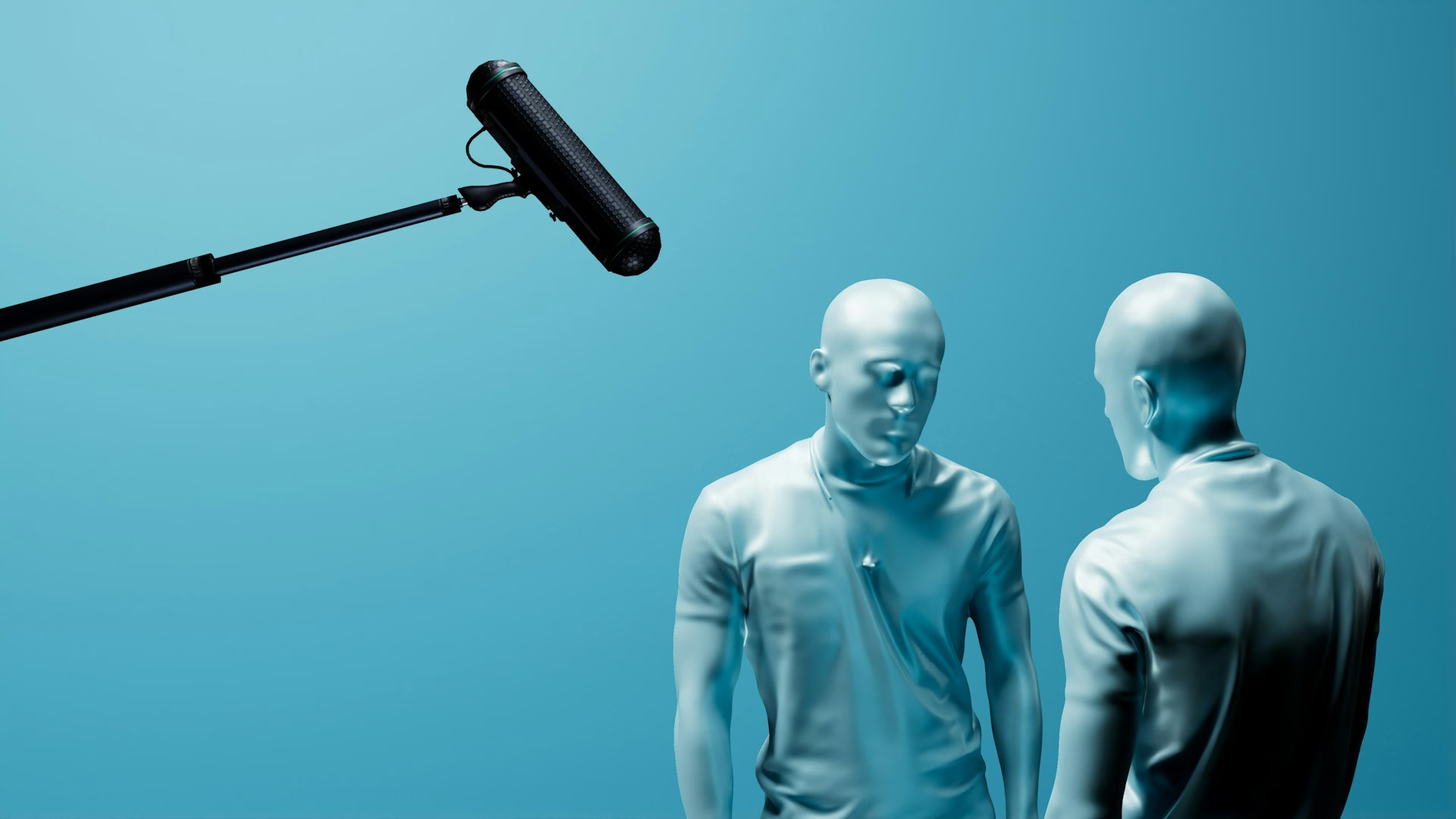
SAG-AFTRA kicked off formal 2026 contract negotiations with Hollywood studios on February 9, and one proposal has already stolen the spotlight [KQED]. It’s called the Tilly Tax: a fee studios would pay every time they use an AI-generated actor in a production [KQED]. The concept landed in headlines on January 29, just days before talks began. With AI-generated likenesses already appearing in productions and Chinese AI tools like Seedance 2.0 generating unauthorized celebrity deepfakes at alarming scale [LA Times], this negotiation isn’t just timely. For working actors, it’s existential.
AI Actors Reshape Hollywood Contracts
The speed of AI advancement has left Hollywood’s contractual framework behind.
 Photo by
 Most existing SAG-AFTRA agreements were written long before generative AI could convincingly replicate a performer’s face, voice, and movement. That gap has created a dangerous gray zone where studios can potentially deploy digital doubles without ongoing compensation.
SAG-AFTRA has been blunt about the stakes. When Seedance 2.0 generated unauthorized videos featuring the likenesses of major stars, the union declared:
“This is unacceptable and undercuts the ability of human talent to earn a livelihood. Seedance 2.0 disregards law, ethics, industry standards and basic principles of consent.” [LA Times]
The core fears among performers come down to a few key concerns:
-
Digital cloning without meaningful consent or recurring pay
-
Studios bypassing traditional casting by generating synthetic performers
-
Erosion of residual structures that have sustained working actors for decades
The AI filmmaking ecosystem is also growing fast. Over 10,000 students have already attended AI filmmaking courses through programs like Curious Refuge [Economic Times]. The talent pipeline for AI-driven production is expanding whether unions are ready or not.
The Tilly Tax Explained
So what exactly is the Tilly Tax?
 Photo by
 Think of it like a music royalty. Every time a streaming service plays a song, the songwriter gets paid. The Tilly Tax works similarly: studios would owe a fee each time they commercially use an AI-generated actor likeness [KQED].
The proposal reportedly covers a broad range of scenarios:
- Fully synthetic AI actors created from scratch but modeled on real performers
- AI-enhanced performances built on a real actor’s digital scan or voice data
- Posthumous or archival use of a performer’s likeness without new consent
The proposal takes its name from Tilly Norwood, described by one source as Hollywood’s first AI actor [Impact Lab]. Her situation put a human face on a concern union members had long felt: that studios could generate a performer’s likeness indefinitely without cutting another check. That candor resonated across the membership.
Industry analysts expect the framework to expand beyond actors. As one analysis noted, we should “expect more Tilly Tax proposals and mandatory AI disclosure for Oscar eligibility” [Impact Lab]. If the music industry eventually built royalty structures around streaming, this hits similar notes. The difference is that the stakes here involve someone’s actual face.
What This Means Going Forward
The outcome of these talks will ripple far beyond Hollywood soundstages.
 Photo by
 If SAG-AFTRA secures a Tilly Tax framework, it becomes a template for writers, musicians, voice actors, and international performer guilds navigating their own AI negotiations.
Studios see it differently. Major streamers argue that rigid AI royalty structures could inflate production costs and push content creation toward non-union territories or fully synthetic casts. Some have already begun piloting AI-only short-form content in markets with fewer union restrictions.
The more nuanced view is that a fair royalty system could actually help studios. Clear licensing frameworks reduce legal risk and could accelerate responsible AI adoption on union productions. Several producers have quietly acknowledged this point.
The tension between innovation and protection isn’t new to entertainment. Residuals themselves were once a radical idea that studios resisted. What makes this moment stand out is the pace of change: contracts negotiated today will govern a technological landscape that barely existed two years ago.
AI actors are already in production pipelines. SAG-AFTRA’s Tilly Tax represents the most concrete attempt yet to ensure human performers aren’t written out of their own industry. The framework agreed upon here won’t just shape Hollywood. It will set the terms for how every creative industry compensates real people in an age of synthetic everything.