Riiven Sparks
Viagra
A heart drug kept failing its intended patients. The side effect the trial nurses noticed first changed everything.
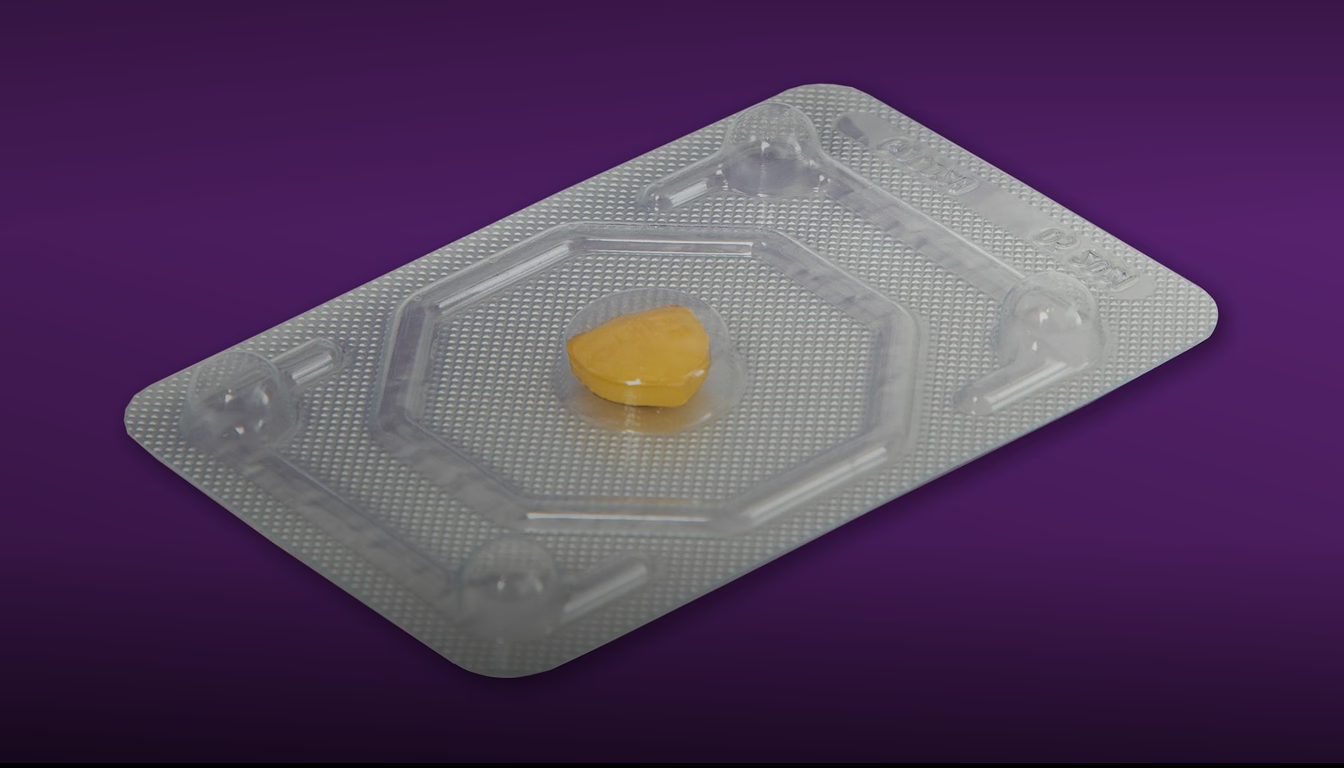
In 1996, Mitra Boolell and colleagues were running clinical trials in Wales on a compound built to relax the blood vessels around the heart. It was meant for angina, the crushing chest pain that comes when the heart muscle is starved of blood. The heart results came back disappointing. The compound did not do much for chest pain. But the trial nurses kept noting something else on the side effect reports.
The pivot
Intent
A pill to treat angina and hypertension
Outcome
The defining treatment for erectile dysfunction
Sildenafil was a phosphodiesterase-5 inhibitor, which is a long way of saying it stopped a certain enzyme from breaking down a molecule that keeps blood vessels open. The theory was clean. Keep the vessels relaxed, ease the load on the heart, calm the angina. Pfizer had invested years in the idea. The science was sound. The patients in the trials were men with heart conditions, exactly the customers the drug was designed for. And on paper, this should have worked. The chest pain barely moved.
Then came the strange entries. Men in the trials were reporting penile erections, marked ones, often days after taking the pills. Some were reluctant to hand the unused tablets back. The researchers could have filed this under noise and moved on. A failed heart drug is a failed heart drug. Boolell and his team did the opposite. They looked closer at the side effect nobody had designed for. The same vessel-relaxing mechanism that underwhelmed the heart was doing something very precise somewhere else.
The biology lined up. An erection depends on blood flow into the penis, and that flow is governed by the exact molecule sildenafil protected. The drug had found the wrong organ all along. So Pfizer pivoted the entire program. They stopped chasing angina and started running trials for erectile dysfunction, a condition that had no good oral treatment at the time. The compound that failed as a heart pill was suddenly the right tool for a problem nobody had been trying to solve with it.
In 1998, the FDA approved it under the name Viagra, indicated specifically for erectile dysfunction in men. It became one of the most recognized drugs on Earth. Almost nobody remembers it was built for chest pain. The angina patients never got their treatment. A different set of men got something else entirely.
A heart drug that missed the heart and found the rest of the body.
The angle
When your experiment fails its intended customer, look at who is quietly reporting the effect you never put on the form. What problem is your failure secretly solving?