Riiven Sparks
Super Glue
A chemist rejected a compound in 1942 because it stuck to everything. Sixteen years later, that was exactly the point.
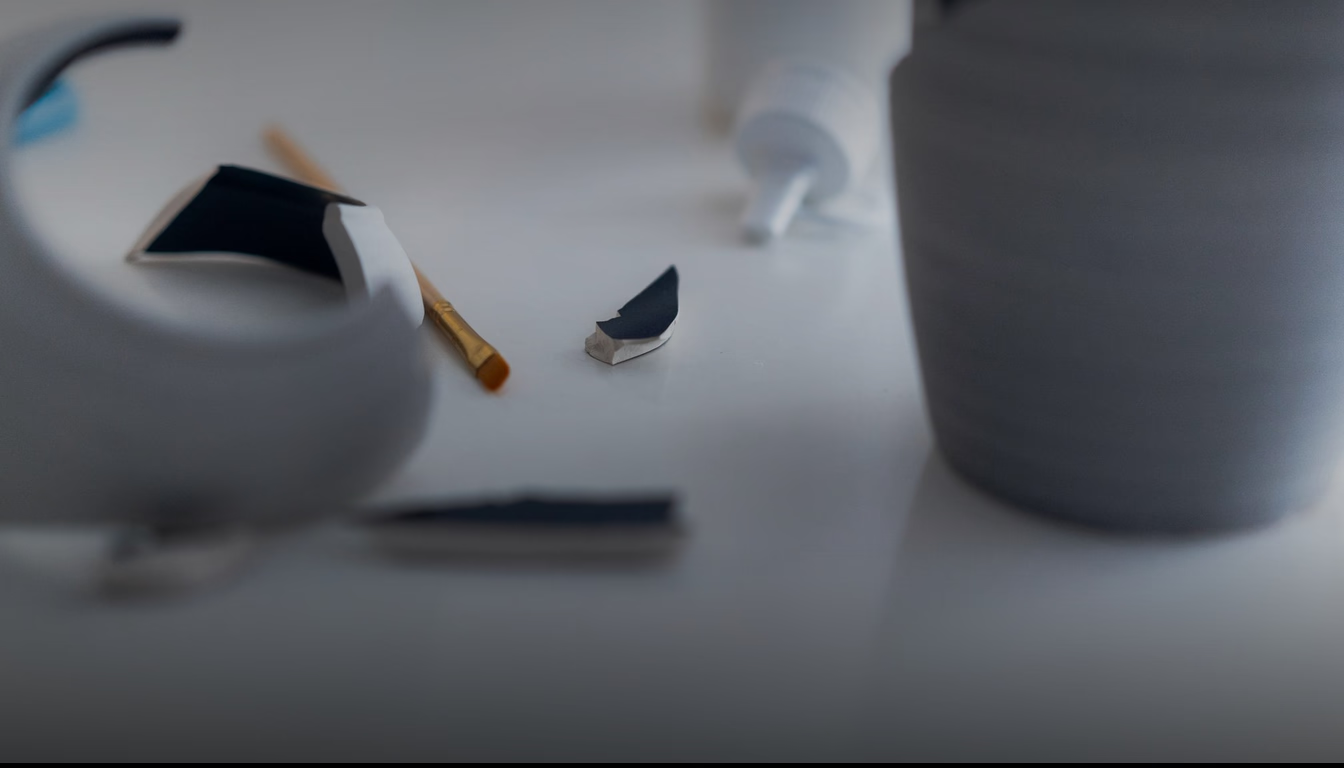
In 1942, Harry Coover was hunting for a clear plastic to fit inside a gun sight. He needed something hard, optically clean, easy to shape. What he got was a compound called cyanoacrylate that stuck to everything it touched. Glass, metal, his fingers, the lab bench. It ruined the optics and ruined the surfaces. He rejected it. Wrong material for the job. The stickiness was the flaw he was trying to escape.
The pivot
Intent
Clear plastic material for gun sights
Outcome
The household adhesive on every junk drawer shelf
The war wanted precision. Coover was working on transparent plastics for gun sights, the small lenses that soldiers looked through to aim. He needed a material that stayed crystal clear and held a shape. Cyanoacrylate did neither. The moment it met a surface, it bonded fast and permanently, smearing into a mess no optic could survive. So he set it aside. A failure for the first market, filed under things that do not work. The substance was not defective. It was simply pitched at a problem it could never solve.
Years passed. Coover moved to Eastman Kodak and kept working on heat resistant polymers for jet canopies. Cyanoacrylate surfaced again. Same behavior. It still grabbed onto everything, still refused to stay clean and clear. Once more it failed the brief in front of him. Two markets now, two rejections. The compound kept doing the one thing nobody had asked it to do. It bonded instantly, with brutal strength, to almost any surface you pressed it against. That trait had cost it every job it auditioned for.
Then Coover looked at the trait itself, not the trait as a defect. The stickiness was not the problem. The stickiness was the product. In 1956 the chemistry was patented as alcohol catalyzed alpha cyanoacrylate adhesive compositions, built to bond fast. The thing he had thrown away twice was an adhesive that needed no heat, no clamp, no long wait. Just pressure and a moment. The right customer was anyone who wanted two things stuck together right now.
The first commercial glue based on this chemistry appeared in 1958. It did not go inside a gun sight or a jet canopy. It went into homes. A single drop held. A clumsy fingertip got bonded to a thumb. The product that failed two precision missions became the one in every junk drawer, the small tube of household glue people reach for without thinking. The gun sight is forgotten. The stickiness is the whole point.
Sixteen years to see the obvious. The flaw was the feature, waiting.
Watch
The angle
When something refuses to behave the way you intended, ask whether it is failing or just waiting for the right surface. What are you throwing away because it works too well at the wrong job?