Riiven Sparks
Bubble Wrap
It was textured wallpaper. Then greenhouse insulation. Then IBM needed to ship a mainframe.
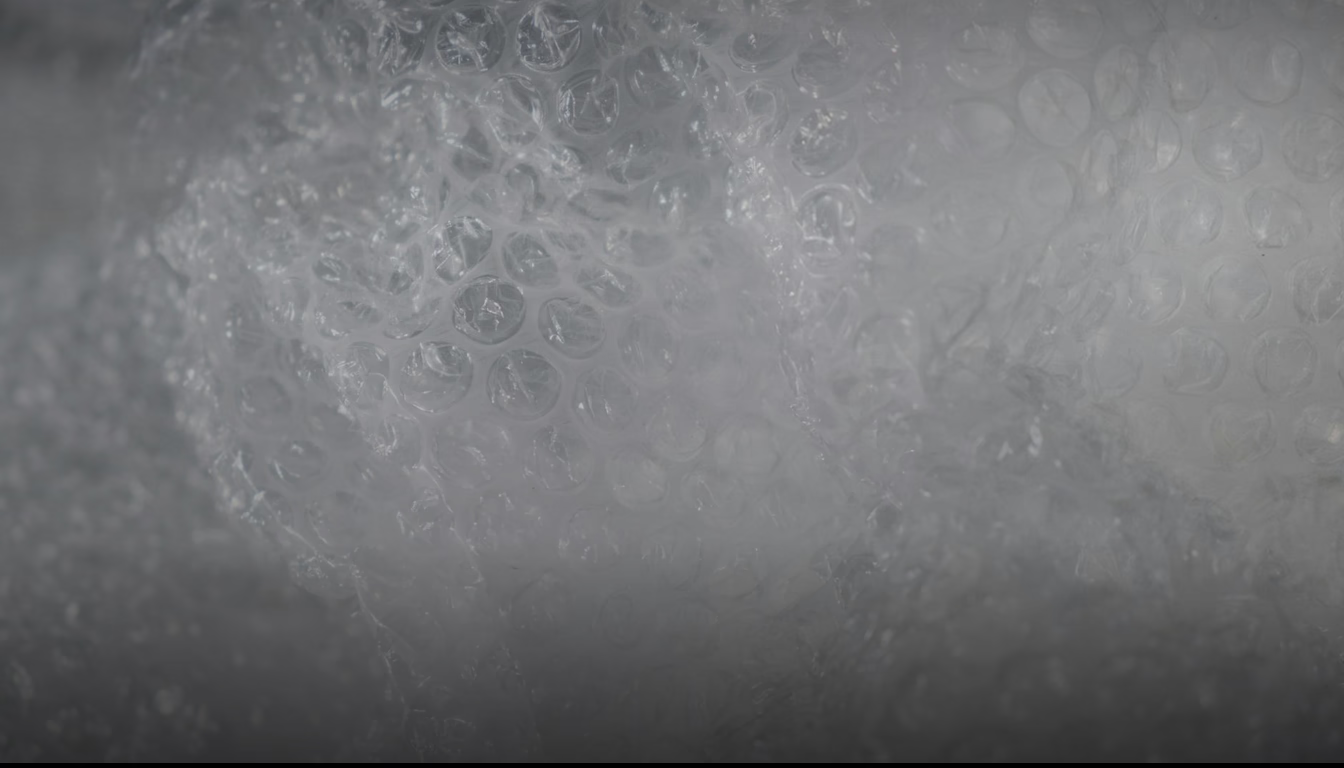
In 1957, two engineers in Hawthorne, New Jersey, sealed two shower curtains together and trapped air bubbles between them. They were trying to invent the next big thing in interior design. Walls you could press your thumb into.
The pivot
Intent
Sell textured plastic as 3D wallpaper
Outcome
A global packaging standard
Marc Chavannes and Alfred Fielding ran their plastic through a heat-sealing machine, hoping for a wallpaper that would feel exciting against a fingertip. Nobody bought it. Mid-century walls were supposed to be flat.
They tried again. Same material, repositioned: greenhouse insulation. The bubbles would trap warm air between two layers. The use case was real but the demand was small. Their company, Sealed Air Corp., needed a third try.
In 1960, IBM was preparing to ship the 1401, a delicate and expensive new mainframe, to customers across the country. They needed packaging that wouldn't crush, wouldn't shed, wouldn't add much weight. A Sealed Air marketer named Frederick W. Bowers heard about the requirement.
He flew to IBM, demonstrated the bubble sheet, and walked out with the contract. Bubble Wrap had found the third use that neither of its inventors had pictured. The company never went back to wallpaper.
Today Sealed Air ships packaging worldwide. The plastic was the same. The customer wasn't.
Watch
The angle
Before you redesign the thing nobody buys, ask who else might already need it. Somewhere you haven't looked.
Sources
- Sealed Air Corporation — corporate history (founded 1960 by Alfred Fielding and Marc Chavannes) (1960)
- Alfred W. Fielding, Co-Inventor of Bubble Wrap, Dies at 76 — The New York Times (1994)
- The Accidental Invention of Bubble Wrap — Smithsonian Magazine (2014)