Riiven Sparks
Lotus Paint
A botanist looked at a lotus leaf under a microscope in 1997 and saw a surface so bumpy that water could not grip it. Five years later, someone put that geometry in a can of paint.
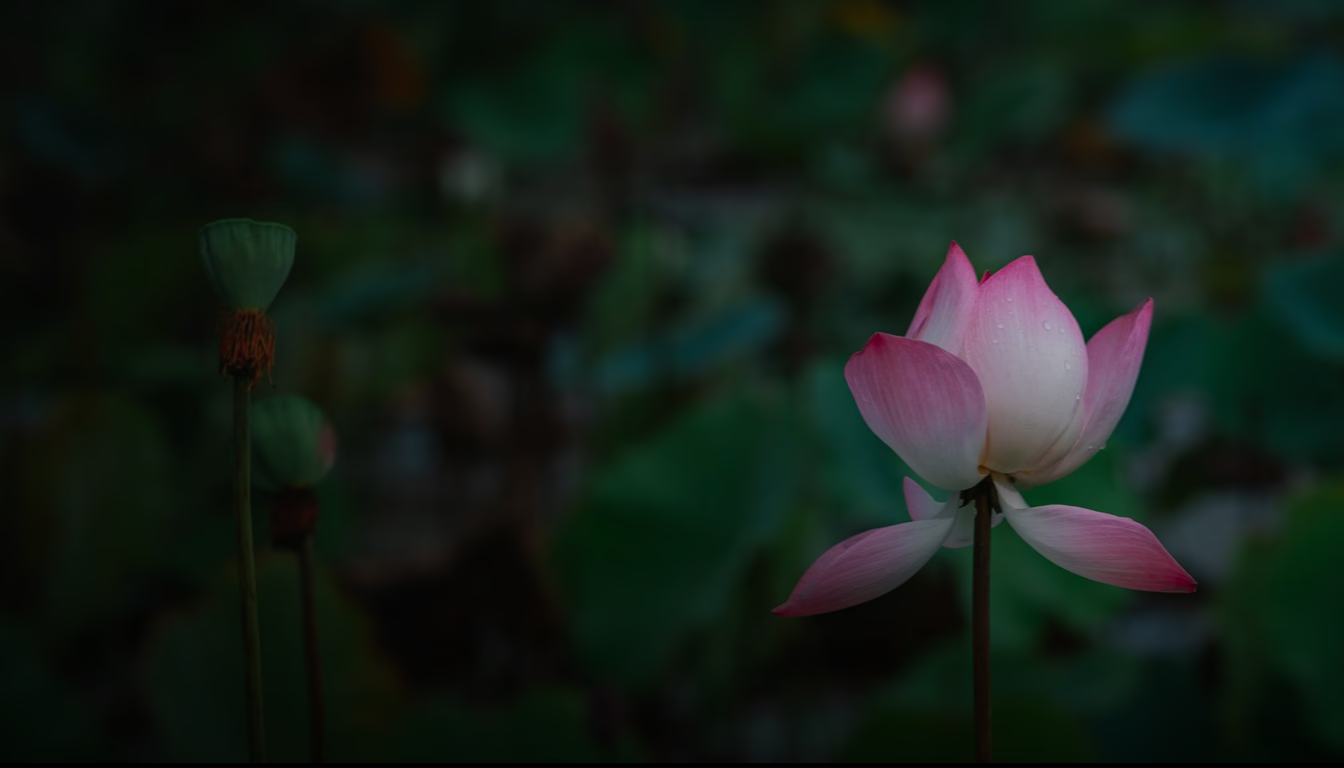
In 1997, Wilhelm Barthlott and Christoph Neinhuis published a paper about a leaf that refused to get dirty. The lotus had been a symbol of purity for thousands of years. Nobody had asked why. The two botanists put its leaves under a scanning electron microscope and found the answer was not chemistry. It was geometry.
The pivot
Intent
Understand why lotus leaves stay clean
Outcome
A self-cleaning coat for buildings
The lotus grows in mud. Its leaves rise above the water and stay spotless, which is why so many cultures treated the plant as sacred. Barthlott had been studying plant surfaces for years. He kept noticing that some leaves needed cleaning before he could examine them, and others never did. The lotus was the cleanest of all. He wanted to know the mechanism behind it. So he magnified the surface until the smoothness fell apart into something else entirely.
Up close, the leaf was not smooth at all. It was covered in tiny bumps, each one only a few thousandths of a millimeter tall, and each bump was coated in even smaller waxy crystals. Water could not settle into that texture. A drop sat on the peaks like a ball on a bed of nails, barely touching the surface. When it rolled off, it picked up dirt and carried it away. The roughness did the cleaning. Barthlott named it the lotus effect.
Here was the surprise. For decades, engineers had assumed that smoother meant cleaner. Polish a surface enough and nothing should stick. The lotus said the opposite. Bumpy surfaces, built at the right scale, repel water better than glass. The mechanism was the texture, and texture could be manufactured. The leaf had shown a recipe, not just a curiosity. Five years of trials followed, turning a microscope image into something you could pour out of a container.
By 2002, the idea reached a patent for a self cleaning paint coating. The formula built the same kind of microscopic roughness into the dried film. Rain hit a wall painted with it and beaded up. The beads rolled down and took the grime with them. Buildings could shed dirt without scrubbing. The lotus had been doing this in ponds the whole time. Someone finally read the instructions written on its leaves.
Watch
The angle
What surface in your daily life are you looking at without actually seeing? The thing you call clean might be hiding a recipe.