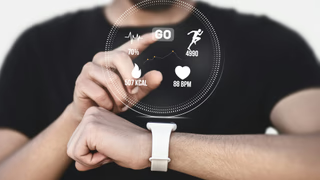
Your wearable tracks three overnight signals before you take a single step, and those numbers are more reliable than how your legs feel. The key is learning to read two-week trends rather than reacting to any single morning reading.
What the Numbers Actually Mean
Before you open the front door, the watch has already logged your resting heart rate and heart rate variability. Resting heart rate tells you whether yesterday’s effort has cleared. HRV measures the tiny gaps between heartbeats: higher variation means your nervous system is relaxed, lower means it is still under stress. Athletes who average under seven hours of sleep run slower time trials even when the effort feels completely normal to them.
A low readiness score is not a command to stop. It means today’s ceiling sits lower than planned. Runners who ease off on low-HRV days tend to hold the same weekly fitness while dealing with fewer injuries.
Data Patterns Worth Trusting
One morning reading rarely tells the full story. A trend across ten to fourteen days does. Watch for a resting heart rate that climbs week over week, sleep scores that stay low through a training block, and a HRV trend that sags across two weeks, which is the clearest early warning of overreaching before injury or burnout arrives.
For a weekend athlete, trust the two-week story over any single Saturday reading. The data is not replacing your instincts. It is giving your instincts better raw material to work with.