

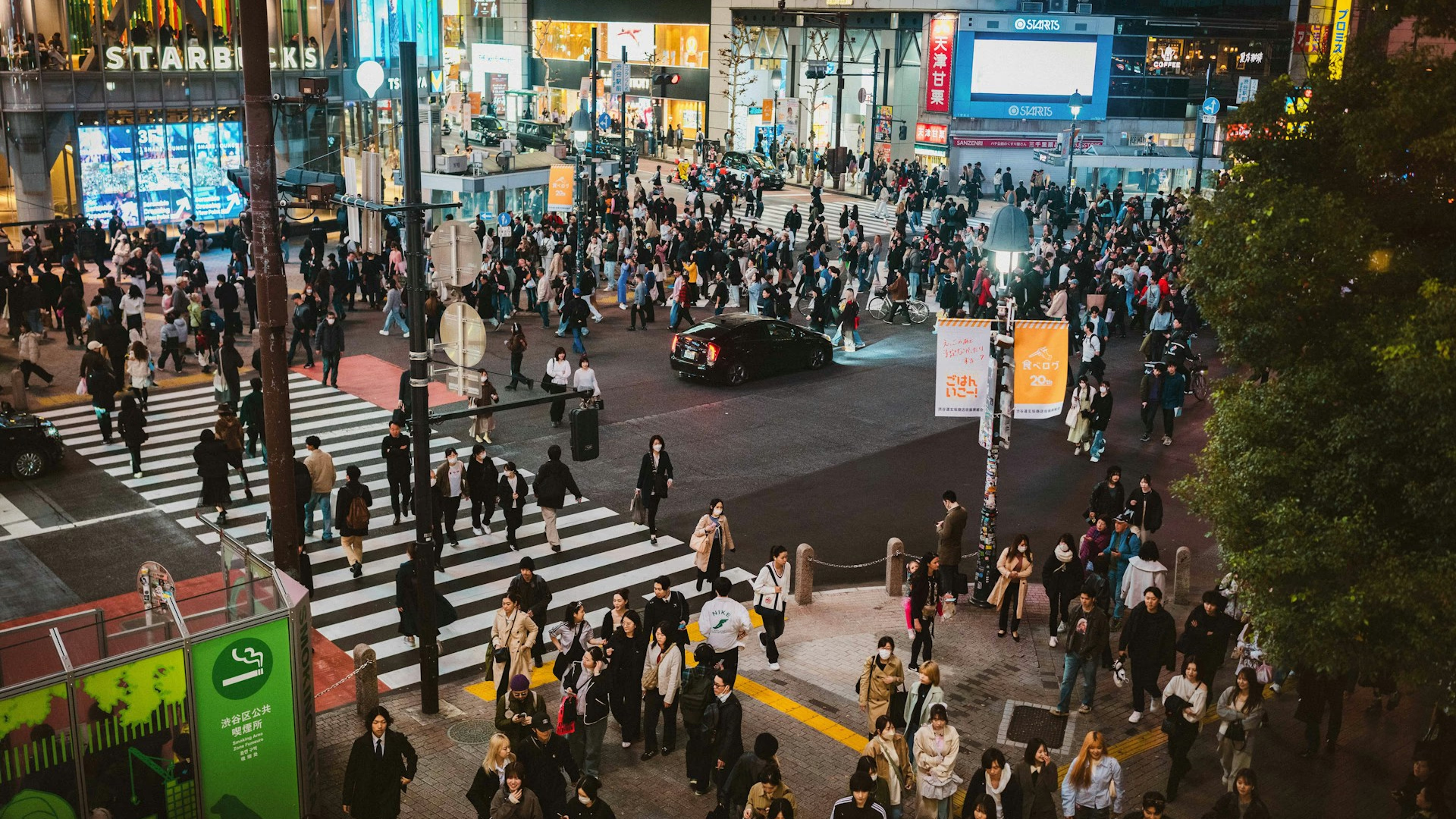
Your brain keeps reacting to city noise long after you stop noticing it. That gap between conscious awareness and biological response slowly lowers your stress threshold, narrows your emotional range, and shifts your resting mood in ways that feel like personality rather than environment.
Noise as Invisible Emotional Sculptor
Auditory habituation feels like proof that noise stops mattering. Move near a busy intersection and within weeks the traffic fades from awareness. That happens in the auditory cortex, which filters predictable sound out of conscious attention. The amygdala, the brain’s threat-monitoring center, does not get the same memo. It keeps logging each siren and braking truck as a small alarm.
Busy streets routinely run 70 to 85 decibels, well past the roughly 55-decibel mark the World Health Organization links to measurable stress hormone elevation. Even when you feel calm, your cortisol can stay elevated.
Suppressing awareness of constant sound also drains attentional resources, the same pool you draw on for regulating mood and registering good moments. Noise you no longer consciously hear keeps drawing down those resources.
Noise above 40 decibels fragments REM sleep even without fully waking you, and that fragmentation narrows the next day’s emotional range. Less joy lands, calm arrives slower, and irritability becomes the path of least resistance. Daytime and nighttime effects compound rather than cancel.
Challenging the Adaptation Myth
The comforting story is that city dwellers simply adapt and pay no lasting price. The evidence splits this cleanly. Subjective annoyance does fall over the years, but objective stress markers remain elevated.
Children make the cost hardest to dismiss. Research near major airports found that kids in flight-path schools carried persistently elevated blood pressure and scored lower on reading comprehension than peers in quieter settings. They had adapted only in the sense that they no longer complained, even as their blood pressure and reading scores stayed measurably worse.
Self-report surveys understate all of this because people normalize their own diminished baseline and compare themselves to neighbors living in the same noise. Adaptation here means tolerating the input, not escaping its effects.