

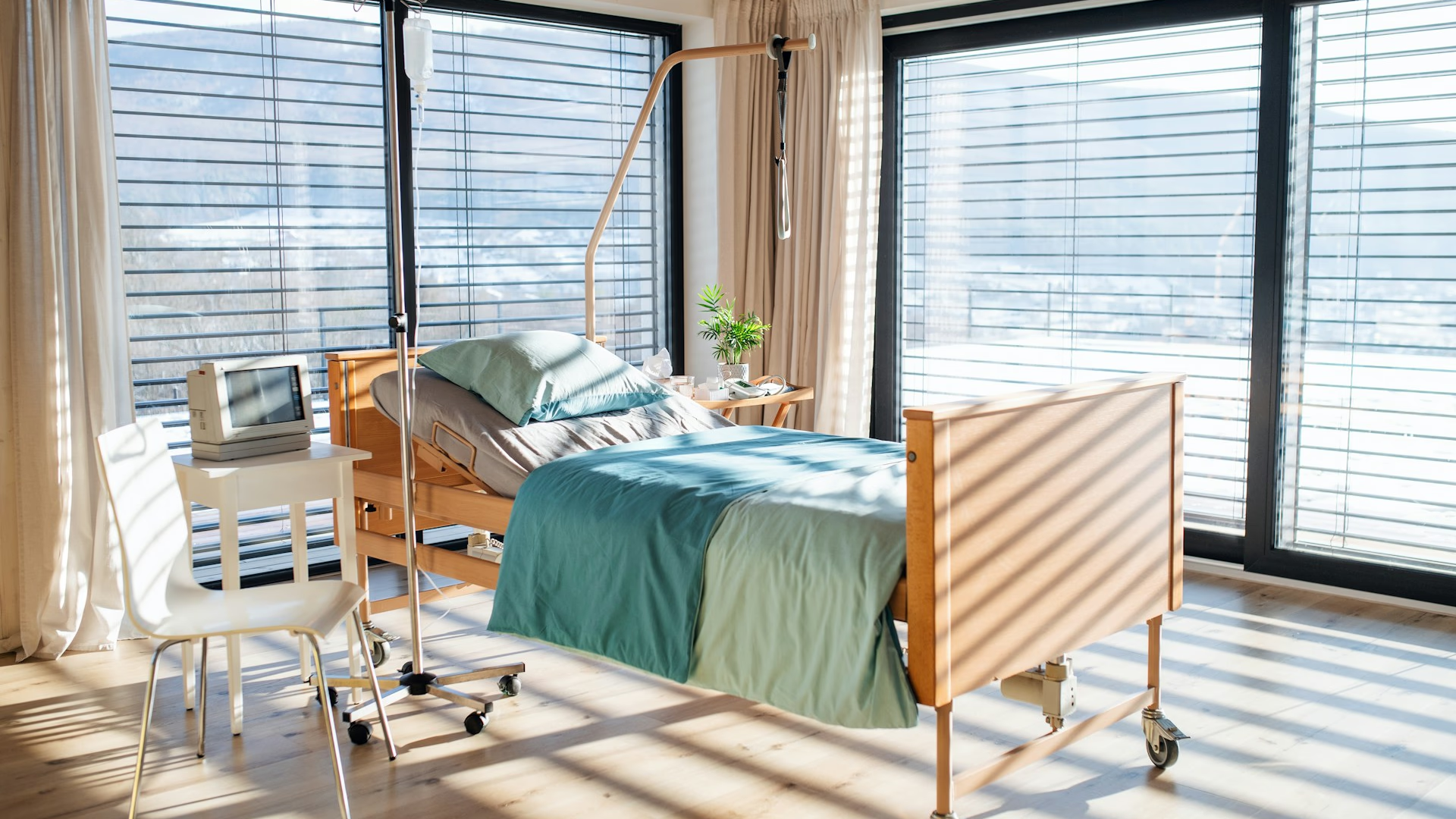
Hospitals were never really designed for the nervous system. They were built for workflow: mop-friendly floors, bright overhead lights, and equipment that beeps through the night. In 2026, that assumption is quietly collapsing. Healthcare designers are catching up to a simple truth: the environment itself is a clinical variable, and sensory overload is no longer treated as an unavoidable side effect of getting care.
The neurowellness movement, a growing field linking environmental design to nervous-system health, is reshaping how we think about stress in clinical settings. The misconception worth unpacking is that hospital stress is purely emotional. Emerging research suggests the opposite.
The Belief: Stress Is the Patient’s Problem
For decades, the assumption was that anxiety in hospitals came from the diagnosis, not the drywall.
 Photo by
 Patients were told to breathe, distract themselves, or accept discomfort as part of healing.
That framing misses how the nervous system actually reads a room. Harsh fluorescent lighting, unpredictable alarms, strong antiseptic scents: these are sensory inputs the body interprets as threat cues, regardless of what a patient is told to feel. Research on sensory-sensitive populations notes that up to 84% of autistic individuals experience sensory symptoms, and healthcare built environments can actively worsen sensory overload, affecting both stress and avoidant behavior. The implication is broader than any one group. If a building can destabilize the most sensory-aware patients, it’s shaping everyone else’s physiology too, just more quietly.
Why This Framing Is Wrong
The correction many designers and clinicians are now making: stress in hospitals is co-produced by the space.
 Photo by
 A patient’s cortisol response, the body’s primary stress hormone, isn’t purely psychological. It’s a reaction to measurable inputs like light temperature, ambient noise, and spatial predictability.
Recent trials make this concrete:
-
A randomized controlled trial found significant reductions in preoperative anxiety when children were placed in multisensory environments, rooms designed to engage multiple senses in a calming way, rather than standard preoperative rooms.
-
In a VR-assisted relaxation trial during radiotherapy, anxiety scores dropped from 18.1 to 9.2 in the intervention group, a moderate effect size around d = 0.44.
These aren’t luxury upgrades. They’re interventions that shift physiological markers, which is the same bar we use for medications.
The Correct Understanding: Environment as Co-Therapist
A more accurate model treats the environment as an active participant in recovery.
 Photo by
 Sensory-adaptive design, which includes dim tunable lighting, softer acoustics, and spaces for pressure touch or gentle movement during procedures, has been proposed as a long-term strategy for reducing procedural distress. It’s not just a comfort feature.
Sensory design is not about making hospitals prettier. It’s about making them legible to the nervous system.
What many patients report, once they experience it, is subtle but real: lower shoulders, slower breath, less dread before the next procedure. It doesn’t work identically for everyone. Some patients prefer minimal stimulation; others find nature imagery grounding. That individual variation is itself part of the design conversation.
Practical Impact: What’s Actually Being Built
 Photo by
 The shift is already visible in real facilities. Lee Health’s Golisano Children’s Hospital launched its SEA STAR program in 2023, becoming Florida’s first Certified Autism Center hospital with dedicated sensory-friendly spaces [Lee Health]. Other systems are now exploring this model, not because it’s trendy, but because outcomes data is accumulating.
A few honest notes on access: full renovations are expensive, and not every hospital can retrofit overnight. But lower-cost elements, including adjustable lighting, sound-dampening panels, portable sensory kits, nature imagery, and quiet rooms, are increasingly within reach for mid-sized facilities. Sensory design exists on a spectrum, and even small changes appear to move the needle on patient-reported stress.
For patients and families, the practical takeaway is simple: noticing the sensory environment is reasonable, and asking for accommodations such as dimmer lights, fewer interruptions, or headphones is increasingly being met with a yes rather than a shrug.
The older belief treated hospital stress as a personal hurdle. The emerging understanding treats it as a design problem with clinical consequences. Healthcare systems in 2026 are finally budgeting for nervous-system safety the way they once budgeted for infection control. The walls, the light, the sound: they’re part of the treatment plan, whether we acknowledge them or not.


