Deep Dive
The Mycorrhizal Economy
Beneath the forest floor: the hidden anatomy of nature's trading network
A tree looks like it stands alone. But pull one up, and you'll find it was never self-sufficient. it was a client of an underground bank that handles a third of the planet's carbon flow.
The invisible fungal intermediaries that move a third of…
The plants and trees you see above ground look independent, but almost all of them secretly depend on a hidden underground partner.
Right under the soil, fungi physically merge with plant roots to swap sugar for nutrients, like a market counter.
The fungi and plants trade like a real market, rewarding the best partners with better prices. all without any central planner.
Every year, these fungi lock away carbon equal to about a third of what humans burn in fossil fuels. more than China emits.
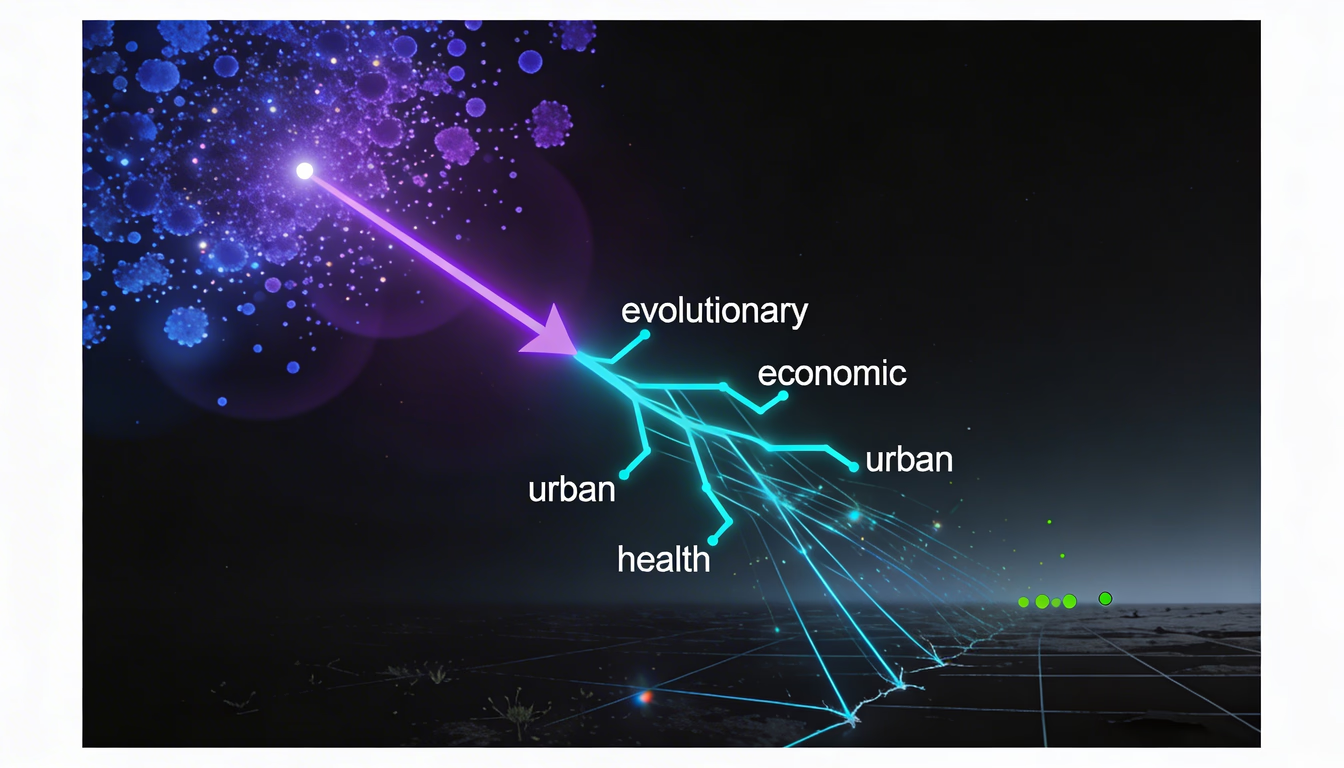
In cities, this hidden network gets frayed and disorganized. the fungal connections between plants become looser and less reliable.
The forest is not a collection of plants. it is a fungal economy in which plants are the retail outlets. A silent intermediary invisible to the eye handles a third of global carbon and sets the price of nitrogen in every ecosystem on land.
Takeaway
Before tilling, paving, or fumigating soil, treat it like financial infrastructure. not dirt. A single pass of deep plowing or broad-spectrum fungicide severs a carbon-trading network that took decades to build, and no above-ground replanting restores it.
More Insights
All Insights
The Biodiversity Dividend
Ecosystems, portfolios, immune systems, and teams all pay the same tax on sameness.
The Forager's Curse
How chasing the richest patch cascades into neighborhoods no one will save

The Discovery Tax
How a single paywall cascades into decades of delayed breakthroughs
Enjoyed this?
Get insights like this every week — interactive visual stories that reveal hidden patterns.