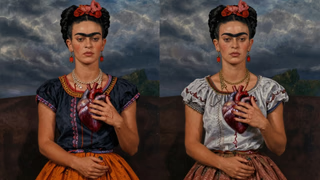

There is a single bead of blood at her throat. It is small, almost shy, this red bead, and yet everything in the painting seems to lean toward it the way a room leans toward a candle. The thorn that made it is not loose or accidental. It is part of a necklace, a braid of brambles wound around her neck the way another woman might wear pearls, and from this crown of small cruelties hangs a hummingbird, black and still, its wings spread wide as though caught between flight and the last moment before falling.
Frida Kahlo painted this in 1940, in the raw months after her divorce from Diego Rivera. She gives us her own face at the center, unflinching. Her brows join in a single dark line. Her eyes look out past us toward something we cannot name. Behind her, broad green leaves rise like a wall of living jungle. A monkey tugs at the thorns from one side - Diego’s gift, now pressing the barbs deeper into her skin. A cat crouches at the other, watching the dead bird with the patient hunger of something that simply wants. And between them, the woman holds perfectly still. She does not flinch. She does not fight. She bleeds without complaint, and the blood at her throat is the quietest, most insistent proof that she is still here, still warm, still wearing the whole impossible thing out into the light.
We spend much of our lives trying to keep certain things apart - the love from the cost of it, the bright life from the slow bleed it asks of us. We arrange our days to avoid the necklace altogether. And then something happens, a leaving, a loss, a door that closes before we reached it, and we find the thorns already fastened at our throat, the clasp already done.
Kahlo has taken the thing that strangles her and turned it into something she chose to wear, and in that single act of wearing it, the wound becomes a face the world must meet. The defiance in her eyes is not the defiance of someone who has escaped pain. It is the harder kind - the defiance of someone who has decided to remain inside it and stay whole.
The hummingbird hangs there spread-winged, not quite dead and not quite living, the way our own hopes hang in the hardest seasons. The painting refuses to choose between suffering and survival. It insists, with its level gaze, that these are the same picture seen from two distances.
You can see the same composure on any ordinary morning, if you know where to look. The man at the bus stop who lost his job last week and still nods good morning. The old woman who waters the same window box she has tended for forty years, alone now, her hands steady on the small green leaves. None of them are free of their thorns. All of them have decided, again, today, to wear the necklace out into the light.