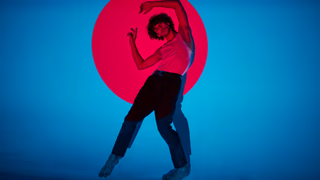
Physical theatre festivals offer something screens cannot replicate: five hundred people sharing the same breath, the same risk, the same vanishing moment. The live exchange between performer and audience is the whole point, and understanding it changes how you experience any live performance.
A Crowd Holds Its Breath
When five hundred people gasp together, the gasp becomes part of the show. The crowd isn’t just watching the work. It completes it.
That exchange runs both directions. “Liveness” is the simple fact that performer and audience occupy the same air and respond to each other in real time. A dancer feels the room go still and slows down to let the silence stretch. The audience feels the dancer notice them and leans in a little closer.
What Screens Cannot Give
Physical theatre speaks through the body first. A single camera angle catches one corner of the stage. A live spectator catches everything at once: the runner in the back, the trembling hand at the front, the shift of weight before a leap.
The small physical signals matter most. The faint sound of a foot landing, the visible effort of a lift, the breath you can almost hear from the third row. A 2024 scholarly study found that this kind of sensory engagement reaches audiences through their bodies, not only through following a story in their heads. Watching a person genuinely risk a fall produces a jolt of empathy that a screen tends to flatten. That visceral pull is why people come back the next year.