Riiven Sparks
Gecko Tape
Kellar Autumn's team showed gecko feet stick dry, by van der Waals forces, then built synthetic setal tips from two materials that stuck as predicted.
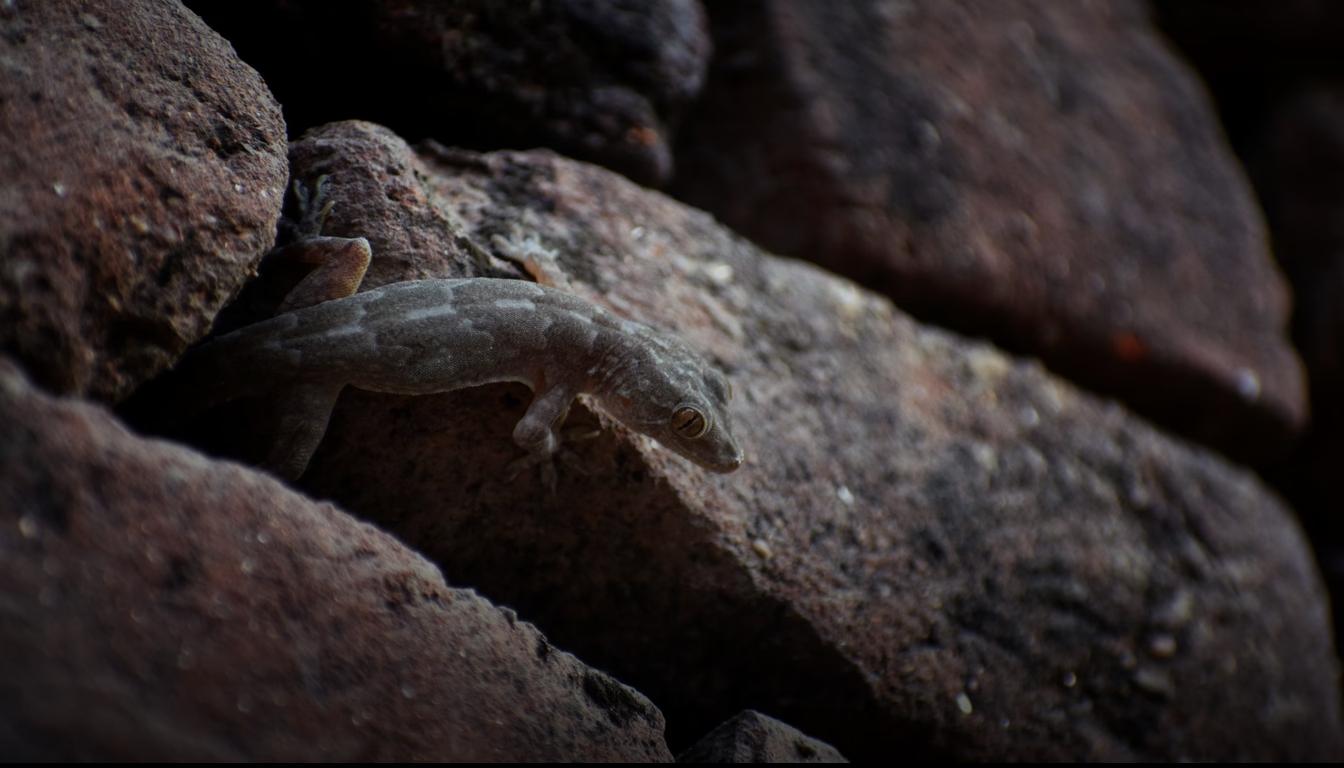
Kellar Autumn and his colleagues pressed single gecko setae, the microscopic hairs on a gecko's toes, against surfaces and measured what held them there. A gecko can run up a wall and hang from it. Most people would assume some hidden glue was at work. The team found no glue and no moisture. The hairs stuck dry.
The pivot
Intent
Understand how gecko feet stick dry
Outcome
A gecko-inspired adhesive nanostructure
Autumn's team wanted to know how gecko feet grip. Two explanations were possible. One relied on water, a thin wet film pulling foot to surface. The other relied on van der Waals forces, faint attractions that appear when two surfaces come extremely close. The team set out to tell these apart by measuring single setae directly.
The measurements pointed one way. The team reported direct experimental evidence that gecko setae adhere dryly by van der Waals forces. That mattered for engineers. Wet adhesion would depend on a sticky chemistry. Dry adhesion depends mostly on shape and contact. If shape did the work, a copy might work too. The team published the findings in 2002.
So they tested the idea. The team fabricated prototype synthetic setal tips, artificial versions of the hair ends. They made them from two materials. Both stuck as predicted. The result suggested that geometry, more than any particular substance, explained the grip. A lizard's toe had become a design anyone could try to copy in a lab.
Lewis and Clark College later described the result in a 2012 feature. It reported that Autumn's team used two polymer materials, long chain plastics, to synthesize a gecko-inspired adhesive nanostructure. Nanostructure means a surface shaped at a scale far smaller than the eye can see. The team had started with a question about lizards. They ended with a sticky material that used no glue at all.
Watch
The angle
Next time something clings to a wall without a drop of glue, would you look closely enough to ask what is really holding it?