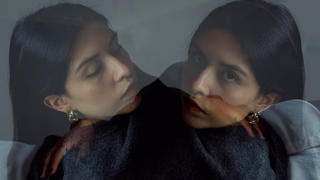

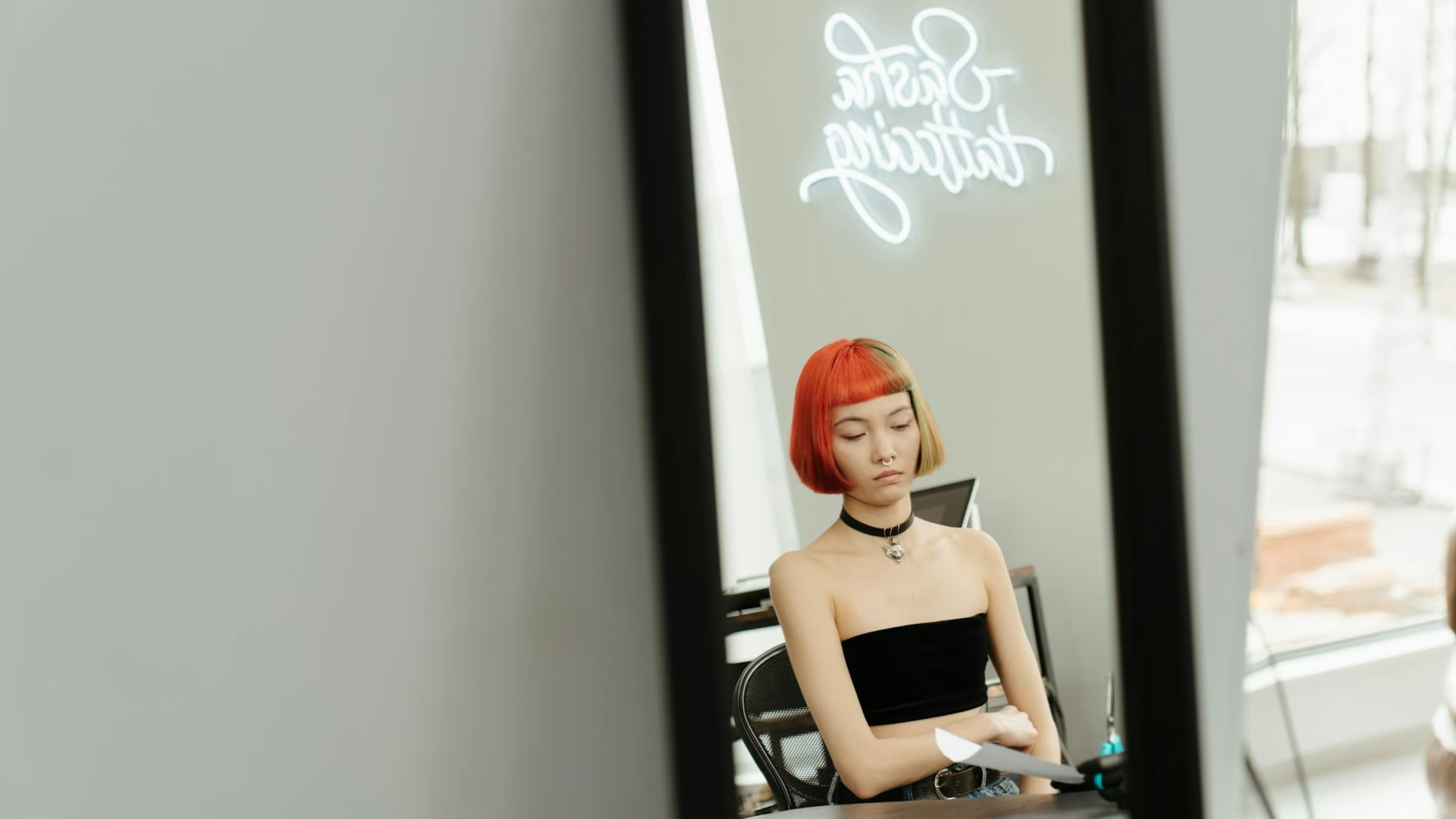
Somewhere in the middle of an ordinary evening, a woman is washing dishes. The window above the sink has gone dark with night, and without meaning to, she looks up. For a half-second - just a half-second - she does not recognize the person looking back. She sees a stranger: tired, softer than expected, a coat of shadows under the eyes. Then the gears click. The stranger becomes her again. She smooths something, not her expression exactly, more like the air around it, and goes back to the dishes.
This is the painting. Not the one on the wall in the Museum of Modern Art, though that one has been there since 1932, the lilac of her cheek humming against the canary yellow of her hair, the dark twin in the glass watching back with green-violet sorrow. The painting is also this: a woman in a kitchen, caught between two selves in the span of a breath, choosing neither and continuing anyway.
Picasso’s girl reaches toward her reflection with one long, careful arm. There is no horror in the gesture. No flinching. Only the tender, unhurried motion of someone placing a palm against a cold window during rain - knowing what they will find on the other side, meeting it regardless. The bright woman and the shadowed one are not at war. They are in conversation. They have always been in conversation.
We are taught, early and often, that mirrors deceive. That the face in the glass is a pale facsimile, reversed and flattened, an impostor wearing our features. But what if the opposite is sometimes true? What if the stranger in the dark window above the sink - the one we don’t quite recognize - is not the lie but the closer truth? Or what if she is the version of ourselves that lives in someone else’s eyes, lit differently, loved into a kind of luminosity we cannot see from the inside?
The painting refuses to answer. That refusal is its whole gift.
To be a person is to live forever in the gap between the face you wear and the face that wears you.
And perhaps the most honest thing we can do - the only honest thing - is what that girl does with her outstretched arm. Not to choose between the radiant self and the worn one. Not to solve the long riddle of which face is the original. But to reach toward the glass with something like gentleness, and say: yes, you too. I see you. Both of you. Keep going.