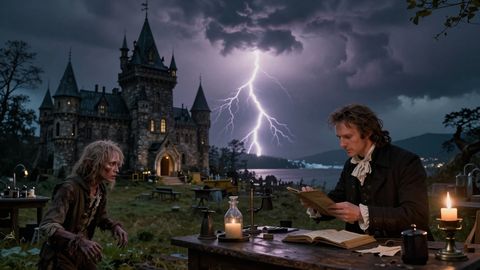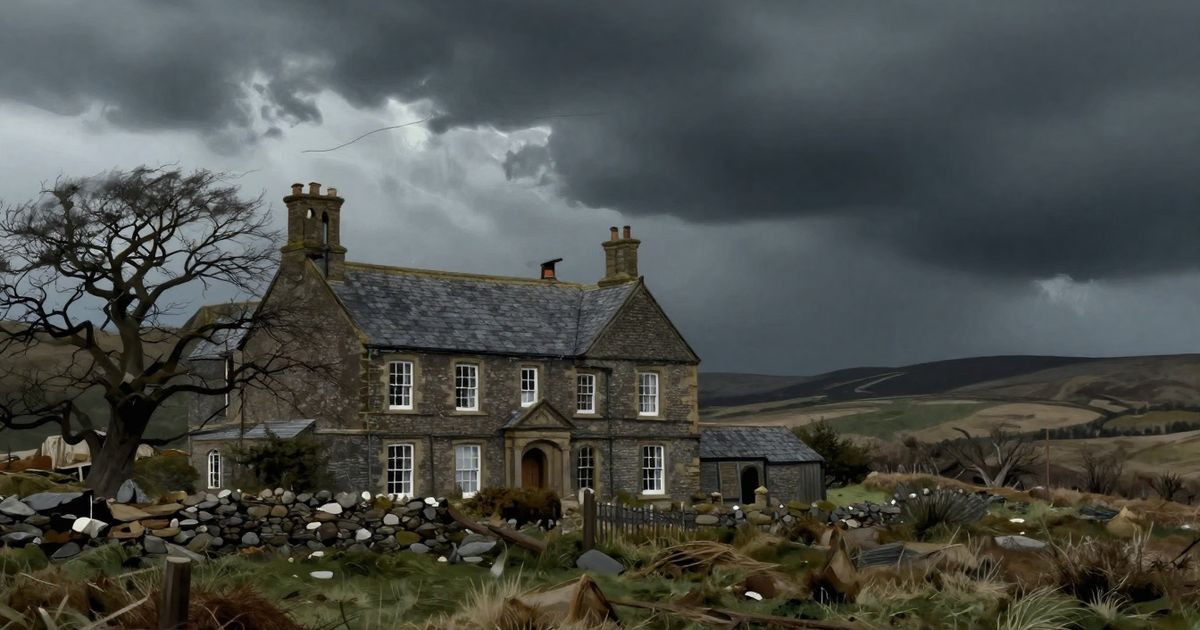

The snow has made a prisoner of him. Lockwood, the narrator, lies in a shuttered bed inside Wuthering Heights, in a room that feels less like a guest chamber than a held breath, and he reaches, half-dreaming, toward the tapping at the glass. His fingers find the latch. The latch finds the cold. And then, through the broken pane, something finds him back - a hand, small and ice-pale, the hand of a child who has been knocking on this window for twenty years.
“Let me in,” the voice says. “Let me in.”
What Lockwood does next is the thing the novel never lets you forget. He does not recoil immediately, not in the first stunned second. He grips the wrist. He feels the grip returned. And then, in panic, he drags the small arm across the broken glass, back and forth, until the hold releases and he can stuff the wound with books and press himself against the far wall, heart slamming, mouth open, while the voice goes on weeping outside in the dark and the snow.
He is a reasonable man, Lockwood. That is his tragedy. He does the reasonable thing. He pulls his hand away.
Emily Brontë wrote this scene at a kitchen table in a Yorkshire parsonage, the wind making its own argument outside, the graveyard close enough to see from the window. She was twenty-nine. She had spent most of her life learning the vocabulary of weather and grief and the particular silence of people who feel too much to speak easily. She put all of it into a ghost’s plea at a frozen window, and somehow it has been reaching through the glass ever since.
The question is not whether you hear the voice. It is what you do when you feel the grip tighten.
There is a version of Lockwood inside most of us - the part that has felt an old claim reassert itself at three in the morning, some grief or love or longing that we were certain we had finished with, pressing its cold face against the glass of a life we built carefully to keep such things outside. We do not always pull our hand away out of cruelty. Sometimes it is simply that we have arranged ourselves around the absence, and to open the window would mean rearranging everything.
Brontë does not judge Lockwood. She does not quite judge anyone in this novel, which is part of what disturbed her era and still unsettles ours. She only shows us what the voice outside already knows - that some bonds are not dissolved by distance or death or the perfectly rational decision to move on. They persist the way the moors persist, indifferent to our preferences, older than our explanations.
You may not have a name for whatever it is that knocks. That is fine. It knows yours.