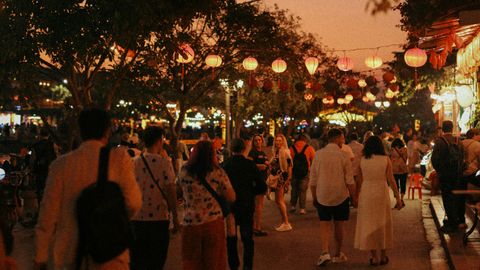
Your daily commute isn’t wasted time. It’s a third space where you transition between identities, creating unexpected opportunities for authentic connection and personal transformation that neither home nor work can provide.
Commuting as Modern Pilgrimage
Medieval pilgrims walked between identities, leaving behind ordinary selves to become seekers and travelers. Modern commuters do the same thing every day, though we rarely recognize it. That person sipping coffee on the train isn’t just getting to work. They’re shedding their home self and preparing their work self for the day ahead.
The average American spends roughly 54 minutes daily commuting. That’s over 200 hours yearly suspended in this transitional state. Rather than viewing this as time lost, we can recognize it as a psychological buffer zone, space between the demands of different life realms.
Rituals emerge organically within this space. The same seat on the bus. The same coffee stop. The same playlist queued up as the car starts. These aren’t mere habits. They’re structure for identity shifts, reducing cognitive load so our minds can prepare for the role changes ahead.
Reclaiming Your Third Space
Understanding the commute’s potential requires intention. Consider designating commute segments for specific purposes: the first fifteen minutes for decompression from home, the middle stretch for learning or entertainment, and the final portion for mental preparation for work. Research suggests structured transitions improve focus and reduce stress upon arrival.
Content choices matter too. Curating threshold content like podcasts, audiobooks, or music that exists outside both work and home contexts reinforces the liminal nature of the space. This isn’t your work reading or your household background noise. It’s something that belongs uniquely to the journey itself.
Try mobile meditation. Rather than escaping into screens, observe fellow travelers. Notice architectural details you’ve passed a thousand times. Engage sensory awareness of the journey itself. The space between destinations isn’t emptiness. It’s where transformation happens, if we’re present enough to notice.