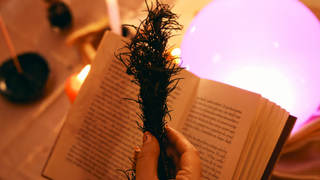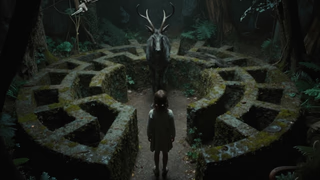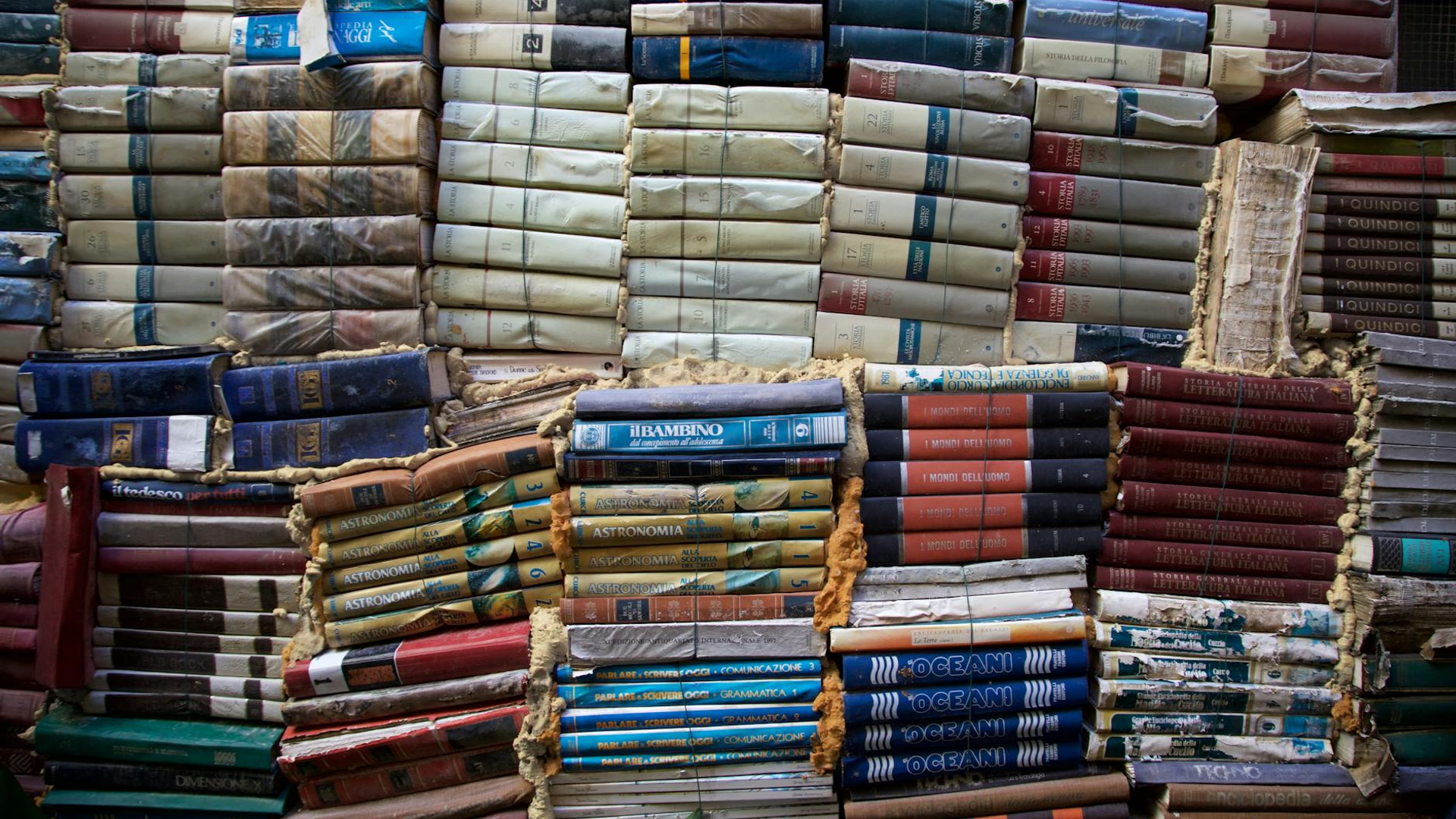
She has not been brought here. No one is coming to take her home. A small girl sits cross-legged on the library carpet with a book open across her knees, a book almost too heavy for her lap, and she turns a page with the particular care of someone who understands that what she is holding is serious. The librarian watches from behind the desk, the way one watches weather change, not to intervene but to witness. Outside, the ordinary world continues its ordinary cruelty: a father who calls her stupid, a mother who cannot see her, a house where the television is always louder than she is. But here the proportions are different. Here the shelves rise to the ceiling and every spine on every shelf is a door left slightly open, and she is small enough, and quiet enough, and hungry enough, to slip through every one of them.
This is not escape. That is the thing people get wrong about children and libraries and books that are too heavy for small laps. She is not hiding from her life. She is measuring it. She is standing the world up against something truer and finding the world wanting, and this finding is not despair but the opposite of despair. It is the beginning of knowing what to correct. She turns another page. The afternoon light falls across the carpet in long rectangles. The library is not a refuge from her life but a correction to it, a place where the proportions of the world finally match the proportions of her mind. She does not know yet what she will do with this knowledge. She only knows that it is hers, and that no one, not even the people who made her, can take it back.
Most of us can name a room like this. Not necessarily a library. Perhaps a corner of a classroom, or the back seat of a car with a book held up to the window light, or the specific silence of a Saturday morning when the house was still and something on a page said: yes, this, here, this is the shape of what you are. We carried those rooms inside us long after we left them. We still carry them.
What Matilda knows, at six, is something many adults spend decades learning and some never learn at all: that the voices telling you that you are too much, too strange, too curious, too loud, are not reporting facts. They are making errors. And errors, unlike laws of physics, can be corrected. The correction is rarely dramatic. It is usually small and specific and sometimes funny. A newt in a water jug. A book chosen carefully from a high shelf. A teacher who looks up at exactly the right moment and sees, without flinching, exactly who is there.
Somewhere inside each of us, the child is still on the carpet. Still reading. Still quietly taking the measure of things.