
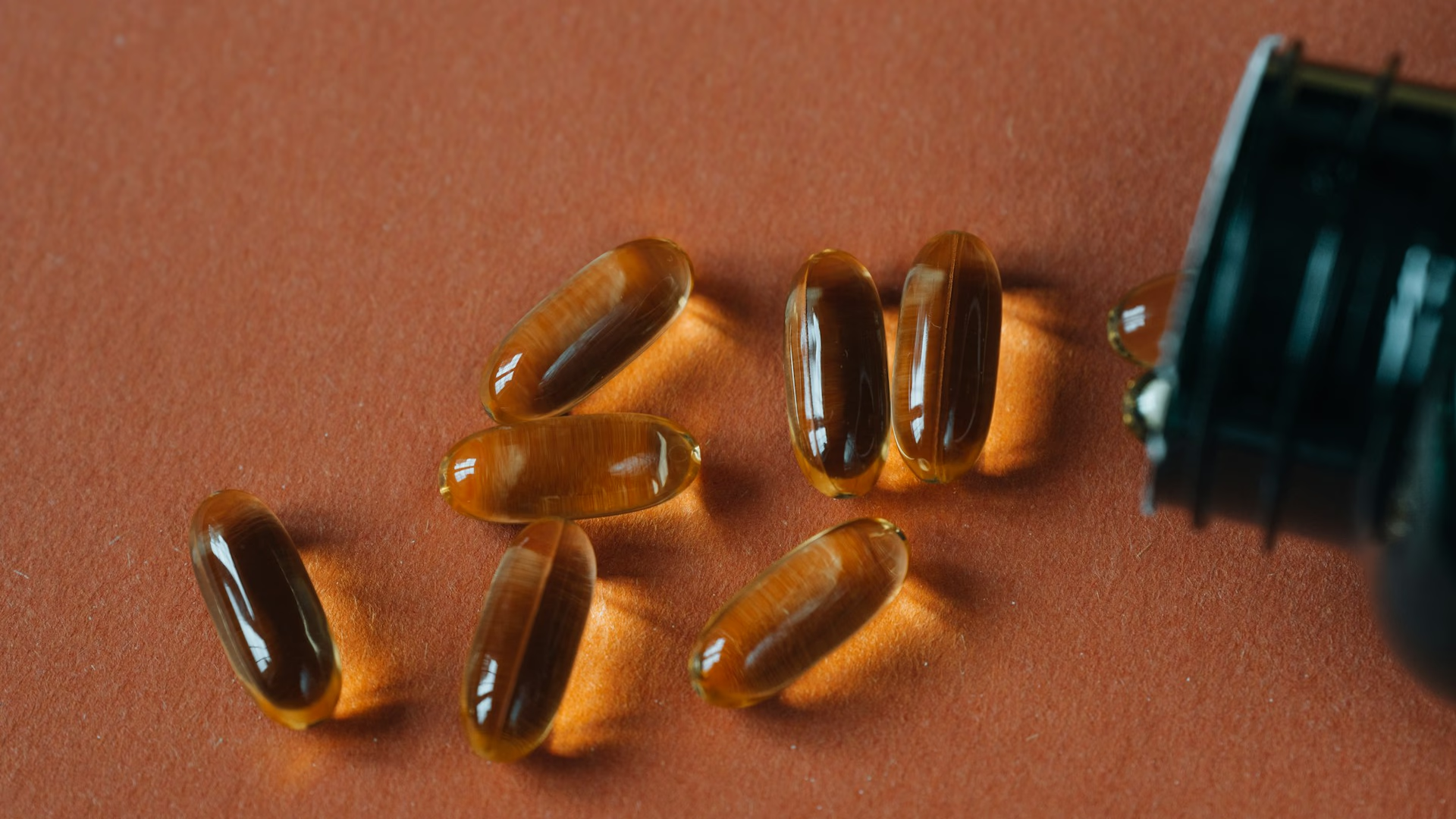
Probiotic supplements now promise calmer nerves, lighter moods, and sharper thinking. The marketing leans on something real: the connection between the gut and the brain is genuine, and researchers are taking it seriously. The trouble is the distance between a lab finding and a label claim. That distance is far longer than most headlines suggest.
The Hype Outpaces the Evidence
Much of the early excitement about the gut-brain axis, the two-way communication network linking the digestive system and the brain, came from animal studies.
 Photo by
 Researchers raised mice in sterile conditions to control their microbes precisely. Those experiments are valuable for mapping biological mechanisms, but a lab mouse is not a person living an ordinary life, and findings rarely transfer cleanly between the two.
The human research that does exist shares a common limitation. Most studies to date are small, often fewer than 100 participants, cross-sectional, and built on associations rather than causes [Frontiers]. In plain terms, they can show that two things appear together, such as a particular gut profile and low mood, without showing that one produced the other. Diet, medication, sleep, and stress all leave fingerprints on the microbiome, so a difference seen in people with depression could reflect any of those factors instead.
When a supplement brand cites a preliminary result as settled fact, it quietly skips over all of that uncertainty.
What the Studies Actually Show
None of this means the link is imaginary.
 Photo by
 Careful human research does find modest, real patterns. The strongest signal involves microbiome diversity, meaning the sheer variety of bacterial species living in the gut. People with more diverse microbiomes tend to report lower anxiety and depression, though the effect size is small and not something a single test could act on.
The biological pathways are also becoming clearer. Researchers have identified a stress route in which intestinal permeability and inflammation connect shifts in gut bacteria to mental health outcomes [Frontiers]. One commonly cited point is that the gut produces a large share of the body’s serotonin. That gut-made serotonin does not cross directly into the brain, so the relationship is more layered than a simple chemical handoff.
“What we’re seeing is not causation, but an association between cognitive impairment and disruptions in both gut and oral microbiomes.” (UT Health San Antonio)
That caution is the honest summary of where the field stands. Real associations, complex machinery, and a long way still to map [PDXScholar].
The Probiotic Supplement Gap
This is where the gap matters most practically.
 Photo by
 Commercial probiotics are sold as a shortcut to the benefits seen in diversity studies, but they run into three problems that marketing language tends to smooth over.
-
Strain mismatch: the bacteria in most capsules are not the same species flagged in mood research, so the advertised link was never about the strain in the bottle.
-
Colonization: swallowed bacteria often pass through within days without settling in or changing your baseline microbiome.
-
Trial quality: studies on probiotics for mood are usually small and short, with inconsistent dosing, making results hard to trust.
A supplement can be perfectly safe and still do very little of what its packaging implies. That is not a scandal. It is a reminder that a real biological relationship does not guarantee a working product.
One Practice the Evidence Supports
If diversity is the metric most consistently tied to better mood, the question becomes how to build it.
 Photo by
 The clearest answer is also the least glamorous: feed the bacteria you already have. Dietary fiber from plants is what those microbes live on, and variety in plants tends to grow variety in the gut.
That points to one doable target. Aim for roughly 30 different plant foods a week, counting each vegetable, fruit, legume, nut, seed, herb, and whole grain as one. The number sounds large until you see how it adds up: a handful of mixed nuts, a soup with five vegetables, a different grain at dinner.
The approach is additive, not punishing. Rather than overhauling your meals, try adding one new plant food each day for a week and let the list build on its own. When the next capsule promises a calmer mind, you can set it down and reach instead for something you can see and chew. The evidence does not promise this will lift a mood on its own, and it is honest to say so. What it does support is variety: the slow widening of the small ecosystem you carry with you, fed one plant at a time.


