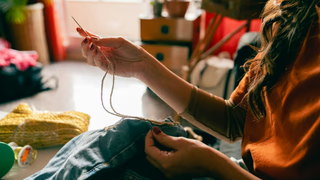


The elbow of the jacket had gone through, a soft hole the size of a coin. The fix was a square of navy canvas stitched down with orange thread, in rows that ran slightly crooked, the way hand sewing looks when someone learns on the item they actually wear. A few years ago that jacket would have gone straight into a donation bag, quietly replaced by something new and unremarkable. Now it gets photographed, sleeve turned toward the light, and shared the way a new purchase used to be. That shift, from hiding a repair to showing it off, says a lot about how a generation is deciding what its money is for.
The Repaired Jacket Moment
Visible mending, the practice of repairing something in a way that shows rather than hides the fix, covers patches in contrasting fabric, darning in a colour that stands out, rows of running stitch across a knee.
 Photo by
 The point is that the repair is meant to be seen.
What it replaces matters more than the technique itself. A patch used to read as a shortage of money, something people apologised for at the office. Framed as a style choice, the same patch reads as care and attention. Owners often describe the mended piece as the one they reach for most, because it now carries a small record of their own hands.
The numbers back this up. In Ireland, 77 percent of 18 to 24-year-olds said they had repaired clothes in the past 18 months [Primark Cares]. Globally, 41 percent of consumers said they choose to repair broken items rather than buy new [Euromonitor].
Why Fixing Signals a Cultural Shift
Repair is competing for money that used to go straight to a replacement haul.
 Photo by
 A cobbler, a tailor, a ten dollar mending kit: these are now line items in a clothing budget rather than a last resort people grudgingly accept.
Price shapes the decision more than principle does. Sixty nine percent of consumers said they’re more likely to repair a garment if it was expensive to begin with [Primark Cares]. That points to something practical under the aesthetics: when an item cost real money, fixing it feels like protecting an investment. The willingness stretches further too. Over 60 percent of Gen Z and Millennials said they’re increasingly open to paying a premium for more sustainable products [Mastercard].
There’s an honest gap in all this enthusiasm, though. Gen Z respondents were the least likely generational group to know how to do basic clothing repairs, and more than a third said they’d keep clothes longer if they had the skills [Levi Strauss]. Wanting to mend and knowing how to mend are two different things, which is why a wobbly first patch is usually part of the story. For a general reader, the takeaway is simple: this trend has less to do with craft mastery and more to do with a shift in what feels worth spending on.
Turning Mending Into a Routine
The habit tends to start with one item rather than a full wardrobe overhaul.
 Photo by
 A few ways in that tend to stick:
-
Pick a single staple worn weekly, jeans, boots, a bag, and take it to a local tailor or cobbler instead of replacing it.
-
Keep a basic kit at home: needle, thread in a few colours, iron on patches. Loose buttons and small tears are easier to handle before they spread.
-
Treat upkeep as a planned monthly expense, the same way a new purchase gets planned, rather than an emergency cost.
What tends not to work is buying an elaborate sewing setup and waiting for inspiration to strike. Kits bought in a burst of good intentions tend to sit in a drawer. A messy repair done in twenty minutes on the couch, half watching something else, is the one that actually gets finished and worn.
It’s also worth being honest that not everything deserves saving. Thin fast fashion knits often come apart faster than a mend can hold. The pieces that reward repair are the ones built well enough to have a second life.
That jacket with the orange stitching will keep going for years, and every wash will make the patch look a little more like it belongs. What changed isn’t the fabric, it’s the reading of it: a visible repair used to say something was missing, and now it says someone decided this thing was worth keeping and spent an evening proving it. Next time a coin sized hole shows up in a sleeve, the interesting question isn’t where to buy a replacement. It’s whether the thread should match or stand out.