
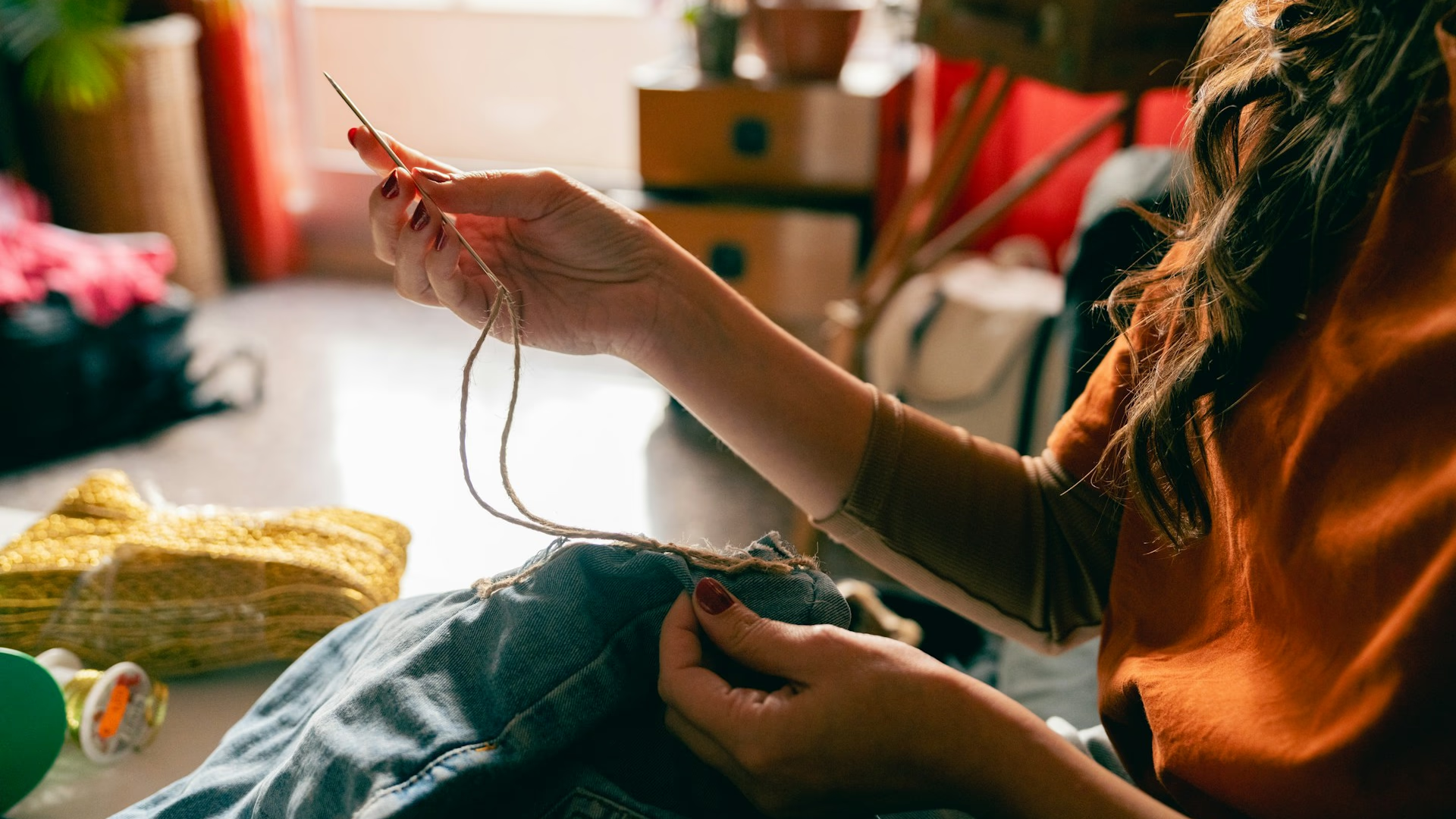
A fraying seam used to mean a trip to the bin. Now it means a trip back to the brand that sold you the jacket. Mentions of reuse and repair grew 16% in 2025 compared to 2024 [Fortune], a surge that reflects something deeper than a passing trend. As spring 2026 approaches, brands across the spectrum are responding to consumer demand for durability, rolling out dedicated mending programs and rethinking how garments are designed from the first stitch. Whether your wardrobe leans toward investment pieces or budget-friendly staples, this movement has something to offer.
The Jacket That Started It All
Patagonia’s 『Don’t Buy This Jacket』 campaign, now over a decade old, planted a radical idea in mainstream fashion: that a brand could build loyalty by encouraging people to buy less.
 Photo by
 The worn, patched outdoor jacket became an unlikely style symbol. Visible mending carried its own kind of effortless cool.
That cultural moment reframed wear-and-tear as heritage rather than failure. A repaired sleeve wasn’t a flaw in the silhouette; it was a story. Brands that leaned into this narrative discovered something powerful: customers who repaired stayed customers longer. The emotional texture of a well-loved garment, it turned out, was worth more than the novelty of a new one.
Major labels took notice. What began as a niche outdoor ethos has migrated into mid-range and premium fashion, where extending a garment’s life is now treated as a brand statement, not a concession.
Brands Betting on Longer Lifespans
The numbers behind this shift are hard to ignore.
 Photo by
 The tailoring and alteration services market is anticipated to reach $12.41 billion by 2030, growing at a CAGR of 4.8% [The Business]. That growth isn’t accidental. It’s being fueled by brands building repair into their business models.
Several labels have launched in-house mending programs or partnered with local tailors to offer post-purchase care. Some are going further, designing garments with repairability in mind:
-
Modular components that can be swapped without replacing the whole piece
-
Replaceable linings and accessible stitching for easy home fixes
-
Care guides shipped with every purchase, treating maintenance as part of the product experience
These aren’t just sustainability gestures. Brands extending product lifespans are seeing stronger post-purchase relationships and reduced return rates. Repair infrastructure is becoming a retention tool, a way to stay relevant in a customer’s wardrobe long after the initial sale.
Why Consumers Are Choosing Repair
Rising clothing costs have made the math simple.
 Photo by
 Repairing a quality jacket or a pair of well-constructed trousers often costs a fraction of replacing them, especially for investment pieces where the proportion and fit were chosen with care.
But motivation runs deeper than the wallet. Only 10% of people currently feel confident repairing their own clothes, while 60% seek sustainable retail options [The Business]. That gap between intention and skill is exactly where brand-led repair services step in, bridging the desire for sustainability with accessible, practical solutions.
Younger shoppers increasingly associate repaired clothing with authenticity and personal narrative. A patched denim jacket or a re-soled boot carries texture that fast fashion simply can’t replicate. For many, choosing repair is both a budget-conscious decision and a values-driven one. Those two impulses reinforce each other.
The Future Wardrobe Looks Different
The wardrobe taking shape is smaller, better-made, and built around maintenance.
 Photo by
 Capsule wardrobes and quality-over-quantity thinking are accelerating demand for garments genuinely worth repairing, pieces where the silhouette holds up season after season.
Brands piloting regenerative fiber projects have tripled since 2023 [Quality Woven], signaling that the commitment to longevity extends beyond repair into how materials are sourced and constructed. The entire lifecycle is being reconsidered.
Some European and North American labels are now piloting subscription-style care models, with ongoing repair and maintenance bundled into the purchase. The brand becomes a lifetime partner in your wardrobe, not a seasonal vendor. Whether you’re curating a minimalist closet or simply want your favorite coat to last another winter, these ecosystems are designed to meet you where you are.
One Stitch at a Time
Community mending workshops and brand-hosted repair events are growing in urban fashion markets globally, turning repair literacy into a shared social experience rather than a solitary chore.
 Photo by
 The skill of knowing how to mend, patch, and care for garments is re-emerging as something worth celebrating.
Legislation is catching up, too. EU textile regulations are pushing extended producer responsibility, which could soon make brand-led repair programs less of a differentiator and more of a compliance requirement. Brands acting early stand to lead rather than scramble.
The question is no longer whether repair belongs in fashion. It does. The real shift is in how quickly durability becomes the ultimate luxury signal, where the most aspirational garment in your closet is the one that’s been loved, worn, and thoughtfully maintained.
Fashion’s 16% repair surge reflects a deeper rethinking of what ownership means. Longevity is becoming a competitive advantage, and the garments worth keeping are the ones worth building better in the first place. That fraying seam from the opening? Repair is likely the most stylish option available. Kind to your wardrobe, kind to your wallet. The most sustainable garment, after all, is always the one you already own.


