
The tie is gone. The hoodie is fading. As employers across the US, UK, Australia, and Japan finalize their return-to-office policies, dress code language is being rewritten in real time. Menswear is quietly following.
New policy guides and retailer data from 2026 show a clear pattern: offices are abandoning both the rigid suit and the anything-goes hoodie in favor of a deliberate middle ground. The result is less a trend than a recalibration. It rewards intentionality over conformity.
How Office Dress Codes Changed in 2026
Workplace dress expectations have moved in three concrete directions this year.
 Photo by
 None of them point toward extremes.
First, rigid formal codes have largely retreated. A 2026 menswear guide describes most Australian workplaces as sitting “between smart casual and business casual,” with full suits reserved for specific occasions [Man of Many]. Even Tokyo, long synonymous with conservative office dress, has remodeled its Cool Biz campaign to explicitly encourage shorts and T-shirts during summer months [Fortune].
Second, casualwear-only cultures are quietly retreating in the opposite direction. A 2026 college employee policy now explicitly bans shorts, sleepwear, and rubber flip-flops while endorsing business casual as the baseline [SJR State]. Employers are signaling that appearance still carries weight, even as the suit fades.
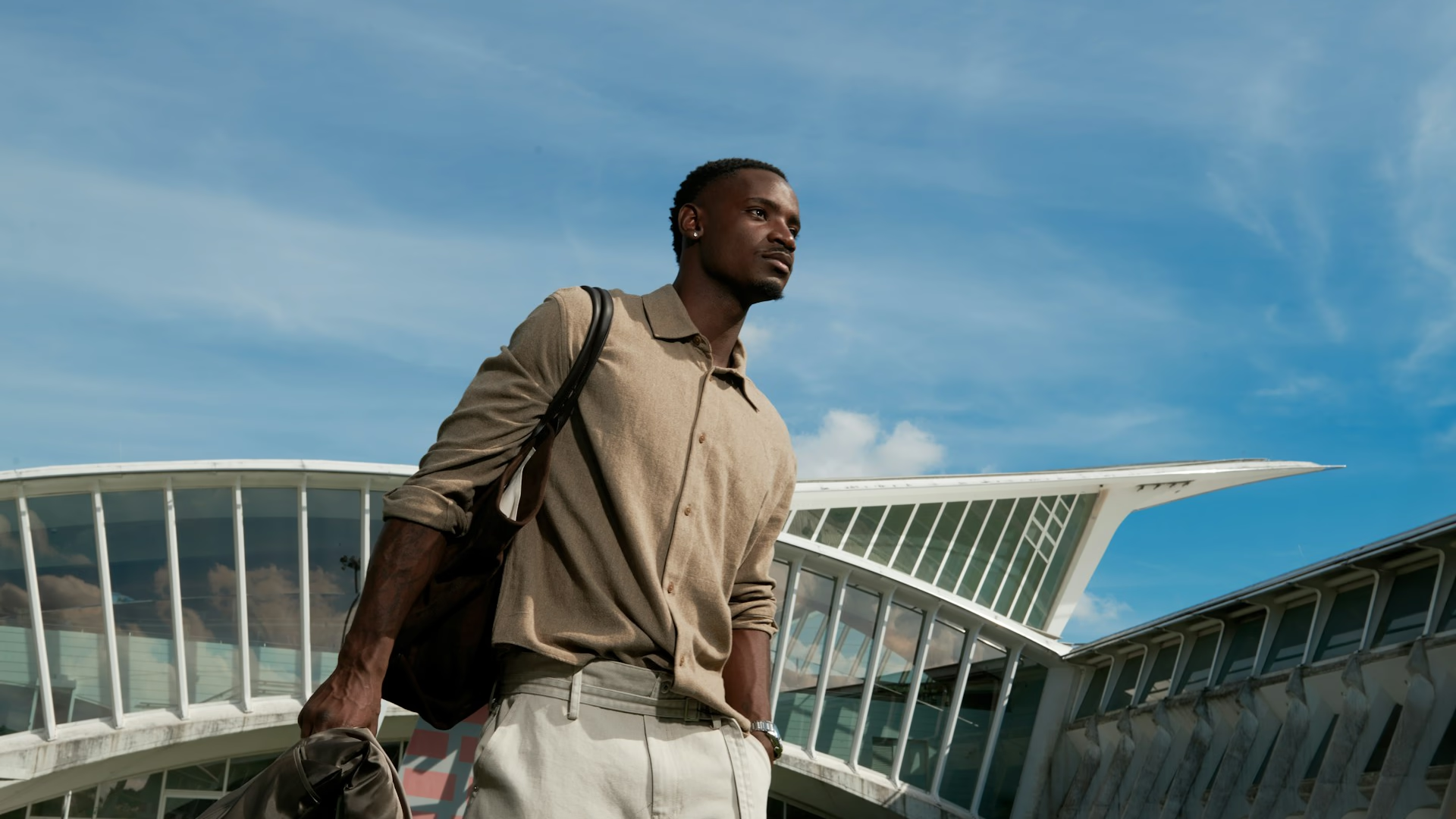
Third, the new default is elevated casual: tailored fits, considered fabrics, and outfits that read as curated without being stiff.
“The universal office dress code is dead. Instead, get good at reading the room.” — Man of Many [Man of Many]
Industries Driving the Menswear Style Shift
Three sectors are setting the pace, each contributing a distinct texture to the broader conversation.
 Photo by
 -
Tech: Once synonymous with hoodies and logo tees, tech offices are nudging employees toward more presentable silhouettes as in-person days return. An April 2026 return-to-office tracker found that many workers would accept more office time in exchange for looser dress rules, a sign that employers are tightening, not loosening, their visual standards [Archie App].
-
Finance and consulting: Historically rigid, these industries are softening toward tailored trousers and open-collar shirts rather than full suits. The proportion stays sharp; the formality eases.
-
Creative and media: Trading streetwear maximalism for quieter, tonal dressing. Less logo, more craft.
Industries that once dressed in opposition are landing in roughly the same register. The convergence is striking.
What Men Should Actually Wear Now
 Photo by
 Budgets vary, and so do offices. Three wardrobe moves cover most 2026 scenarios.
- An unstructured blazer in a neutral tone. It elevates almost any outfit without the formality of a suit jacket, and options exist across price points, from high-street labels to premium tailoring.
- Tailored trousers in wool-blend or technical fabrics. They offer the comfort of chinos with a sharper silhouette, pairing as easily with a knit polo as with a button-down.
- Considered footwear: leather loafers or clean minimalist sneakers rather than chunky athletic shoes. Footwear is often the fastest single shift from casual to office-appropriate.
One 2026 back-to-office guide even frames over-the-calf socks as a foundational detail, arguing that small choices increasingly carry the outfit [Pierre Henry]. Fit, as Man of Many puts it, remains everything: “A well-fitting t-shirt and chinos will beat an ill-fitting suit every single time” [Man of Many].
Office dress codes in 2026 are reshaping menswear not through dramatic trends but through quiet recalibration. Tech, finance, and creative industries are converging on the same message: look intentional, not uniform. For men navigating hybrid schedules and shifting policies, a small, curated wardrobe does most of the work. The best-dressed man in the office isn’t trying harder. He’s just paying closer attention.


