Riiven Sparks
Cardiac Pacemaker
A wearable box was built to steady hearts for a few days after surgery. It became the blueprint for a machine meant to live inside the body for years.
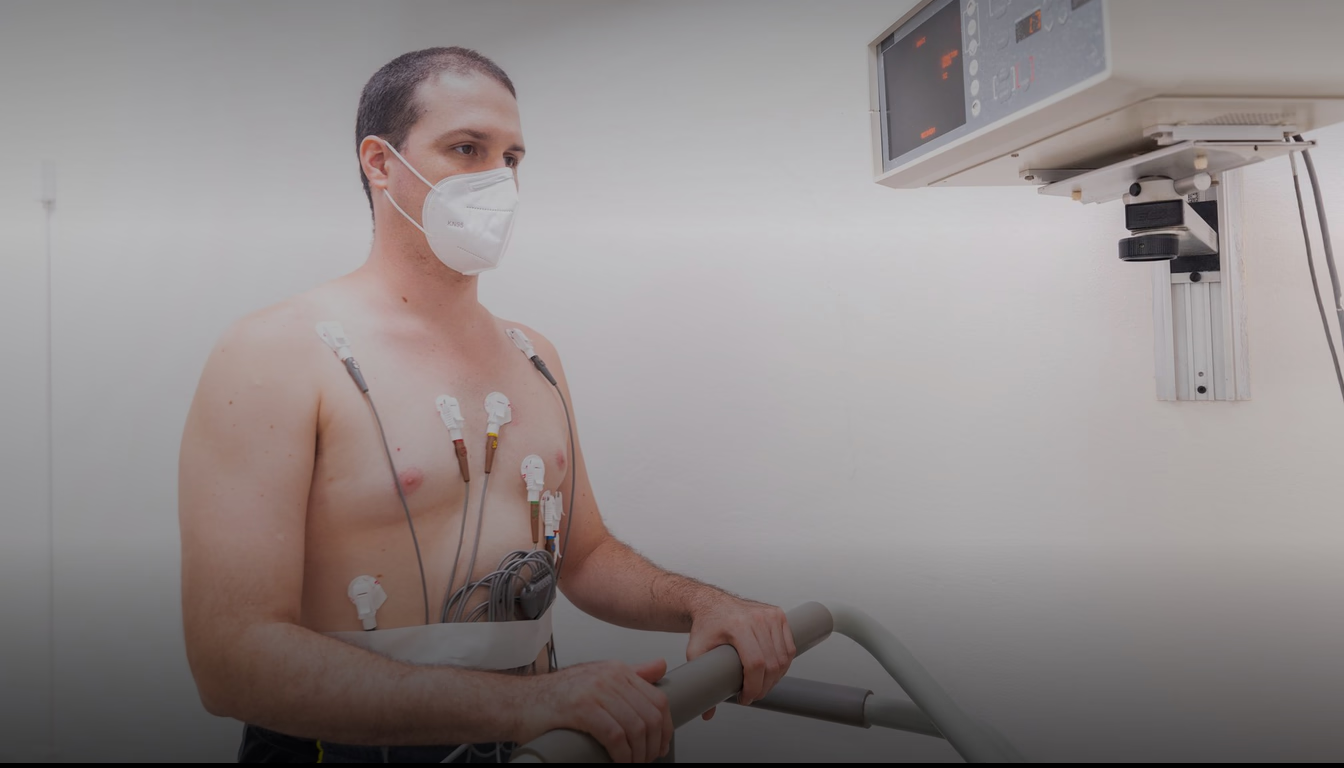
In 1958, Earl Bakken built a small box a patient could wear on the chest. It was meant to be temporary. Children coming out of open heart surgery sometimes developed heart rate irregularities for a few days, and the box would carry them through that stretch until the heart settled on its own. Bakken was solving a short problem. The device that came out of his shop, the Medtronic 5800, was never designed to be a permanent answer to anything. It worked anyway. That was the complication.
The pivot
Intent
Treat short term post surgery arrhythmia
Outcome
A permanent implant that paces hearts for years
Open heart surgery in the 1950s left a specific gap. Surgeons could repair a defect and close the chest, then watch the heart lose its rhythm in recovery. The trouble was often self limiting, resolving within days on its own. But a heart that beats too slowly for a few days is still a heart that can kill you in those days. What was needed was a bridge. Something to hold the beat steady until the tissue healed and the natural pacing came back.
Bakken's answer, the Medtronic 5800, was a wearable external pacemaker. The Smithsonian's National Museum of American History describes it plainly: it was created to treat short term heart rate irregularities after open heart surgery, not to serve as a general long term cardiac pacing solution. The framing matters. Nobody was thinking in years. They were thinking in days. And yet the box did something that had not been done casually before. It proved that an electrical pulse from a manufactured device could reliably run a human heartbeat outside the operating room, on a patient who was awake, walking, going home eventually.
The same year, in Buffalo, a different line of work was closing on the other half of the problem. Wilson Greatbatch worked with Dr. William Chardack at the Buffalo VA hospital and Dr. Andrew Gage. In 1958 they implanted an electrode in a dog, connected to a pulse generator. The dog's heart followed the pulse. That experiment, as the VA's own history of the invention recounts, evolved into the first commercially produced implanted pacemaker. The temporary idea had found its permanent form. A box on the chest became a box under the skin.
The stopgap turned out to be the prototype. Not because anyone reframed it in a meeting, but because the thing it demonstrated was bigger than the thing it was for. Bakken's device answered a question about days, and the answer held for years.
A heartbeat is now something a machine can promise for a decade at a time, not a week.
Watch
The angle
Your temporary fix may be proving something larger than the problem it patched. Next time a stopgap works better than expected, ask whether you built a bridge or a destination.