Mirror Pattern
Fragility in Disguise
The systems you depend on look most reliable in the moment right before they fail, so a calm dashboard is not the same as a safe one.
Why do the systems that look most modern, optimized, and reliable often shatter hardest when a rare shock finally lands?
GRID
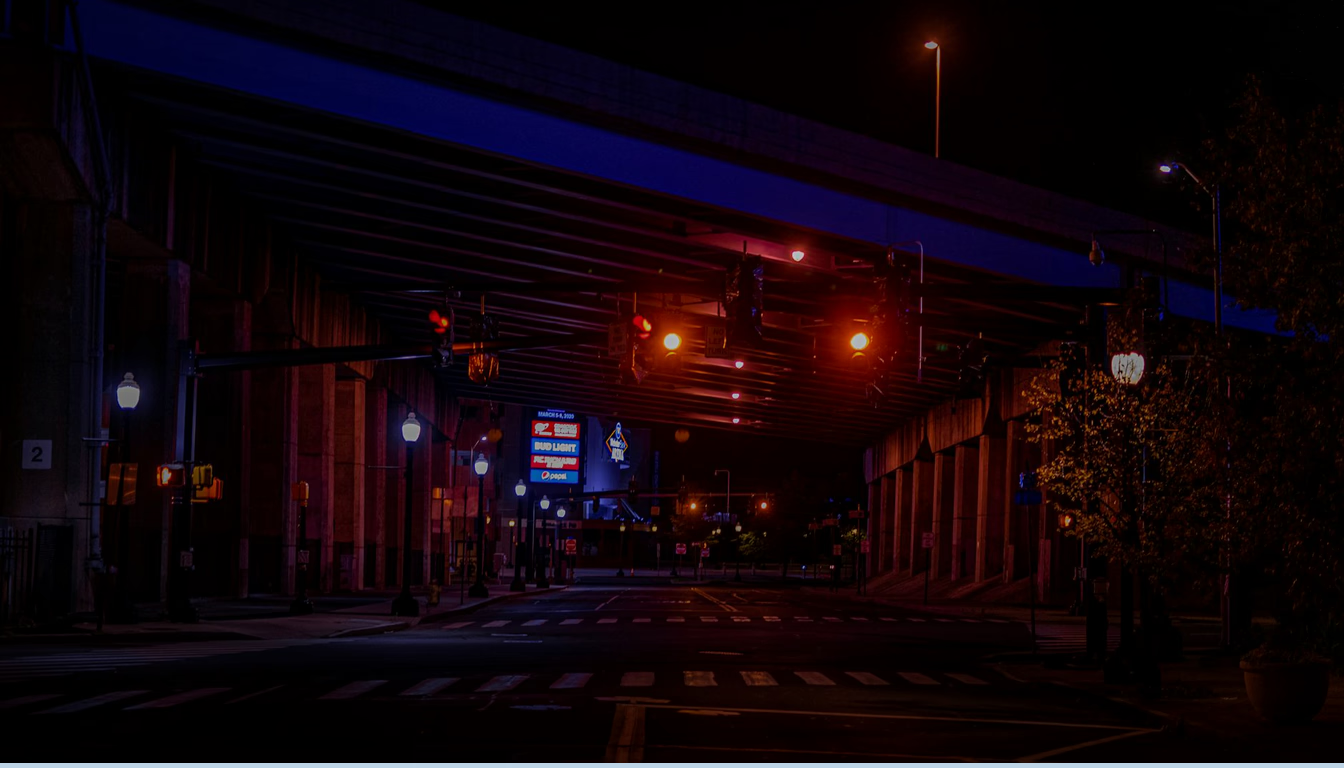
The lights stay on, so the system looks healthy.
Even while it looks reliable, the grid already loses the U.S. economy about $150 billion a year to outages.
ECOSYSTEMS
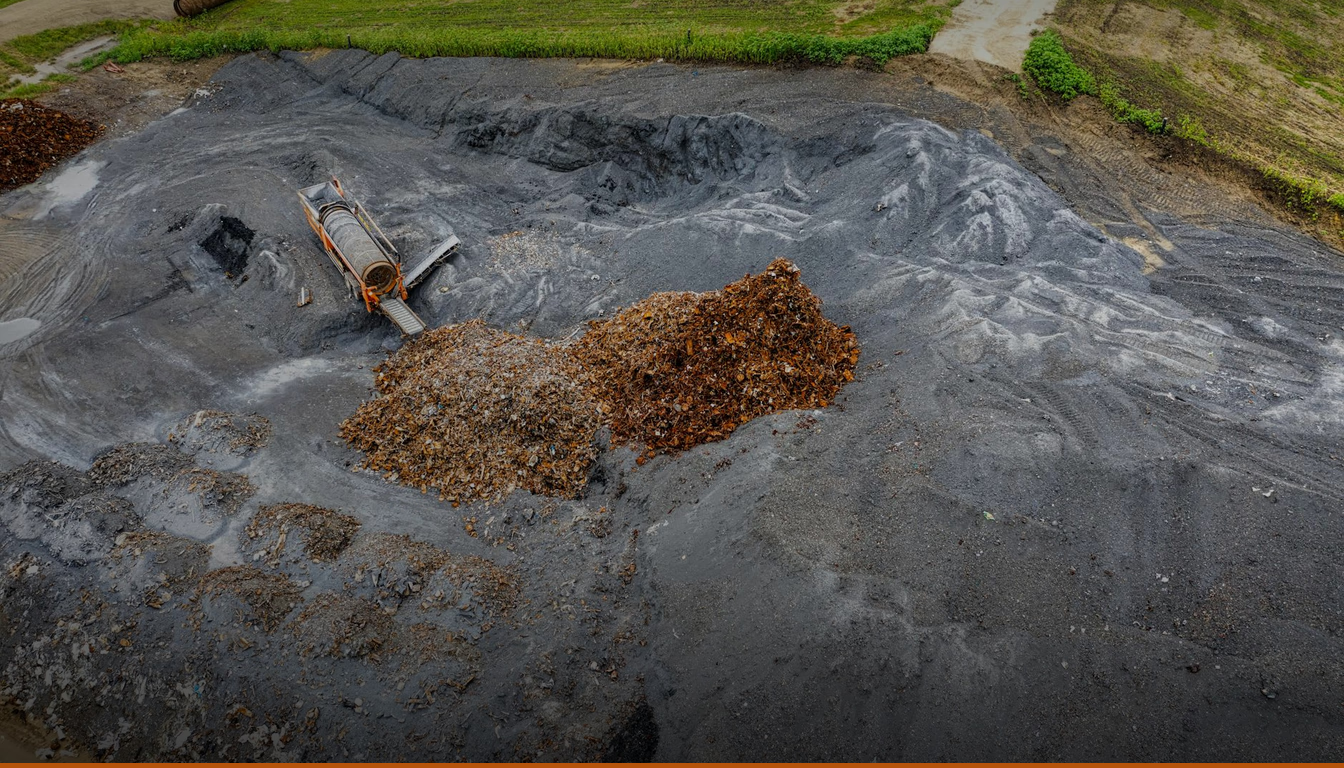
The landscape looks fine from a distance, yet the animals inside it are vanishing.
Monitored wildlife populations have fallen 69% on average even though the forests still look green.
Same pattern
Both systems wear a surface of stability while structural weakness accumulates underneath the metrics people watch.
GRID
Because that calm depends on lean inventories, wires, software, and weather quietly tie everything together.
Digitization, weather exposure, and demand all rise together, so more of the grid can fail at once.
ECOSYSTEMS
Once that decline sets in, species relationships are being rewired out of sight.
Faster temperature shifts, land use, and pollution speed up how quickly species replace one another.
Same pattern
Tight invisible coupling, electrical or ecological, turns local stress into network-wide vulnerability.
GRID
Once that coupling spreads, there's less backup than there used to be.
Spare capacity and redundancy shrink, leaving thinner reserve margins than the grid once carried.
ECOSYSTEMS
As that reshuffling drains the system's slack, too much fertilizer wipes out the variety that holds ecosystems together.
Nitrogen loading past about 80 kilograms per hectare a year collapses the diversity that keeps ecosystems stable.
Same pattern
Redundancy and biodiversity play the same role: slack that absorbs shocks until optimization quietly removes it.
GRID
Because those reserves are gone, one bad day takes down huge regions at once.
When one shock cascades, the outages cost the U.S. economy roughly $150 billion each year.
ECOSYSTEMS
Past a tipping point, the ecosystem snaps into a worse version of itself.
Most of that 69% average decline since 1970 lands fast after a tipping point breaks, not as slow steady erosion.
Same pattern
When buffers run out, both grids and ecosystems flip suddenly rather than degrading gracefully.
What this reveals