
The Moment
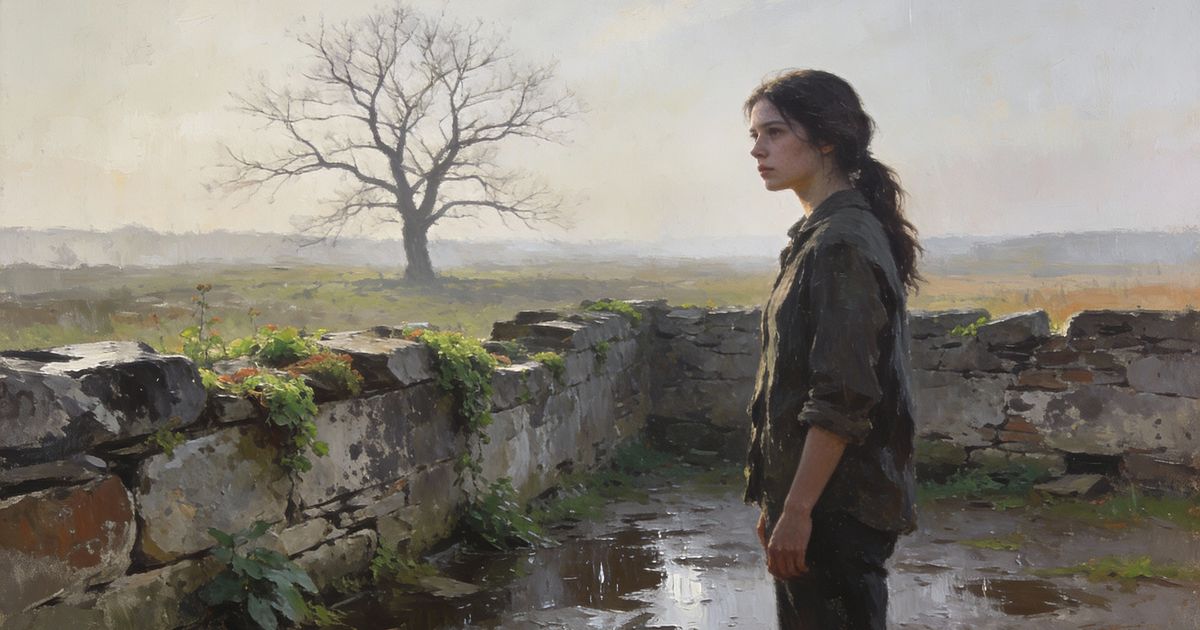
She stands before the canvas with a brush in her hand, mixing flesh tones for another stranger’s face. Lee Kyung is twenty years old and her brother is dead and she is painting American soldiers so they can send portraits home to mothers who still have sons. The irony is not lost on her. Nothing is lost on her anymore - that is part of the problem. She has become someone who sees everything with a clarity so sharp it cuts.
The soldier sitting across from her is young, maybe her age, with a cowlick that won’t stay down and freckles across his nose. He wants to look handsome. They all do. They want their mothers to see them strong and whole, not afraid, not complicit in the devastation of a country they cannot pronounce correctly. So she paints him that way. She gives him kind eyes and a straight jaw and she does not put in the canvas what she knows - that he too is far from home, that he too might not survive this, that they are both just trying to make it through another day in the wreckage.
Her hands know what to do even when her heart is somewhere else entirely. This is what she has learned about grief: it does not excuse you from the small necessities of living. You still need money for rice. You still need to show up when your shift begins. The war took her brother but it did not take her hunger or her rent or the rent or the hours that must somehow be filled between waking and sleeping. So she paints. She studies the planes of foreign faces. She creates something that did not exist before her hands touched the canvas, and this is not healing exactly, but it is something - a small act of continuation in a world that has taught her everything can end.
The Reflection
There is a particular kind of survival that no one prepares us for - the kind that looks like ordinary life. We expect grief to be dramatic, to bring us to our knees, to stop time. And sometimes it does. But more often, it asks us to keep moving through the mundane details of existence even when everything feels impossible. We answer emails. We make dinner. We show up to work and perform tasks that seem absurd in the face of what we have lost.
This is not weakness. This is not denial. This is the quiet accumulation of moments that eventually becomes a life rebuilt from fragments. The work itself becomes a kind of witnessing - not of what we have lost, but of what persists. Our hands still know their tasks. Our bodies still move through space. And somewhere in the repetition of small acts, in the attention we pay to things outside our own pain, something shifts.
Maybe we do not survive by grand gestures of recovery. Maybe we survive by showing up to paint one more portrait, to cook one more meal, to take one more breath. The naked tree does not decide to endure winter. It simply stands there, stripped of everything, until the season changes. And perhaps that is all we can do too - keep standing, keep working, keep witnessing, until we look up one day and realize we have made it through.