A Boy Hiding in a Box
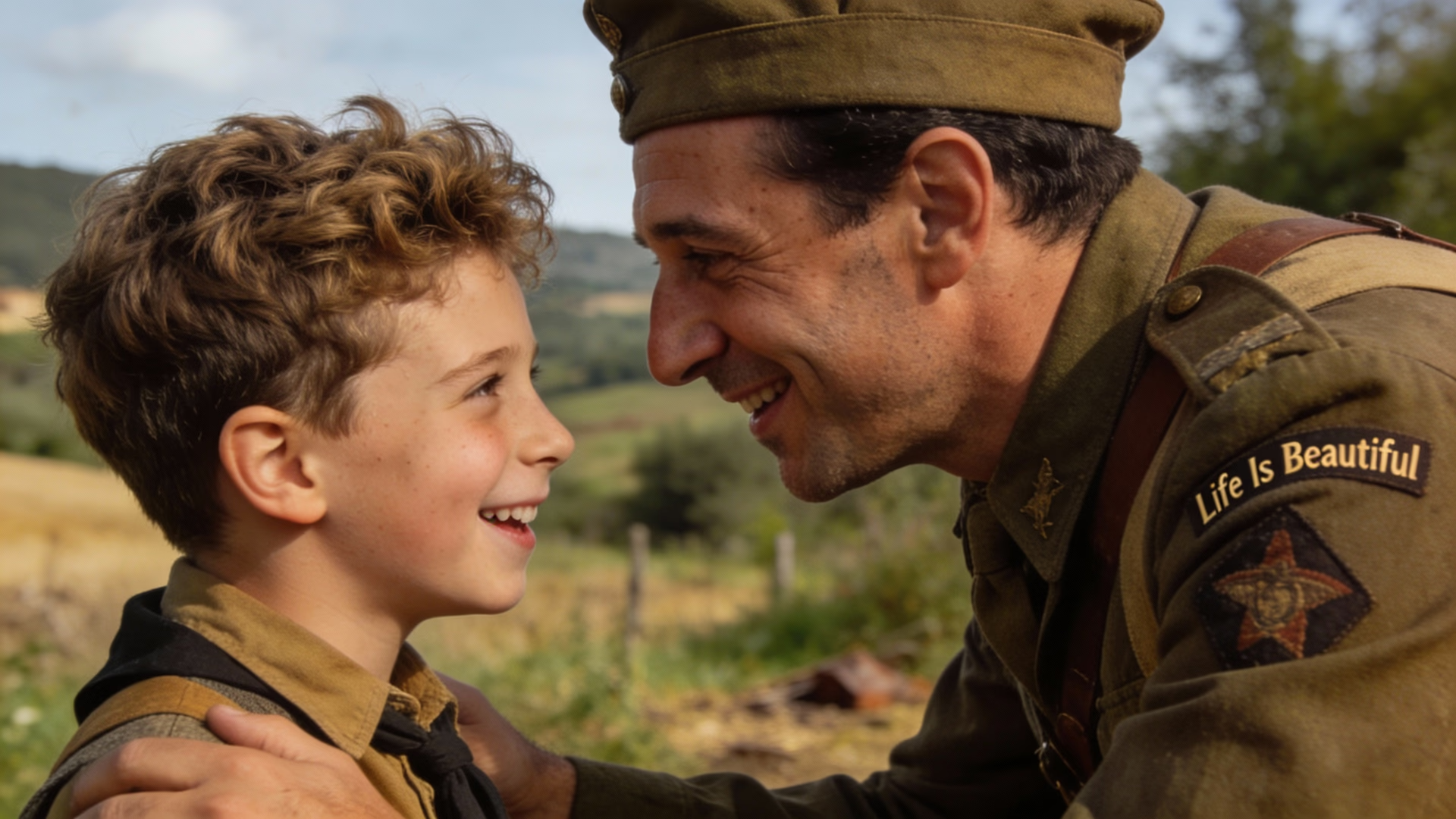
There is a scene near the end of 『Life Is Beautiful』 that I cannot shake loose from my memory, no matter how many years pass since I first watched it. A small boy crouches inside a metal box, hardly breathing, his eyes wide with a mixture of fear and excitement. His father has told him this is part of the game. The prize, if he stays hidden and silent, is a real tank. Outside, in the darkness of the Nazi concentration camp, guards search for anyone still alive. The boy believes he is winning.
Roberto Benigni, who directed and starred in this 1997 Italian film, crafted this moment with such tender precision that it feels less like cinema and more like a wound. The metal walls of that hiding place become both a coffin and a cradle. We watch through the narrow slits alongside the child, seeing boots pass by, hearing voices bark in German. The boy does not understand what death means in this place. He only knows the rules his father has given him. Stay quiet. Stay hidden. We are so close to winning.
What strikes me now, returning to this scene years later, is the quality of the silence. It is not empty. It is filled with everything the father has poured into his son’s imagination over their months in the camp. Every absurd explanation for the cruelty around them, every silly walk, every exaggerated whisper about points and prizes. All of it condenses into this single moment of hiding. The boy’s face shows no terror because his father has built a world where terror cannot enter. He has constructed, brick by invisible brick, a fortress made entirely of love disguised as nonsense.
The camera lingers on the child’s small hands gripping the edges of his hiding spot. His fingernails are dirty. His clothes are threadbare. But his eyes, those eyes hold something that the camp was designed to extinguish. They hold wonder. They hold the unshakeable belief that his father would never lie to him about something this important. And in a way, his father hasn’t. The game is real. The stakes are exactly what he said they were. Survival.
What Lies Beneath the Laughter
 Photo by
 Benigni drew inspiration from his own father’s experience as a prisoner in Bergen-Belsen. This fact transforms the film from a creative exercise into something far more personal, almost confessional. The comedy that runs through the story, the physical humor and verbal wit that made Benigni famous, carries a weight that becomes heavier with each viewing. We laugh at Guido’s antics as he woos the beautiful Dora, at his bumbling attempts to appear important, at his rapid-fire improvisations. But the laughter changes pitch once the family arrives at the camp. It becomes something else entirely.
There is a moment when Guido “translates” a German officer’s brutal instructions for the new prisoners. The officer screams about rules and punishments, about what will happen to those who disobey. Guido, who does not speak German, invents an elaborate set of game rules for his son. Points for hiding. Points for not crying. Deductions for asking for snacks. The prisoners around him, who understand exactly what was really said, stare at this small man with something between confusion and awe. He is doing something impossible. He is making a different world exist inside the same space as this hell.
I think about this often. The layers of meaning stack upon each other like sediment. On the surface, a father lies to protect his child’s innocence. Below that, a man uses humor as an act of defiance against a system designed to strip away every shred of human dignity. Deeper still, we find something about the nature of reality itself. What is more real? The horror that surrounds them, or the love that creates an alternative universe strong enough to shield a child’s mind?
The most radical act of resistance is not always the fist raised against oppression, but sometimes the gentle hand that covers a child’s eyes and whispers, “This is just a game we’re going to win.”The film sparked controversy when it was released. How dare anyone make comedy from the Holocaust? How could laughter exist in the same frame as gas chambers? But I think those critics missed what Benigni was doing. He was not making light of suffering. He was illuminating something essential about how we survive it. The imagination is not an escape from reality. Sometimes it is the only tool we have to reshape reality into something we can bear.
Guido’s comedy is not for himself. He does not crack jokes to make his own burden lighter. Every pratfall, every silly voice, every invented rule is aimed at one small audience: his son. The exhaustion in the father’s eyes, visible in quiet moments when the boy looks away, tells us everything about the cost of this performance. He is spending himself completely, burning every reserve of creativity and hope, to keep one flame alive in his child.
The Universal Language of Protection
 Photo by
 We do not need to live through historical atrocities to recognize this impulse. It lives in every parent who has hidden their own fear to comfort a frightened child. In every person who has smiled through pain so that someone they love would not worry. In every caregiver who has invented silly games to distract from medical procedures, or transformed monsters under the bed into ridiculous creatures who are actually terrified of socks.
The human capacity to create protective fictions is both beautiful and necessary. We are storytelling creatures, and we tell stories not just to entertain but to survive. When the world becomes too harsh, we build smaller worlds within it. We draw circles of meaning around the people we love and fill those circles with whatever light we can generate.
I remember my own mother during a period of family difficulty. The details are less important than what she did with them. She turned our reduced circumstances into an adventure. We were explorers, she said, learning to live with less so we could appreciate more. The meals that had shrunk became “special rations for our expedition.” The cancelled trips became opportunities to discover hidden treasures in our own neighborhood. I believed her, mostly. And the part of me that suspected the truth also understood what she was doing, and loved her more fiercely for it.
This is what the film holds up to us like a mirror. Not the specific horror of the Holocaust, but the universal truth about love’s creative power. When we cannot change our circumstances, we can change the story we tell about them. When we cannot protect someone from pain, we can sometimes protect them from despair. The imagination becomes an act of love, and love becomes an act of resistance against everything that would diminish us.
What We Carry Forward
 Photo by
 The tank arrives at the end. A real tank, rolling through the liberated camp, driven by American soldiers who have come to end the nightmare. The boy emerges from his hiding spot and sees it, enormous and gleaming. His face breaks into pure joy. “We won!” he shouts. “We won the game!”
His father is not there to see this moment. Guido was taken away and shot just before liberation, his final act a silly march performed for his son’s benefit, making the boy laugh one last time. The child does not know this yet. Perhaps he will learn it later, when he is old enough to understand what really happened. Perhaps he will spend his whole life carrying both truths: the terror of what was, and the beauty of what his father made him see instead.
I wonder sometimes about the weight of such a gift. To be loved so completely that someone would spend their last energy maintaining a beautiful fiction for your sake. To discover later that the game was real and deadly serious all along. Does this double the grief, or does it transform it into something that can be borne?
The film does not answer this. It simply shows us the boy’s face in that final moment, radiant with the victory his father promised him. And it leaves us with a question that I carry still, years after first watching.
When we build these shelters of imagination for the people we love, what are we really doing? Are we protecting them from reality, or are we showing them a deeper reality that the darkness cannot touch? Perhaps the most profound act of faith is not believing in something beyond this world, but believing that love can create meaning within it, even in places designed to destroy all meaning.
Life is beautiful, the title insists. Not because suffering is an illusion. Not because tragedy is somehow justified. But because we have the power to make it so for each other, one silly game at a time, one invented rule at a time, one final funny walk toward an ending we cannot escape but refuse to let define us.
What stories are you telling to protect someone you love? And what are they protecting in you?