
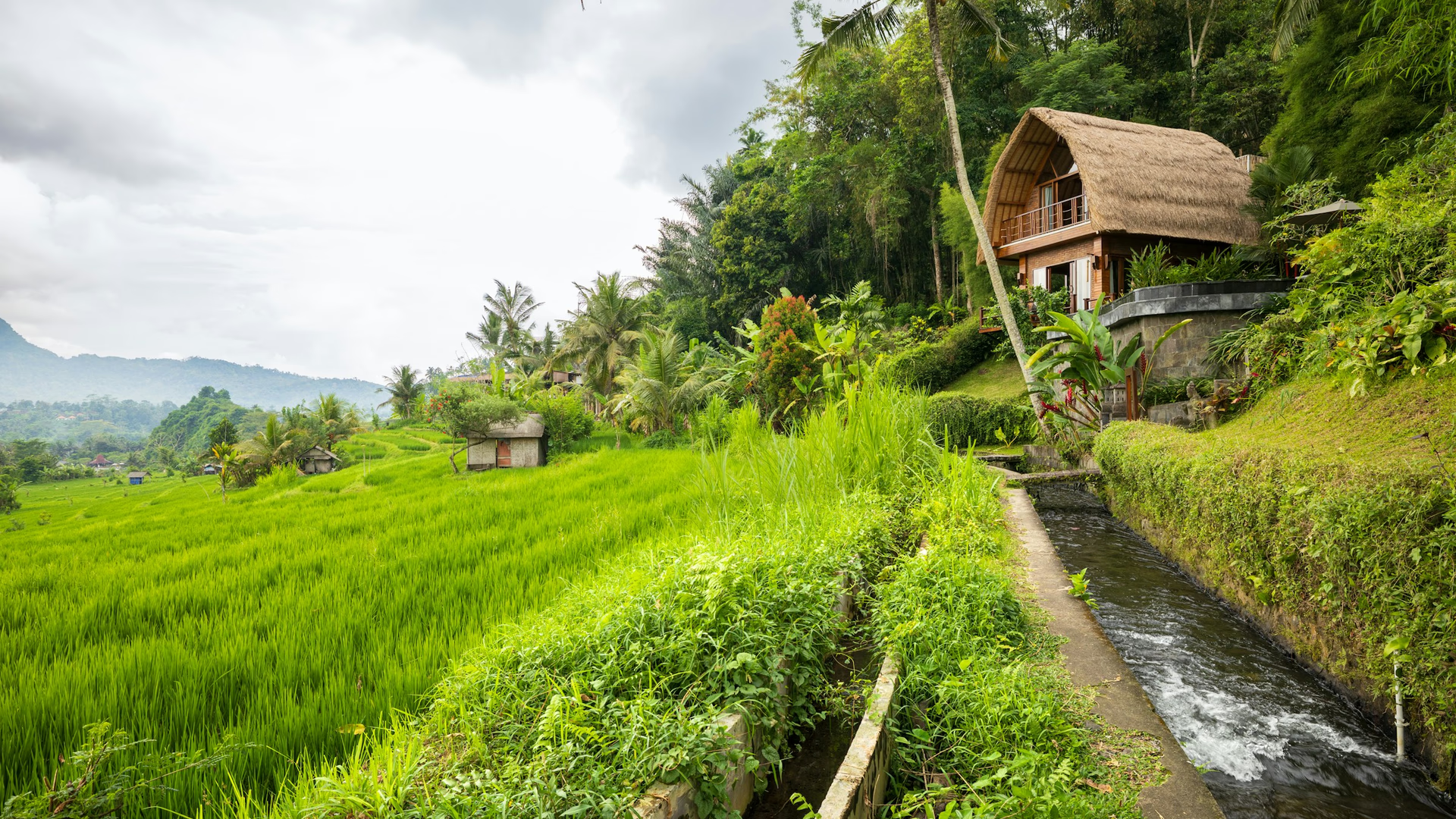
In Tegallalang, terraced rice fields drop down a hillside in Bali’s highlands, and cafes built into the slope fill every morning with visitors photographing the view. The irrigation that keeps those terraces green runs on a system centuries older than the cafes: farmers sharing water through village cooperatives tied to temple schedules. No hotel report anywhere tracks whether that system still has enough water to finish the season. That gap between what gets photographed and what gets counted is the subject here.
A Rice Terrace Morning
The terraces are held together by subak, a centuries-old system in which farmers share irrigation water through village cooperatives tied to water temples.
 Photo by
 In plain terms, subak is a committee, a canal network, and a religious calendar all at once. UNESCO recognized it in 2012 as a cultural landscape. That recognition protects the idea of subak. It does nothing for the daily economics behind it.
Leasing farmland to a villa developer changes a family’s income more than another season of rice ever could. That’s not a moral failure. It’s arithmetic. But each lease narrows the irrigation channel, changes the water schedule for everyone downstream, and thins out the scenery that draws visitors in the first place.
Researchers working on regenerative tourism argue the goal should be to restore ecosystems, reinforce cultural identity, and support inclusive economic development [IDEAS RePEc]. That list asks for something specific: not less harm, but more health afterward than before. Nothing in a standard hotel sustainability report measures whether a subak still functions.
Where The Pressure Shows
Ask anyone living in Canggu about the dry season, and the conversation turns to water pressure in the taps before it turns to traffic.
 Photo by
 Social entrepreneur Tomo Hamakawa argues that Bali’s visitor influx now strains water and infrastructure so much that sustainability alone isn’t enough of a goal, and that regeneration has to be the target instead [Eco-Business].
That argument is worth slowing down on. Sustainability means holding steady, keeping damage at a level the island can absorb. Regeneration means leaving the place measurably better: more water in the aquifer, more forest, more households earning a living from land they still own.
Framed that way, the harder question follows on its own. Better by how much, and better for whom, and who is actually keeping score?
Bali Has Run This Test Before
This part of the story echoes an older one.
 Photo by
 In the early 1970s, Indonesia adopted a master plan for Bali tourism, developed with international consultants and World Bank involvement. The plan concentrated large resorts in Nusa Dua, a dry limestone peninsula chosen partly because it held little farmland and few villages.
The logic was containment: build the big hotels there, and leave the villages alone. Officials tracked success using the numbers that were easiest to collect: hotel beds, arrivals, and foreign exchange earnings.
Those numbers all went up. What the plan never had a column for was land conversion happening outside the zone, or how fast informal development would spread up the coast through Kuta, Seminyak, and eventually Canggu. Balinese planners have debated the consequences ever since.
The parallel is direct. The 1970s plan measured growth and got growth, along with everything it forgot to measure. A regenerative label that counts only carbon and plastic risks running the same experiment with newer vocabulary.
What Counts Right Now
Look at what regenerative projects on the island actually publish, and a pattern shows up.
 Photo by
 The clearest wins tend to be physical and specific:
-
Astungkara Way has connected more than 70 km of heritage footpaths, routing walkers through farming villages rather than around them [The Bali Sun]
-
The Sweet Potato Project, linked to Potato Head Bali’s regenerative certification, established two syntropic farms in western Bali, a farming method that grows food and forest together on the same plot [The Bali Sun]
-
BaliSpirit Festival runs closed-loop waste management (a system where waste is processed and reused on-site rather than trucked away) alongside restoration work and a social-legacy program [ScholarHub UI]
-
Nyambu Village trained around 270 community members in tourism management, English, and financial literacy [British Council]
That last item stands apart, and it’s the most interesting one. Footpaths, farms, and waste loops are things done to a landscape. Training 270 people changes who holds the skills, and therefore who gets to negotiate.
Academic work is starting to push in the same direction. One study of coastal tourism identified eight elements for a regenerative model [IJSDP]. The specific number matters less than the underlying move: researchers are converting a warm aspiration into a checklist someone can actually audit.
For a general reader, this means the word “regenerative” is currently doing two different jobs. Sometimes it names a solar array or a waste system. Sometimes it names a shift in who earns the money and who decides.
The Number Worth Asking For
Experts in this field agree more than they disagree. Nearly all of them want ecological repair, cultural continuity, and local economic benefit measured together rather than traded off against each other.
Where they part ways is on sequence. One camp starts with the ecosystem, reasoning that a depleted aquifer eventually ends tourism anyway. Another starts with community capacity, arguing that villages with training and legal standing will protect their own watershed better than any certification scheme could.
The Nyambu case suggests the second camp has a point. Financial literacy isn’t a green metric in any conventional sense. It’s the thing that lets a village read a lease agreement before signing it.
Regenerative tourism should restore ecosystems, reinforce cultural identity, and foster inclusive economic development. (IDEAS RePEc research summary)
So if a traveler gets to ask an operator one question, the useful one is about local revenue retention: what share of what you pay actually stays in the village. It’s a single percentage. It’s uncomfortable to dodge. And it quietly folds in most of the harder questions about land, labor, and who’s actually in charge.
Subak farmers across Bali’s highlands will keep managing their water tomorrow, whether or not anyone visiting asks a single question about it. What can change is smaller and entirely within reach. Before booking a stay, it can help to message the operator and ask what percentage of your payment stays in the village, then compare answers across two or three places. Some will reply with a figure and a breakdown. Some won’t reply at all, which is also an answer. Booking the one that can tell you is how a view becomes a livelihood, and how the terraces stay terraces instead of becoming the ground floor of somebody’s villa.
Sources
- The Bali Sun, regenerative and adventure tourism in Bali after lockdown
- British Council, sustainable tourism in Bali and Nyambu Village training
- IDEAS RePEc, regenerative tourism principles chapter
- The Bali Sun, Potato Head Bali regenerative certification and Sweet Potato Project
- IJSDP, eight elements of a regenerative coastal tourism model
- ScholarHub UI, BaliSpirit Festival closed-loop waste and social legacy program
- Eco-Business interview with social entrepreneur Tomo Hamakawa


