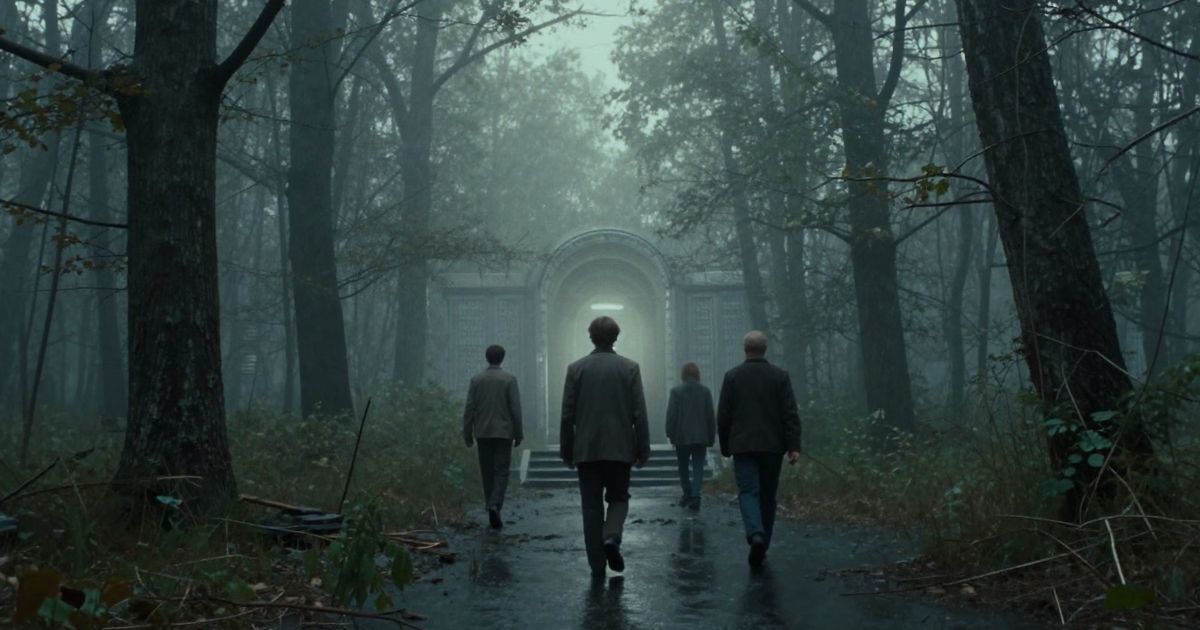

Three men stand at the threshold of the Room. They have crawled through tunnels, crossed standing water, thrown weighted cloths into open air to test for traps they cannot see. They have argued, rested, argued again. They have come all this way through a landscape that looks like the end of something - rust and fog and grass growing through concrete, the beautiful wreckage of a world that gave up on itself. And now the Room is right there. One step. One door. One wish.
Neither man enters.
Not because the journey broke them. Not because the danger was too great. They stop because of a fear quieter and more total than any of that - the fear of what they would discover about themselves if the Room delivered what it promised. The Writer, who has spent his life performing longing for an audience, suspects his deepest wish is petty. A hungry, embarrassing little thing, nothing like the hunger he has advertised. The Professor, who came prepared to destroy the Room rather than let tyrants use it, cannot trust what his own hands might reach for. They have mapped the distance between themselves and meaning for their entire lives. Now that the distance is gone, they find they need it back.
Behind them, the Stalker weeps. Not because they’ve failed. Because they’ve confirmed something he already knew. That people do not want the room itself. They want the ache of approach. They want meaning to stay just ahead of them, a door slightly out of reach, a wish they can keep the shape of by never speaking it aloud.
We spend most of our lives building elaborate maps to rooms we will never let ourselves enter.
The thing is, you already know the room the Writer and Professor refused. You’ve stood at its threshold, too - in the moment a promotion became real and felt wrong, in the silence after someone said exactly what you’d waited years to hear, in the creative work you circled so long it became a monument to your own avoidance. We all carry unexamined wishes. Not because we are cowards, but because the examined wish demands something of us. It asks us to own the actual shape of our wanting, stripped of the story we’ve been telling everyone, including ourselves.
But here is what Tarkovsky hides at the bottom of the film’s despair: the Zone was never only out there. In the final scene, a girl who cannot walk sits at a kitchen table and stares at three glasses until they move. The train passes. The glasses keep sliding. The world stays loud and ordinary, and something impossible happens inside it anyway.
Meaning is not waiting in a room you haven’t reached. It is already here, scattered through the wreckage of your daily life, in the trembling of ordinary things, in the love you chose even when it cost you, in the mornings when the light hits a surface and being alive feels, without reason, like enough.