
The Moment
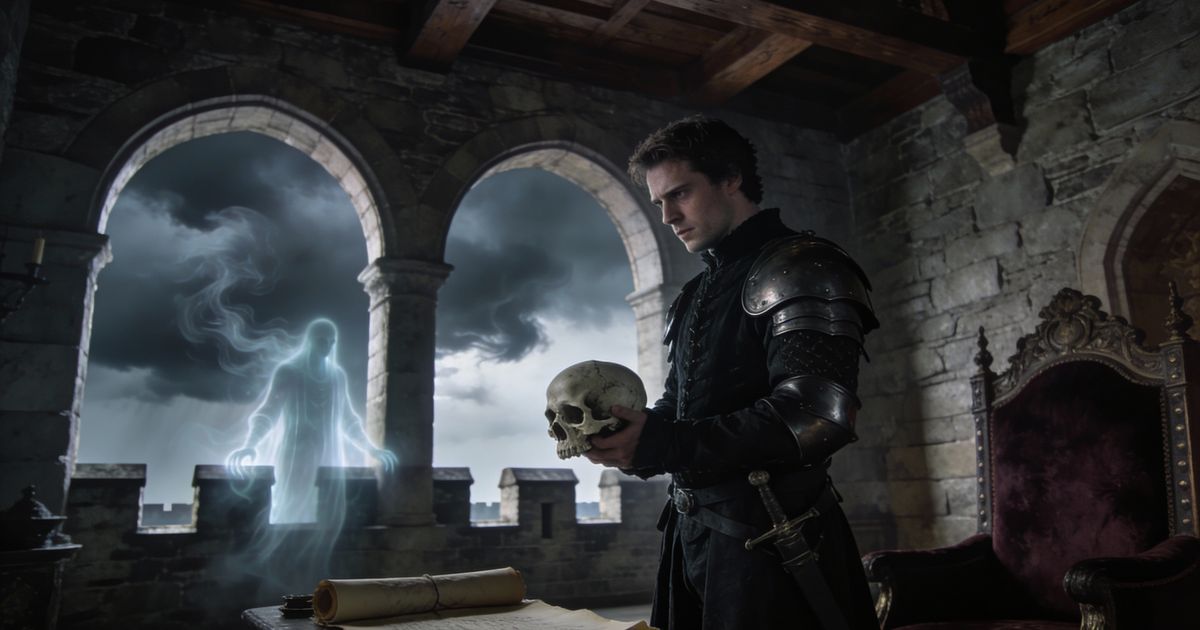
There is a man alone in a chamber, speaking to himself in the darkness. Outside, the court of Elsinore carries on with its celebrations and its conspiracies, but Hamlet stands apart from all of it, holding a question in his hands like a blade he cannot decide whether to turn inward or outward.
“To be or not to be.”
Four centuries have passed since Shakespeare wrote those words, and still they hang in the air like breath made visible on a winter night. This is not a man contemplating suicide, though generations have read it that way. This is something larger and more terrible. This is a human being asking whether consciousness itself is worth the pain it brings. Whether it is better to feel everything, to know everything, to carry the unbearable weight of seeing the world as it truly is, or to simply cease existing at all.
He knows his uncle murdered his father. He knows his mother is complicit in her willful blindness. He knows the court around him is built on poison and lies. And he alone must carry this knowledge, must decide what to do with it, must become someone new through the choosing. The ghost has demanded revenge. His conscience whispers caution. The world will not wait for him to be ready.
So he stands there, pacing, thinking, questioning. Not because he is weak, but because he sees too clearly. Not because he fears death, but because he understands what action costs. Every choice is also a death, the closing of one version of yourself so another can emerge. To kill is to become a killer. To act is to accept that innocence is gone forever.
The battlements are cold. The question remains unanswered.
The Reflection
We stand on our own battlements more often than we admit, knowing what must be done and yet unable to move.The decision that will change everything. The truth that will shatter a relationship. The threshold we know we must cross but cannot quite step over. We tell ourselves we need more time, more information, a clearer sign. But perhaps what we really fear is becoming the person that choice will make us.
Shakespeare offers no formula, no wisdom about when to leap and when to wait. Hamlet’s story ends in ruins, the stage littered with bodies, the price of hesitation made terribly clear. But the price of hasty action would have been just as high. There is no safe choice. The world moves forward whether we are ready or not.
What remains, four hundred years later, is not guidance but companionship. Someone else stood where we stand. Someone else felt the paralysis of consciousness, the burden of seeing clearly, the terror of choosing who to become. We are not alone in our cold vigil.
The question Shakespeare leaves us cannot be answered from a distance. When does thinking become hiding? When does wisdom become fear? We will only know in the moment itself, standing in our own darkness, holding our own blade, waiting for a certainty that may never come.
The torch flickers. The future waits.