
The Moment
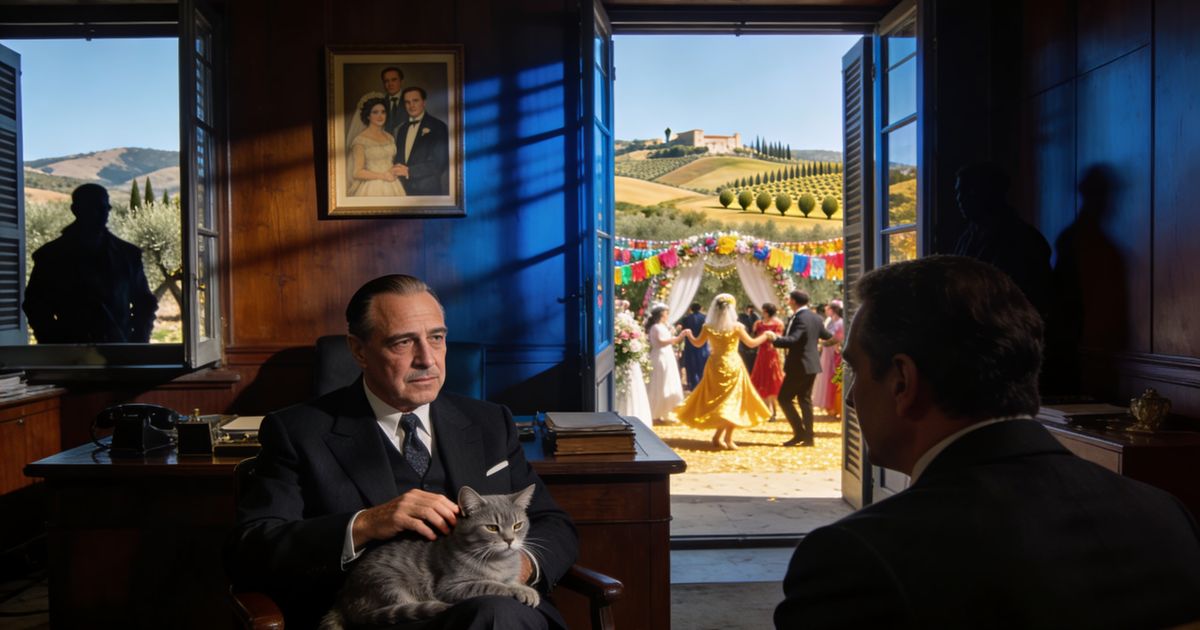
There is a door closing, and Kay Adams stands on the wrong side of it. She has come to ask her husband a question, though she already knows the answer. Did you kill your sister’s husband? Michael looks at her with those dark, unreadable eyes and says no. It is a lie, and they both understand what the lie means. Then his men arrive, and she watches them gather around him with a deference that makes her stomach turn. They kiss his hand. They call him Don Corleone. And as the door swings shut between them, she sees in that narrowing sliver of light a man she has never met before, though she has been married to him for years.
This is not the Michael who came home from the war. Not the man who sat across from her in restaurants, speaking about his family with embarrassed distance, promising her he was different. That Michael believed in America the way soldiers do, in the legitimate world, in clean hands and clear conscience. This Michael, the one on the other side of the door, has become his father. Worse than his father. The warmth has calcified into pure control. The reluctance has hardened into mastery. His hands no longer shake when he orders death. His face betrays nothing.
Kay’s expression in that moment holds everything the film wants to say. Not anger, not yet. Just recognition. The slow, sick understanding of someone realizing they have been sleeping next to a stranger. The door closes with quiet finality, and she is left standing in the outer room, measuring the distance between the man she loved and the man he has become.
The Reflection
We like to think we would notice such a transformation in ourselves, that we would feel the moment we crossed from who we were into someone unrecognizable. But the door closes so quietly. We are too busy making decisions that feel necessary, compromises that seem small, choices that appear to have no other option. Then one day someone looks at us the way Kay looks at Michael, and we see ourselves reflected in their horror.
The stakes in our lives are smaller. We do not order executions or build criminal empires. But we recognize the pattern. The principle we bent just this once. The silence we kept when we should have spoken. The coldness we swore we would never inherit from our parents but somehow absorbed anyway. Each choice carries its justification. Each step feels rational in the moment. We tell ourselves we are protecting what we love, providing for our families, doing what must be done.
And maybe we are. Or maybe we are just becoming what we become, one reasonable decision at a time, while the person we intended to be watches from the other side of a closing door, measuring the distance we have traveled from ourselves.