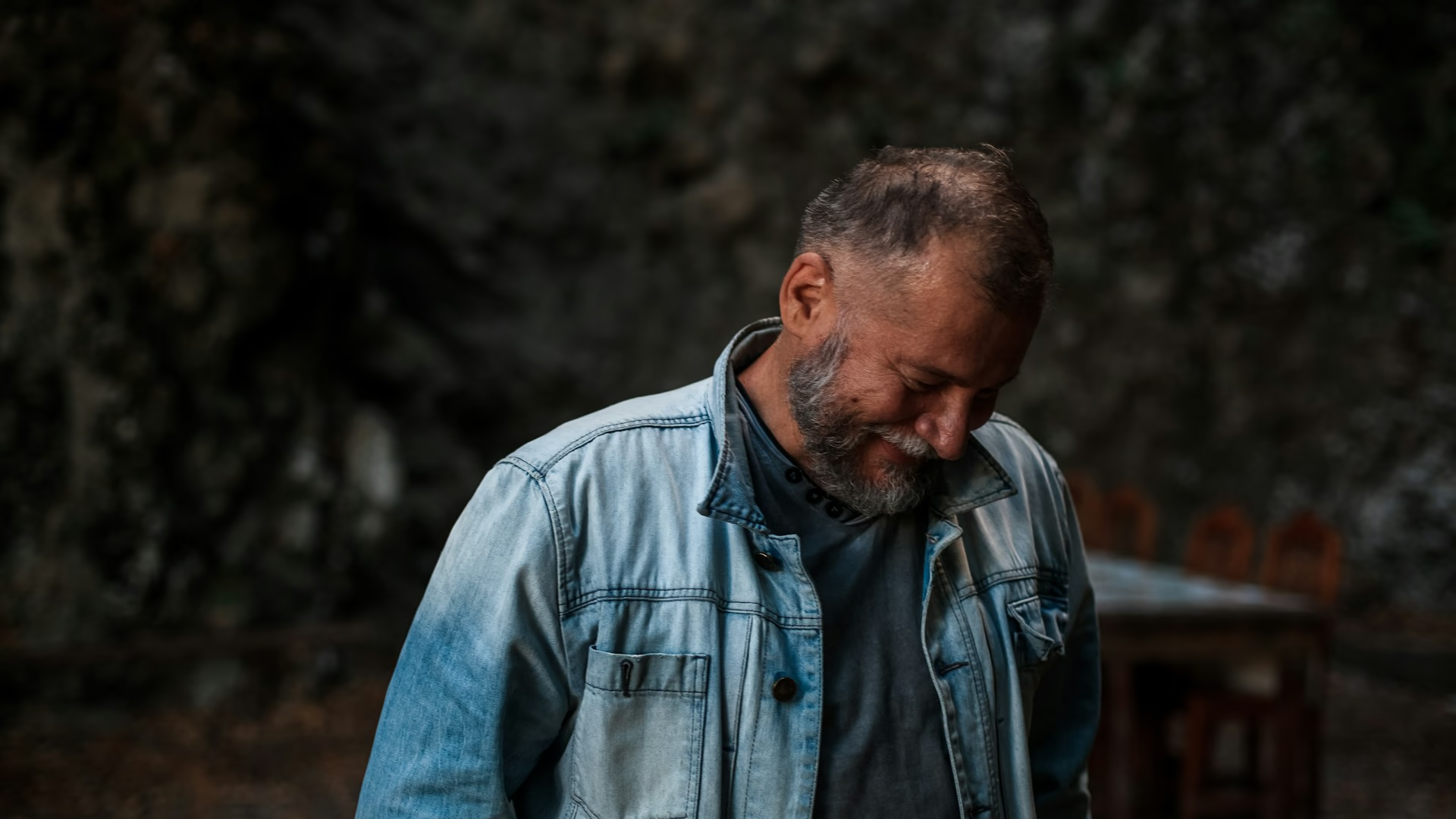
Run your fingers across a worn leather jacket or a linen shirt softened by a hundred washes. That feeling isn’t wear and tear. It’s fashion becoming more itself.
In 2026, this idea is reshaping entire collections. Designers are no longer chasing pristine perfection; they’re engineering pieces meant to deepen, soften, and individualize over years. Consumer literacy around sustainability has reached a tipping point, and brands without a longevity-driven story are quietly losing relevance. The luxury fashion market is projected to grow from $299 billion in 2025 to $420.3 billion by 2035 [Marketresearchfuture], and it’s being rebuilt around a single sensory question: how does it feel, and how will it feel later?
Why Texture Is Taking Over Fashion
The shift began quietly in the early 2020s, when at-home dressing rewired what shoppers wanted from their clothes.
 Photo by
 Comfort became non-negotiable. Bouclé, raw silk, brushed cashmere, and slubby linen moved from quiet corners of the market to center stage.
Luxury houses leaned in. Bottega Veneta’s intrecciato weaves and Loewe’s craft-forward leathers turned tactile identity, the way a material feels in the hand, into the headline rather than the footnote. The logo receded; the hand-feel advanced.
Why now? Because shoppers can finally tell the difference, and they care. The personal luxury goods market grew an estimated 3% to 5% in real terms in 2024, with the sustainable fashion segment expanding at roughly 12% CAGR, compound annual growth rate, through 2030 [Rawshot]. Growth is concentrating around pieces that feel considered, not disposable.
A curated wardrobe today is less about what’s seen across a room and more about what’s felt up close.
Materials That Improve With Age
A new hierarchy of materials has emerged, ones that reward patience.
 Photo by
 The signs of true quality echo what antique dealers have long understood: patina, the natural aging seen as soft sheen, subtle color shifts, and gentle wear, is the most honest mark of authenticity.
The materials writing this story today:
-
Full-grain and vegetable-tanned leather develops a personal patina shaped by the wearer’s hands, light, and time.
-
Linen, raw silk, and heavyweight cotton gain drape and suppleness with every wash.
-
Japanese selvedge denim fades along creases that map the wearer’s movement.
-
Hand-loomed wools and tweeds soften without losing structure.
“The most telling sign of a true antique is its patina, the natural aging that develops over time.”
The same logic now governs how a $40 linen shirt and a $4,000 leather bag are evaluated. Both can earn character. Both can disappoint. The price tag sets the entry point; the material decides the ending.
Emerging Signals in Future Fashion
What’s coming next builds on this foundation rather than replacing it.
 Photo by
 Bio-based materials, including mycelium leathers, fermented silks, and regenerated cottons, are being engineered to mimic and eventually extend the aging properties of natural fibers. Several luxury houses are folding these into 2026 collections, not as novelty drops but as core offerings.
Ownership models are shifting too. Repair ateliers, lifetime guarantees, and aging guides are becoming standard rather than niche. The message is consistent: buy fewer, keep longer, learn to care.
Retail is adapting as well. Concept stores increasingly stage fabric-forward installations meant to be touched before purchased. It’s a direct response to consumers building tactile literacy, the skill of evaluating a garment by hand rather than by image.
Budgets vary, and that’s the point. Whether the investment is a hand-loomed scarf or a single well-chosen denim jacket, the criteria are the same: does it have somewhere to go over time?
Texture has moved from background detail to fashion’s defining dimension. Leather, linen, selvedge denim, and the bio-fabrics arriving now offer luxury as something earned rather than purchased. It’s a slow collaboration between wearer and material. Next time something catches your eye, run your fingers across the fabric first. Ask how it will feel in five years, not just five minutes.
Sources
- Luxury Fashion Market Report projecting growth from $299B in 2025 to $420.3B by 2035
- Fashion Industry Growth Statistics: personal luxury goods grew 3-5% in 2024; sustainable fashion at 12% CAGR through 2030
- Patina and Authenticity: the natural aging that develops over time is the most telling sign of a true antique