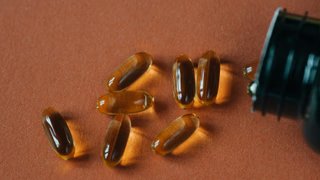
Sea moss is trending hard in 2026, but the science tells a more cautious story. Weight loss and ED claims have no clinical backing, while gut health and skin hydration show the strongest real evidence. The bigger hidden risk is iodine, and it varies wildly between brands.
Myth Versus Verified Data
Several popular sea moss claims have been directly examined, and the results are honest about their limits.
There is no robust clinical evidence from high-quality human trials demonstrating that sea moss pills directly cause weight loss. These claims remain theoretical.
The same applies to erectile dysfunction: no studies have examined its effect on that condition at all. Immune-boosting claims fare slightly better, but only in animal models. No human randomized controlled trials confirm dramatic effects.
Where sea moss does show genuine promise is gut health. Its prebiotic fiber content appears to support microbiome diversity, and seaweed polysaccharides have produced consistent, if still preliminary, positive results. Topical marine polysaccharides also show measurable skin barrier-repair effects in dermatological research.
The Iodine Problem Nobody Mentions
This is the part wellness content tends to skip. A 45-gram serving can deliver iodine at nearly double standard daily recommendations. A 2025 independent analysis of 30 commercial sea moss products found iodine content ranging from 45 mcg to 2,340 mcg per serving, an 800% spread between brands. That is not a minor labeling issue. It is a real thyroid risk hiding in a smoothie.
Anyone with thyroid conditions or taking thyroid medication should be especially cautious. Check the iodine content on the label before buying, and treat sea moss as a functional food, not a cure-all.