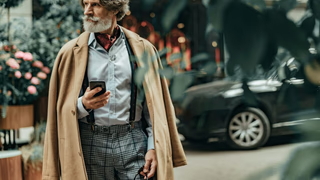
The most compelling person at the dinner party wasn’t wearing the logo or working the room. She was just listening, really listening, and laughing at her own bad jokes. Everyone else suddenly looked like they were trying too hard.
That shift in the air is the same one reshaping how we shop, decorate, dress, and define success in 2026. After a decade of matching sets, fast furniture, and curated grids, the cultural appetite has flipped. Realness is now the rarest thing in the room, and rare things become valuable.
World A: The Curated Life
Walk through peak performance culture and you’ll recognize it instantly.
 Photo by
 Matching sofa-and-loveseat combos. Identical white kitchens. Capsule wardrobes assembled from the same five viral brands. Every surface optimized, every outfit photographable, every purchase a small audition for an invisible audience.
This world isn’t villainous. It’s just exhausting. The pursuit of more keeps moving the goalpost: more followers, more square footage, more matching throw pillows. And the people living inside it are quietly admitting the returns have stopped compounding.
World B: The Intentional Life
In the parallel world, things look different.
 Photo by
 A vintage armchair sits next to a new linen sofa that doesn’t match it. A wardrobe is built from things actually worn, not things photographed once. Purchases happen slowly, with reasons.
The data backs up what the rooms already show. 96% of Gen Z consumers say they shop with intention, and 66% believe purchases should reflect personal values [Getkard]. That same group is skeptical of empty promises: 64% will pay more for sustainable products, but they spot hollow marketing instantly [Getkard]. Luxury brands have noticed, expanding sustainable lines by 28% in response [Market Reports]. Meanwhile, 1,110 emerging brands on Tmall, China’s major e-commerce platform, posted over 60% year-on-year growth during spring launches, many built on craft and story rather than scale [36Kr].
This isn’t minimalism for aesthetics. It’s a quieter philosophy: own less, but mean it.
The Intersection: Why Realness Got Rare
The two worlds collide in an obvious place: the feed.
 Photo by
 When everyone performs, the person who simply exists becomes the most interesting one on the screen. Curated perfection became so universal that unfiltered honesty now reads as bold, almost rebellious.
“Every follow, like, repost, and even purchase is a direct reflection of a person’s identity and values.” [Getkard]
That’s the contradiction at the heart of this shift. The same generation that grew up performing online is the one most aggressively rejecting performance as a status signal. They’ve seen behind the curtain too many times. The matching set, the logo, the algorithm-approved aesthetic: all of it now signals insecurity instead of taste.
The Unified Insight: Quiet Is the New Loud
What both worlds reveal, held side by side, is that status hasn’t disappeared.
 Photo by
 It’s been redefined. The new markers are harder to fake:
- Things you’ve kept a long time
- Choices you can explain without referencing a trend
- Confidence that doesn’t need external confirmation
- Relationships built on candor instead of curation
The person who buys one well-made chair and keeps it for twenty years now reads as more sophisticated than the one who redecorates every season. The friend who admits they’re struggling lands harder than the one posting highlight reels. Authenticity compounds. Performance depreciates.
As curation became the default, realness became scarce, and scarce things become desirable. Choosing to show up genuinely, to own things that don’t match, to say what you actually think, isn’t a retreat from ambition. In 2026, it’s the most sophisticated social move available.
This week, it might be worth noticing one place you’re performing instead of just being. The most powerful room you can walk into is one where you don’t have to pretend.