The padlock icon sits in the browser bar, small enough that most people stopped noticing it years ago. It appears when you check a bank balance on the train, when you send a photo of a passport to a landlord, when you buy a birthday present at midnight. That tiny grey shape is a promise: whatever passes between your device and the other end is scrambled beyond anyone else’s reading.
The promise holds because of arithmetic. Certain math problems are easy to set up and brutally slow to reverse, and the whole architecture of online trust leans on that gap. Quantum computing matters here for a specific reason. It does not break the promise today, but it changes what kind of promise it is.
Why Hard Math Buys You Trust
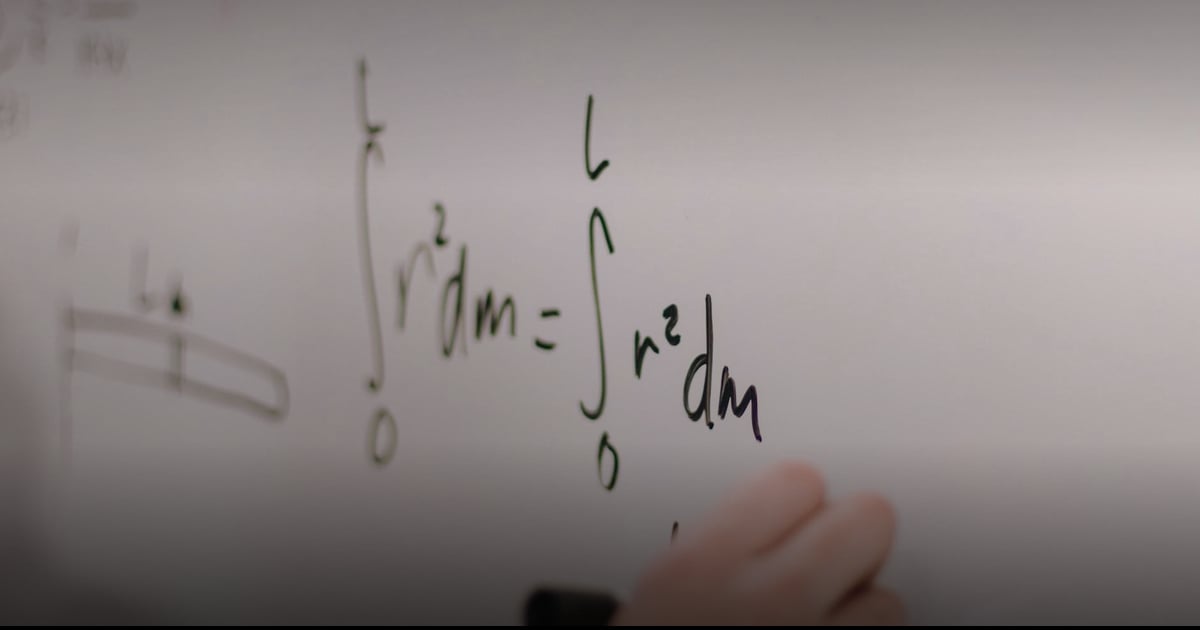
Most secure connections rest on a scheme called RSA, a method of locking data that depends on multiplying two enormous prime numbers together.
 Photo by
 Multiplying them is trivial. Pulling the product back apart into its two original factors is the slow part. For a 2048-bit number, the standard size, no classical machine has a practical route to the answer.
That single fact carries a lot of weight. HTTPS websites, encrypted messaging apps, digital signatures on contracts, and card payments all assume factoring stays out of reach.
It’s worth being precise about what security means here. Nothing in this system is mathematically impossible to break. The protection is economic: breaking one connection would cost more time and energy than any attacker could justify, so nobody tries. The lock on your front door isn’t unpickable either. It’s just not worth picking.
Digital trust has always been a bet on cost, and quantum machines matter because they could change the price.What the Benchmarks Actually Show
 Photo by
 Speedup isn’t a vibe. It’s measured by watching how solution time grows as a problem gets bigger, comparing quantum hardware against the best classical method anyone knows.
Recent results are real and worth taking seriously:
-
Google Quantum AI reported a roughly 13,000 times speedup over the Frontier supercomputer on a specific physics simulation, running on a 65-qubit processor (a qubit is the basic unit of quantum information, similar to a bit in a regular computer).
-
Researchers at USC and IBM demonstrated an exponential scaling advantage on a modified version of Simon’s problem using 127-qubit Eagle chips.
-
IBM described three separate quantum advantage demonstrations in 2026, while noting that meaningful advantage remains narrow and task-specific.
Notice what these tasks are: physics simulation, and a structured math puzzle chosen because quantum mechanics happens to suit it. None of them is factoring a 2048-bit key.
The gap between a headline speedup and a real cryptographic threat is measured in qubits, and the distance is enormous. Breaking RSA-2048 with Shor’s algorithm, a quantum method for finding the factors of large numbers, is estimated to need millions of stable, error-corrected qubits. Today’s leading processors carry a few hundred noisy ones. A 2026 Bundesbank paper prepared for a G7 working group put it plainly: no cryptographically relevant quantum computer exists yet.
The machines beating supercomputers this year are not the machines that could read your email.
The Mechanism Under the Hood
The popular explanation, that a quantum computer tries every answer at once, is close enough to be memorable and wrong enough to mislead.
 Photo by
 A quantum computer holds many possibilities in superposition, meaning a qubit can carry a blend of zero and one rather than committing to either. But you only get one measurement at the end, so raw parallelism buys nothing by itself.
The real trick is interference, a process where a good algorithm arranges those possibilities so wrong answers cancel each other out, like two ripples meeting crest to trough, while the right answer reinforces itself. Shor’s algorithm does exactly this. It converts factoring into a search for a repeating pattern, then uses interference to make that pattern stand out. A 2023 CEPS report on quantum and cybersecurity describes the result as radically faster factoring of large numbers, which is what puts RSA and related signature schemes on the clock.
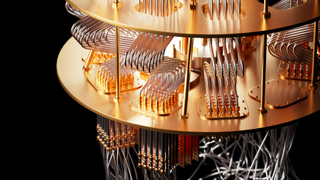
The bottleneck isn’t chip speed. It’s keeping a fragile physical state undisturbed long enough to finish the calculation.This is also why scaling is so hard. The moment a qubit leaks information to its surroundings, the delicate pattern collapses. Engineers fight that with dilution refrigerators (devices that cool chips near absolute zero) and error correction, where many physical qubits are pooled to produce one reliable logical qubit.
Migrating Trust Before the Deadline
The unsettling part of this timeline has nothing to do with hardware.
 Photo by
 Encrypted traffic can be recorded now and decrypted later, which means data with a long shelf life, medical records, state secrets, genomic data, is already exposed to a future machine.
That’s why migration started well ahead of the threat. NIST’s post-quantum cryptography program has selected algorithms built to resist both classical and quantum attacks, and has laid out a plan to move US federal systems off RSA and elliptic-curve schemes over roughly the next decade.
Choosing the algorithms was the fast part. Rolling them out means touching firmware, browsers, payment terminals, certificate authorities, and hardware that shipped years ago and may never get another update. The earlier move from SHA-1 to SHA-256, a far simpler swap, took more than ten years to finish.
The useful question to ask a bank or health platform isn’t whether they’re safe from quantum computers. It’s whether they’ve published a migration timeline at all.The padlock in your browser bar was never a statement of permanence. It was always a claim about arithmetic and cost, renewed quietly every few years as the math underneath it got replaced. Quantum speedups don’t steal that padlock. They shorten the interval before the next replacement, and they make the shelf life of today’s encrypted data a real question rather than an academic one. Next time you notice the icon, it can mean something slightly more accurate: not a sealed vault, but a lock that engineers are already busy rekeying, on a schedule measured in years rather than headlines.
Sources
- Google Quantum AI reports 13,000x speedup over Frontier supercomputer
- Exponential scaling advantage on a modified Simon’s problem with Eagle processors
- Three demonstrations of quantum advantage reported in 2026
- G7 Quantum Technologies Working Group paper, 2026
- NIST post-quantum cryptography standardization and federal transition plans
- Quantum Technologies and Cybersecurity, 2023