Solo travel is surging. More than four in ten Americans now travel solo regularly [The Traveler], and 45% of women expressed interest in traveling alone in 2025, up 8% from the year before [Woman’s World]. At the same time, biometric border control, which uses facial recognition and fingerprint scans to verify identity automatically, is live at 54% of airports worldwide [Airport]. These two trends are colliding at exactly the right moment. The technology isn’t theoretical anymore. It’s operational, and it’s reshaping what it feels like to navigate the world alone.
This guide covers the real anxiety points solo travelers face, how AI-powered biometrics address them, and the practical steps worth taking before your next departure.
Solo Travel Anxiety Is Real and Measurable
For solo travelers, border crossings and hotel check-ins consistently rank among the most stressful moments of any trip.
 Photo by
 A midnight arrival at an unfamiliar airport with no companion to double-check the customs form and no shared language with the officer is genuinely hard. Traveling alone means carrying the full cognitive load: documents, navigation, communication, and personal safety decisions, all at once, often while jet-lagged.
This challenge is especially sharp for women traveling independently. 81% of solo female travelers are over 45 years old [Woman’s World], and this same group reports the highest levels of pre-trip and in-transit worry. The specific concerns come up repeatedly:
-
Identity verification at foreign borders with language barriers
-
Public exchange of room numbers during hotel check-in
-
Lost or stolen key cards compromising room security
-
Navigating unfamiliar security protocols without a travel partner
These aren’t minor inconveniences. They’re documented barriers that keep people from booking the trip in the first place. The encouraging shift is that biometric technology now targets precisely these friction points.
Faster Borders, Less Waiting, Less Worry
The most immediate relief AI biometrics offer solo travelers happens at the border.
 Photo by
 Biometric e-gates, self-service kiosks that use facial recognition to verify your passport automatically, replace unpredictable human interactions. No guessing what the officer might ask. No fumbling through a phrase book. No mood-dependent encounters.
American Airlines launched 20 Dormakaba Argus Air XS eGates with optional facial biometric modules at Dallas Fort Worth International Airport [Biometric]. Philadelphia International Airport rolled out Enhanced Passenger Processing with facial comparison technology for touchless international arrivals [Fortune]. These aren’t pilot programs tucked away in a single terminal. IATA’s Proofs of Concept have demonstrated biometric verification replacing manual document checks at multiple airport touchpoints [IATA], and 64% of airlines now plan to use their own issued digital credentials, up from 32% in 2024 [Airport].
For the solo traveler, the practical impact breaks down like this:
- Speed - e-gate processing takes seconds rather than minutes, shrinking the window of vulnerability in an unfamiliar environment
- Consistency - the system treats every traveler the same way, removing the anxiety of unpredictable human judgment
- Pre-verification - programs like Global Entry or Smart Gates let you arrive with your identity already confirmed, so the border becomes a walkthrough rather than an interrogation
Enrollment windows for trusted traveler programs can take two to six weeks, so it’s worth applying well before your trip. The destinations with the most mature biometric infrastructure, including Singapore’s Changi, Dubai International, major EU hubs, and increasingly Japan, also sit along popular solo travel corridors. Routing through these airports can meaningfully reduce transit stress.
Safer Stays with Smart Hotel Biometrics
Border crossings get the headlines, but hotel check-in is the other high-anxiety moment for solo travelers.
 Photo by
 Traditional front-desk procedures often require staff to state or write room numbers within earshot of other guests. That’s a vulnerability flagged repeatedly in solo travel safety guides.
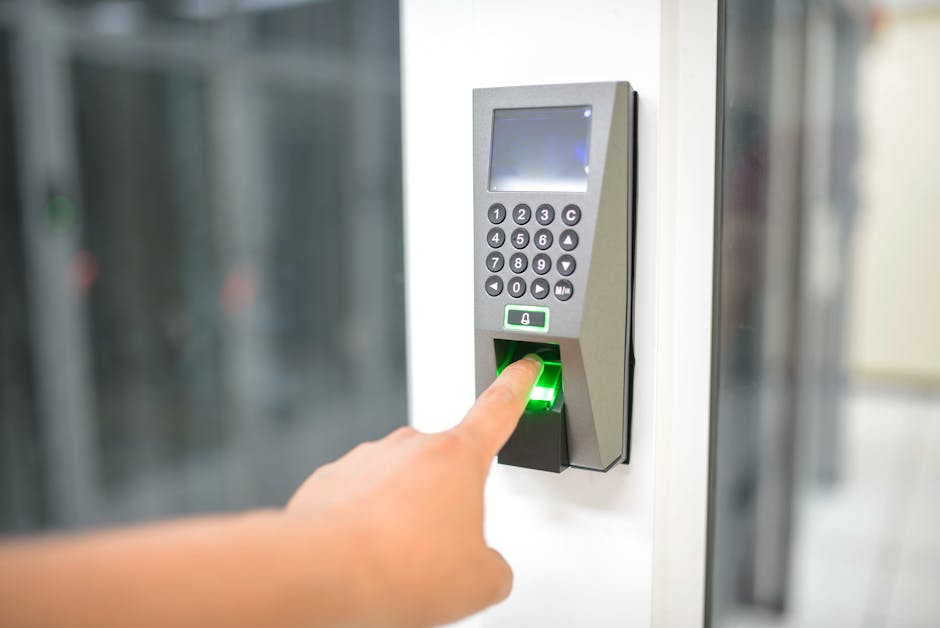
Biometric hotel check-in changes that dynamic. Facial recognition or fingerprint verification at a kiosk means no public exchange of room details, no physical key card to lose or have copied, and no interaction where someone overhears your floor number. The check-in becomes silent and private.
Beyond the lobby, biometric room locks add another layer. A fingerprint or facial scan means the solo traveler is the only person who can open their door. No worrying about whether a previous guest’s key card was properly deactivated.
Some properties also deploy AI-powered corridor monitoring that can detect unusual behavior, such as loitering near room doors or tailgating through secured entrances, and alert security staff in real time. For a solo traveler, this kind of passive, around-the-clock awareness provides a safety net that simply didn’t exist a few years ago.
Not every hotel offers these features yet. When booking, it’s worth checking whether the property advertises:
-
Contactless or biometric check-in
-
Keyless room entry via app or biometric scan
-
AI-assisted security monitoring in common areas
Properties in Singapore, the UAE, Japan, and parts of Western Europe tend to be furthest along in adoption.
What to Know Before You Rely on AI Biometrics
The technology is real and expanding, but it comes with practical considerations worth understanding before departure.
 Photo by
 Enroll early. Trusted traveler programs and biometric pre-clearance systems require advance registration. Two to six weeks is a reasonable lead time. Waiting until the week before your flight usually means clearing customs the old-fashioned way.
Understand local privacy rules. Biometric data policies vary significantly by country. The EU’s GDPR framework, which sets strict rules on how personal data can be collected and stored, limits how long border authorities can retain facial recognition data for non-flagged travelers. Other regions have looser or less transparent policies. A quick search of your destination’s border authority website can clarify what data is collected and how long it’s stored.
Choose biometric-forward routes. Not all airports and hotels have caught up. Solo travelers heading to off-the-beaten-path destinations in Central Asia or rural South America may find biometric infrastructure sparse. Planning at least one leg through a major hub with mature systems, such as Changi, Dubai, Heathrow, or Narita, can ease the overall experience.
Airports worldwide are deploying biometric authentication systems like facial recognition to streamline passenger identification [OpenPR], but coverage remains uneven. Treating biometric tools as a helpful layer rather than a guaranteed feature at every stop keeps expectations realistic.
Solo travel anxiety is a documented barrier, and it concentrates at exactly the moments where AI biometrics now operate: border crossings and hotel check-ins. With biometric systems live at over half the world’s airports and expanding into hotels, the infrastructure is catching up to a growing solo travel population. Researching enrollment programs for your destination and confirming your hotel’s check-in technology are small steps that can meaningfully reduce stress the moment you land. The checkpoints get easier. The journey stays yours.
Sources
- The Traveler: More Americans Eye Solo Travel Amid Safety, Cost Jitters (2026)
- Woman’s World: Women Over 40 Are Leading the Solo Travel Boom (2026)
- Airport Suppliers: SITA Research: Aviation’s Record Technology Investment (2026)
- Biometric Update: American Airlines Deploys Biometric Boarding Gates at DFW (2026)
- Fortune Business Insights: Philadelphia Airport Enhanced Passenger Processing (2026)
- IATA: Biometric Verification Proofs of Concept at Airport Touchpoints (2026)
- OpenPR: Airport Security Market Growth Trends and Future Outlook (2026)