Riiven Wild
Beavers Build Wetlands That Do the Work of Dams
A beaver colony turns a plain stream into a stepped wetland that filters water, recharges groundwater, and buffers floods, with no maintenance budget.
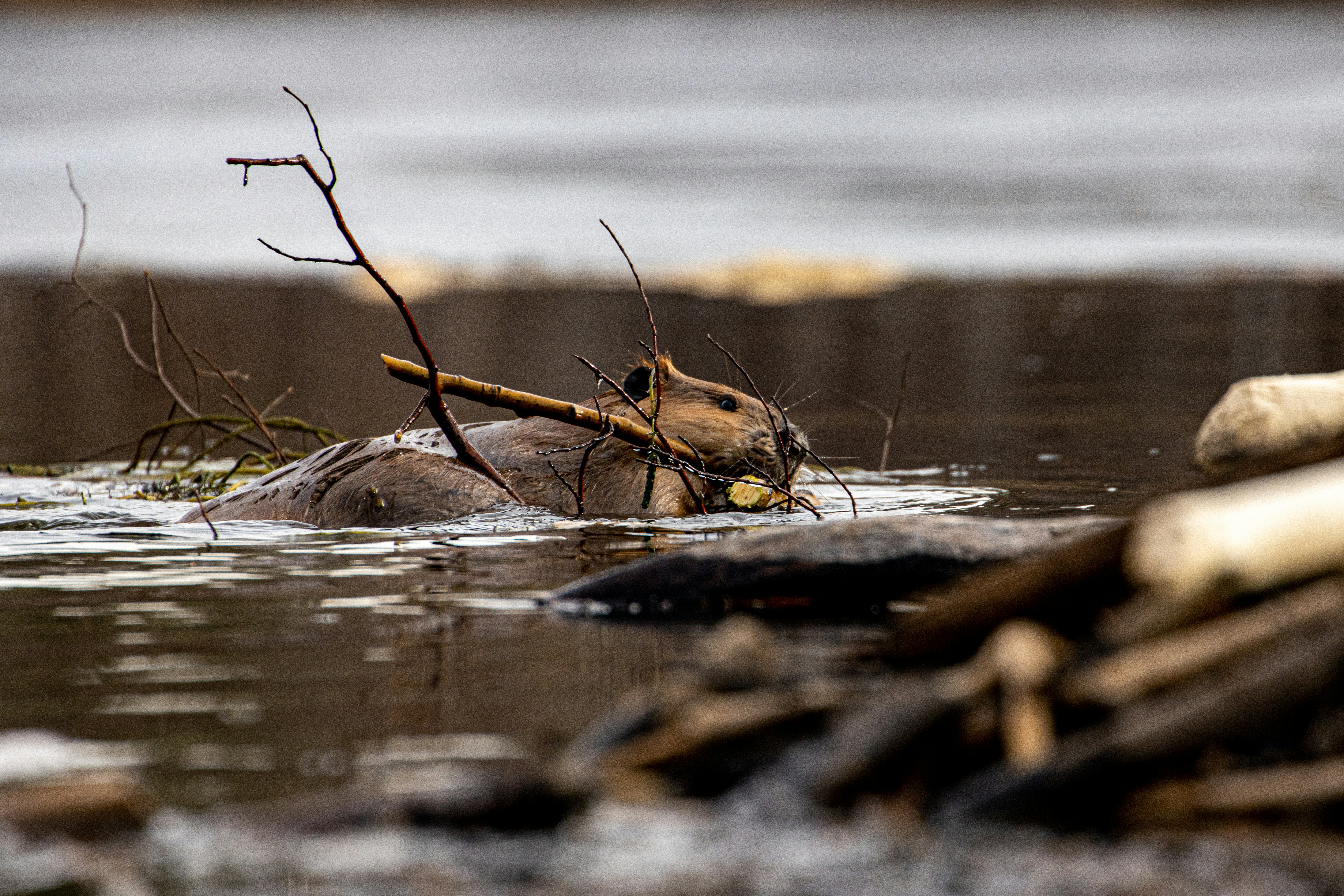
The Scene
High in the Colorado Rockies, a mountain stream drops through a chain of beaver ponds, each one held back by a dam of branches and packed mud. Over several seasons, researchers tracked what those dams did to the water passing through. Most of us assume water management is a human project: we build the infrastructure, we control the flow. The measurements pointed the other way. The beavers were running a flood-control and water-cleaning system on their own, and its grip on the stream outweighed even the swings of drought and heavy snowmelt around it. The animals had been doing this work long before anyone thought to measure it.
The Creature
A keystone species is one whose presence reshapes the conditions every other species depends on. Beavers qualify in the most literal way, because they rebuild the land itself. The Neponset River Watershed Association calls them among North America's most prolific wildlife engineers. A single colony builds a series of dams across a stream corridor, and the result is not one pond but a layered system. Water slows. Sediment drops out of suspension and settles into the streambed, building soil. The pond surface widens, and the water table beneath the surrounding land rises, keeping the ground wet through dry months when surface flows have thinned to a trickle. The animals do not build once and leave. They patch breaches within a day and reinforce the structures before winter, reading the water level and adjusting as it shifts.

How It Works
The engineering logic explains why a beaver wetland outlasts a single concrete structure. Beavers build several dams in series along a reach. Each one backs up a pond that spills into the next, so the whole sequence dissipates stream energy at every step instead of concentrating it in one place. A flood pulse that would scour a single barrier gets absorbed gradually across the staircase. The water-quality effect is measurable too. As water pools and seeps around each dam, it slows enough for sediment and nutrients to settle or break down. In the Colorado study, the dam raised the stream's nitrate removal by about 44 percent compared with the same reach without it, and that effect held up better than the seasonal swings of the climate. Nitrate is a stubborn pollutant, since too much of it feeds algae blooms that strip oxygen from the water. These are the jobs we build engineered dams to do: slow peak flows, capture sediment, recharge groundwater, and hold dry-season baseflow. Beavers deliver them at once, and the system maintains itself.

Watch
The Ripple
The wider effect shows up across the food web. Slow, shallow water and saturated ground bring back fish, amphibians, songbirds, and the native plants that line a healthy stream. The scale of the loss becomes clear in the history. North American beaver populations collapsed under the fur trade, falling from an estimated 60 million animals to fewer than 100,000 by around 1900. The wetland complexes those colonies maintained dried up, streams cut down into their beds, and within a generation the drained landscape looked like it had always been that way. Hydrologists working through the twentieth century were often studying watersheds that had not held a beaver in living memory, so they treated bare channels as the natural baseline. Where beavers have returned across the Pacific Northwest and Northern Rockies, the measurements move the other way: restored wetland acreage, stronger dry-season flows, and the return of species that need slow water.

Why It Matters
We spent a century engineering solutions to problems beavers had already solved, in watersheds we had emptied of the animals doing the solving. The infrastructure was always available at no cost. We had removed the builders. Where the colonies return, as on that Colorado stream, the water slows down and stays, and the work gets done without a maintenance budget.


