
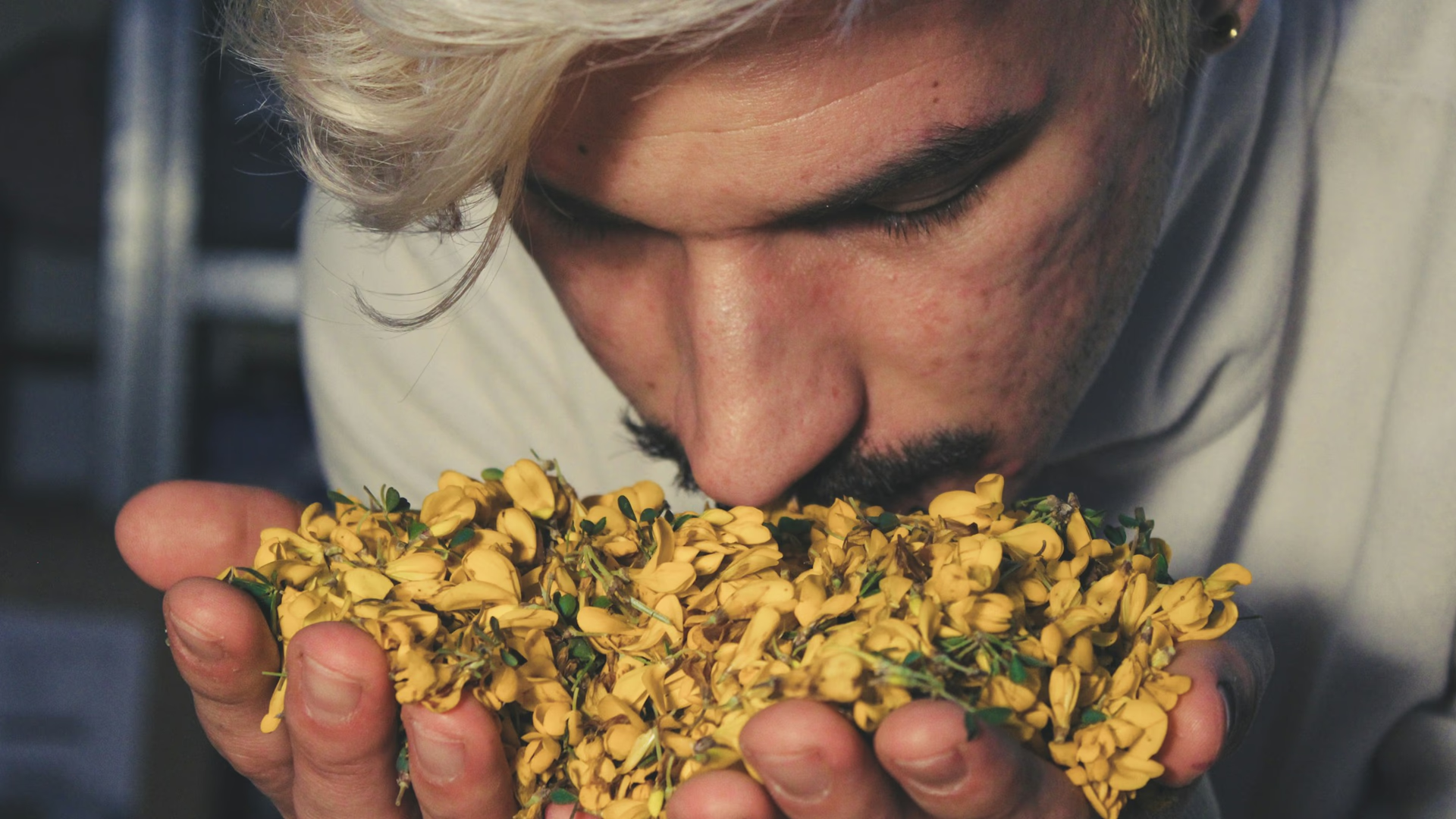
Steam curls off a bowl of soup on the table, and your mouth waters before the spoon even lifts. Nothing has touched your tongue yet. Your body is already acting like the meal has started.
That little reaction is easy to write off as impatience. It’s closer to a rough draft. Smell, color, sound, and memory get pulled together into an early guess about what the bite will taste like. The tongue shows up late, mostly just to confirm or correct that guess.
The Anticipation at the Table
Think about the last time a familiar plate arrived and your appetite sharpened just from looking at it.
 Photo by
 Saliva increases, the stomach shifts, and digestion starts its opening moves, all from sight and smell alone.
The strange part is how far this goes without any food present at all. When researchers asked people to simply imagine a taste, brain scans showed activity in the mid-insula, one of the brain’s main taste-processing regions, located deep in the folds of the cortex. Scientists could tell from the scan alone whether the imagined taste was sweet, sour, or salty [NIH].
In plain terms, your brain can rehearse a flavor the way you might hum a song you haven’t heard in years.
Prediction Circuits at Work
Flavor isn’t handled by one small patch of tissue.
 Photo by
 The insula, the orbitofrontal cortex (a region behind the eyes tied to decision-making and reward), and the anterior cingulate cortex work as a team, pulling smell, texture, sight, and past experience into one impression [NIH].
That network runs ahead of the meal. Expecting a pleasant sweet taste activates reward circuits in the midbrain, striatum, and orbitofrontal cortex. Many of those regions don’t light up from the taste itself [NIH]. Wanting has its own separate machinery.
When the guess lands close, processing speeds up. Expected tastes get coded faster in the taste cortex than unexpected ones. Prediction turns out to be a shortcut for efficiency.
The guess also bends the result. In one study, people told to expect a very sweet drink, then given a milder one, rated it sweeter than people who got the same mild drink with no buildup. Their primary taste cortex showed stronger activity too.
Signals From Outside the Mouth
Aroma does much of the quiet work behind the scenes.
 Photo by
 One research team found the taste cortex responding to taste-associated smells almost as if they were real tastes.
“We saw that the taste cortex reacts to taste-associated aromas as if they were real tastes.”
Other cues push in the same direction, and most arrive before the first bite:
-
The sound of a crunch, carried through the jaw, sharpens the sense of freshness
-
Weight in the hand, a heavier glass or a thick bowl, reads as richness
-
Heat and steam signal that something was cooked with care
Spice makes the point vividly. In a 2024 study on hot sauce, what people expected about the heat changed both what they reported feeling and the activity in the anterior insula and prefrontal cortex, regions tied to processing intensity and emotional response [PLOS Biology]. The bottle’s promise was part of the burn.
Culture Writes the Forecast
Here’s where the science turns into a story about how people actually live.
 Photo by
 If flavor gets built from stored experience, then whoever fed you as a kid wrote the reference file your brain still checks against.
A fermented smell that reads as spoilage in one kitchen reads as depth and ripeness in another. Aged cheese, fish sauce, natto, sourdough: none of these taste “correct” to a brain with no template for them. My first bowl of properly funky doenjang stew tasted like a mistake. The fourth tasted like dinner. Nothing in the pot changed. The forecast did.
That’s why global food isn’t simply a matter of availability. Palates shift slowly, one repeated meal at a time, as the brain gathers enough evidence to predict pleasure instead of alarm. Plant-based products, reduced-sugar drinks, and unfamiliar regional dishes all run into the same wall: a prediction built decades earlier.
The next time steam rises off a bowl and your mouth waters early, notice the gap between that first watering and the first swallow. The meal is being written in that gap, out of every similar bowl you’ve ever eaten. Taste is partly memory arriving on time, and it’s worth pausing for, not because the pause makes food healthier, but because the soup was already flavored in your mind before the spoon ever touched it.
Sources
- NIH, imagined tastes activate primary taste cortex
- PLOS Biology, 2024 hot-sauce expectation study
- NIH, expected tastants coded more rapidly in gustatory cortex
- NIH, expectation of sweetness alters perceived intensity
- NIH, anticipation of sweet taste activates reward circuits
- NIH, insula and orbitofrontal cortex in flavor perception network


