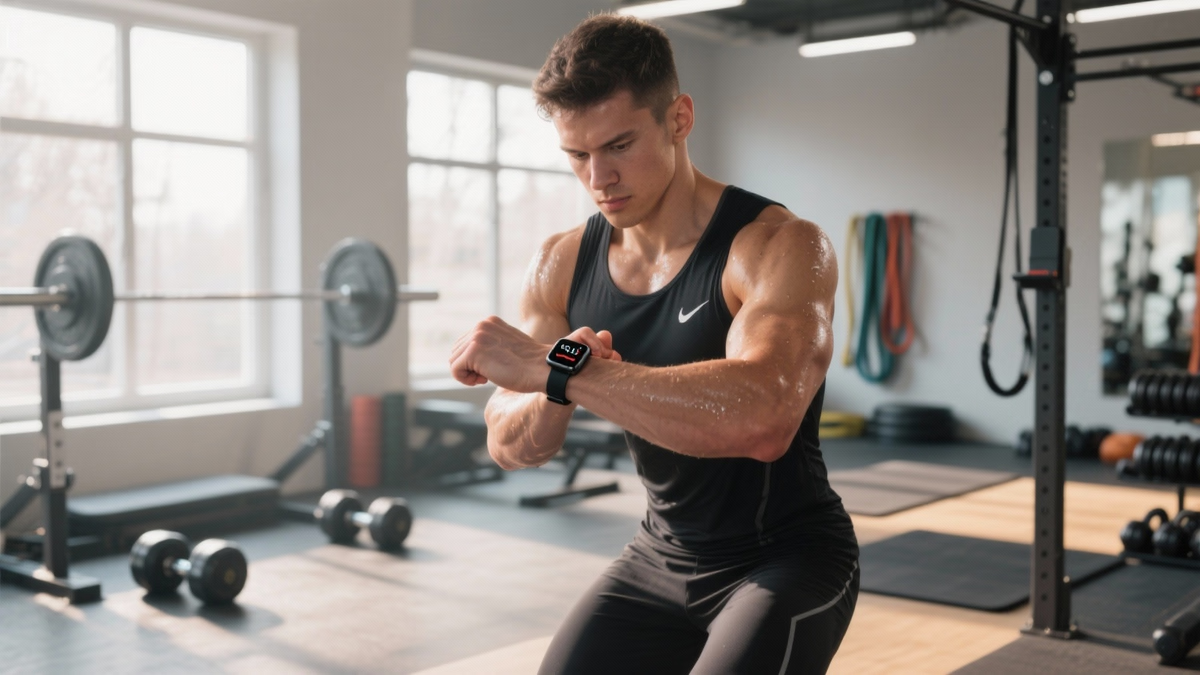

Mark checked his fitness tracker after another disappointing 10K. Six months of logging every workout, yet his times stayed flat. The device showed everything, heart rate, pace, distance. But something was missing.
He’d fallen into the same trap I see everywhere: collecting data without knowing what to do with it.
Here’s the truth: You don’t need new gadgets. You need to understand what you already have.
The 80% Problem Nobody Talks About
You finish a workout. Check your device. Note the numbers. Move on.
Sound familiar?
Most athletes use only 20% of their tracker’s features. After three months, that drops to 15%. Not because they’re lazy, because the complexity is overwhelming.
Elite athletes track three times more data points than intermediate athletes. But they didn’t start that way. They built understanding layer by layer, mastering basics before adding complexity.
Think of it like owning a sports car but only using first gear. The power’s there. You just haven’t learned to access it.
Wearable technology provides real-time data to optimize performance with precision. Without proper understanding, that precision becomes noise.
What Actually Moves the Needle
Sarah, a marathon runner, started tracking heart rate variability (HRV) alongside her regular metrics.
 Photo by RDNE Stock project on Pexels
Within two weeks, she could predict her best training days.
The data backs this up: HRV predicts performance readiness 72% better than resting heart rate alone. Athletes using HRV improve training efficiency by 23% in eight weeks.
The Metric Everyone Ignores
Sleep quality correlates with next-day performance at 0.78, almost as predictive as the training itself. Wearable sensors enable real-time monitoring of biomechanical and physiological parameters, optimizing workload and reducing injury.
Your body’s telling you when to push and when to rest. Most mid-range devices already track this. You just need to listen.
The Three-Layer System That Actually Works
After testing dozens of approaches, here’s what sticks:
Layer 1: Foundation (Weeks 1-4)
 Photo by Eugene Capon on Pexels
Master three metrics: heart rate, pace, distance. These provide 60% of useful insights.
-
Track heart rate zones during different workouts
-
Notice how pace changes with fatigue
-
Watch distance patterns over time
Four weeks to nail this. No more.
Layer 2: Recovery Intelligence (Weeks 5-8)
Add sleep tracking and HRV monitoring. This adds 25% more insight with minimal complexity.
Recent biosensor developments monitor biochemical parameters alongside physiological data to optimize training and recovery. You’re not just tracking workouts, you’re understanding the complete cycle.
Layer 3: Advanced Analytics (Optional)
Power output, running dynamics, lactate threshold. Most athletes never need this layer. The first two provide enough for major improvements.
Your Week-by-Week Implementation
Week 1: Find Your Baseline
Run three test sessions at different intensities:
-
Easy run
-
Tempo effort
-
Interval training
 Photo by Andrea Piacquadio on Pexels
Watch how your heart rate responds. Don’t aim for perfect data. Look for patterns.
Weeks 3-4: Unlock Hidden Features
Your device has been collecting sleep data all along. Check these settings:
-
Morning resting heart rate
-
Sleep quality scores
-
Recovery recommendations
Notice connections between sleep and performance.
Week 5+: Make Data-Driven Decisions
Tired despite good sleep? Check HRV trends. Heart rate high during easy runs? Your body needs recovery.
Stop seeing technology as a judge. Start seeing it as a coach.
The Monthly Review That Changes Everything
 Photo by Ketut Subiyanto on Pexels
Athletes who review monthly show 40% better adherence than daily obsessors or complete ignorers.
Set a calendar reminder for the first Sunday each month. Spend 30 minutes on trends, not individual workouts.
Look for patterns:
-
Decreasing resting heart rate = improved fitness
-
Faster easy runs at same heart rate = aerobic efficiency
-
Consistent HRV improvements = better recovery
Macro trends beat daily fluctuations.
When to Upgrade (And When Not To)
Base upgrade decisions on three months of data, not marketing promises. If you’re maxing out current capabilities and need specific features, upgrade. Otherwise, master what you have.
The best technology is the one you actually use.
Your Next Move
Pick one underutilized feature on your device.
 Photo by MART PRODUCTION on Pexels
Use it consistently for two weeks. Maybe sleep tracking. Maybe recovery scores. The specific feature matters less than understanding it fully.
Your breakthrough isn’t in a new device. It’s in the technology you already wear.
The conversation with your body is happening. Time to start listening.