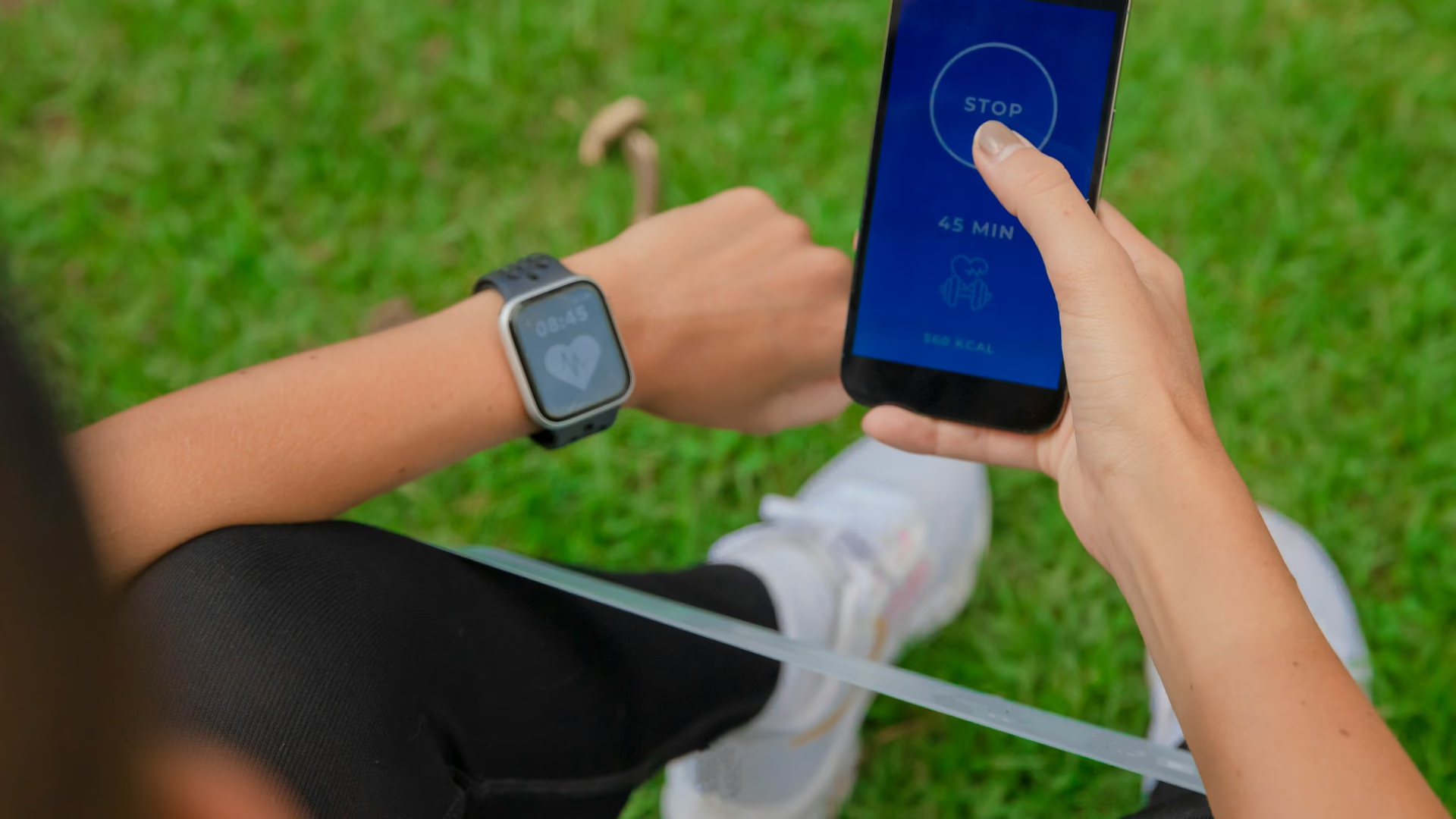
Only 25% of mobile app users return the day after downloading [Appinventiv]. For health and wellness apps promising better sleep, calmer minds, and steadier blood pressure, that number carries real consequences. The digital health market is projected to reach $12.1 billion in 2025, with over 340,000 health apps available. Yet 2025 to 2026 research increasingly confirms what many of us have sensed: engagement with most health apps drops sharply within the first few weeks [NIH]. The technology isn’t necessarily broken. The timeline of our expectations often is. What recent studies reveal about the relationship between sustained use and actual health outcomes reframes how we think about that neglected app on our phones.
The App That Gathered Dust
Most health apps don’t fail because they’re poorly built.
 Photo by
 They fail because people leave before any benefit has a chance to surface.
Research found that engagement with 75% of mobile phone apps drops within the first few weeks [NIH]. Separately, mHealth researchers have noted that “user engagement to mHealth diminishes over time, resulting in significant dropout rates”. The pattern is remarkably consistent: a burst of enthusiasm at download, a trickle of check-ins by day five, silence by week three.
The mismatch at the core of this cycle is telling. Many apps need at least two to three weeks of input before their algorithms can generate anything genuinely personalized. Users expect immediate value; the app needs time to learn. Neither side is wrong, but the gap between those timelines is where most people quietly walk away.
The January effect illustrates this perfectly. Health app downloads surge at the start of every new year, then usage drifts back to baseline within weeks. The intention was real. The window was just too short.
Why One Week Is Not Enough
A week of tracking sleep or logging meals feels productive, but behavioral science suggests it barely registers as a starting point.
 Photo by
 Research on habit formation indicates that building automatic behaviors takes considerably longer than the commonly cited 21 days. Some studies place the range anywhere from 18 to 254 days, depending on the complexity of the behavior.
Health metrics reinforce this timeline. Resting heart rate trends, sleep architecture patterns, stress variability: these require weeks of baseline data before any meaningful pattern emerges. Without that foundation, the app is essentially guessing, and so is the person using it.
A review of digital health interventions found that most effective programs lasted 12 weeks, with medium-term interventions of 5 to 12 weeks being the most prevalent design at 46% [JMIR]. Shorter engagements simply didn’t produce the same measurable shifts. This doesn’t mean every app demands three months of devotion. But it does suggest that judging a health app after five days is like evaluating a garden after planting seeds yesterday.
The Moment Things Click
Something tends to shift for people who push past the early friction.
 Photo by
 Many users report a specific moment: a first personalized insight, a visible trend in their data, a streak that suddenly feels worth protecting. That moment transforms the app from a chore into something they actually want to open.
One concrete example: the PathMate2 health intervention app achieved an average daily usage rate of 71.5% among its participants [JMIR]. That’s a striking number compared to the typical drop-off curve. Researchers attributed much of it to thoughtful system design that delivered timely, relevant feedback.
This “click moment” aligns with what self-determination theory describes: visible progress is one of the strongest intrinsic motivators for continued health behavior. When the data starts reflecting something real, better sleep scores or a calming trend in heart rate, the relationship with the app changes.
Social and community features can accelerate this shift. Hybrid fitness app users demonstrate 43% higher retention rates than single-channel participants [Fitness Avenue]. Accountability and shared experience seem to bridge the gap during those difficult early weeks when personal results haven’t materialized yet.
Small Habits Drive Big Change
The apps that sustain engagement tend to share a design philosophy: ask for less, more often.
 Photo by
 A single meal logged. One two-minute breathing exercise. A quick morning check-in. These micro-habits lower the activation energy required to engage daily, and over time, they compound.
What sustained daily use over 90 days can look like:
-
Baseline health metrics become reliable enough for trend analysis
-
Personalized recommendations improve as the algorithm learns individual patterns
-
Small behavioral shifts, like an earlier bedtime or a post-lunch walk, begin to feel automatic
-
Users report noticing changes they weren’t explicitly tracking
Streaks, gentle reminders, and progress visualizations act as scaffolding during low-motivation stretches. They’re not gimmicks. They’re bridges across the inevitable dips in enthusiasm that every sustained practice encounters. The key distinction many people notice: consistency matters more than intensity. Five minutes daily outperforms an hour-long session once a week followed by nothing for a month.
What the Future Asks of Us
Next-generation health apps are getting smarter.
 Photo by
 Passive tracking through wearables reduces the manual effort that drives so many people away. AI models are learning to predict when a user is about to disengage and intervene with timely nudges. These advances are genuinely promising.
But even the most sophisticated app can’t help someone who deleted it on day four.
The most effective digital health ecosystems emerging in 2025 to 2026 blend app engagement with human elements: coaching, community, or clinical support. Hybrid digital-human programs consistently show better outcomes than app-only interventions for managing chronic conditions. Technology amplifies effort; it doesn’t replace the gentle, sustained commitment that health change requires.
“The effectiveness of system design in technological interventions largely determines participants’ long-term adherence.”
This finding carries a dual message. Yes, developers bear responsibility for building apps worth sticking with. And yes, the person using the app brings something no algorithm can manufacture: the patience to let it work.
Digital health apps aren’t instant remedies. They’re practices that unfold over weeks and months. The first two weeks often feel unrewarding, the data sparse, the insights generic. But for those who push past that early friction, something tends to shift. The app learns. The habits settle. The numbers start telling a story worth reading. If there’s a wellness app gathering dust on your phone, it’s worth reopening: not with grand expectations, but with a gentle commitment to 90 days of small, daily check-ins. The best health app is ultimately the one that stays open long enough to matter.