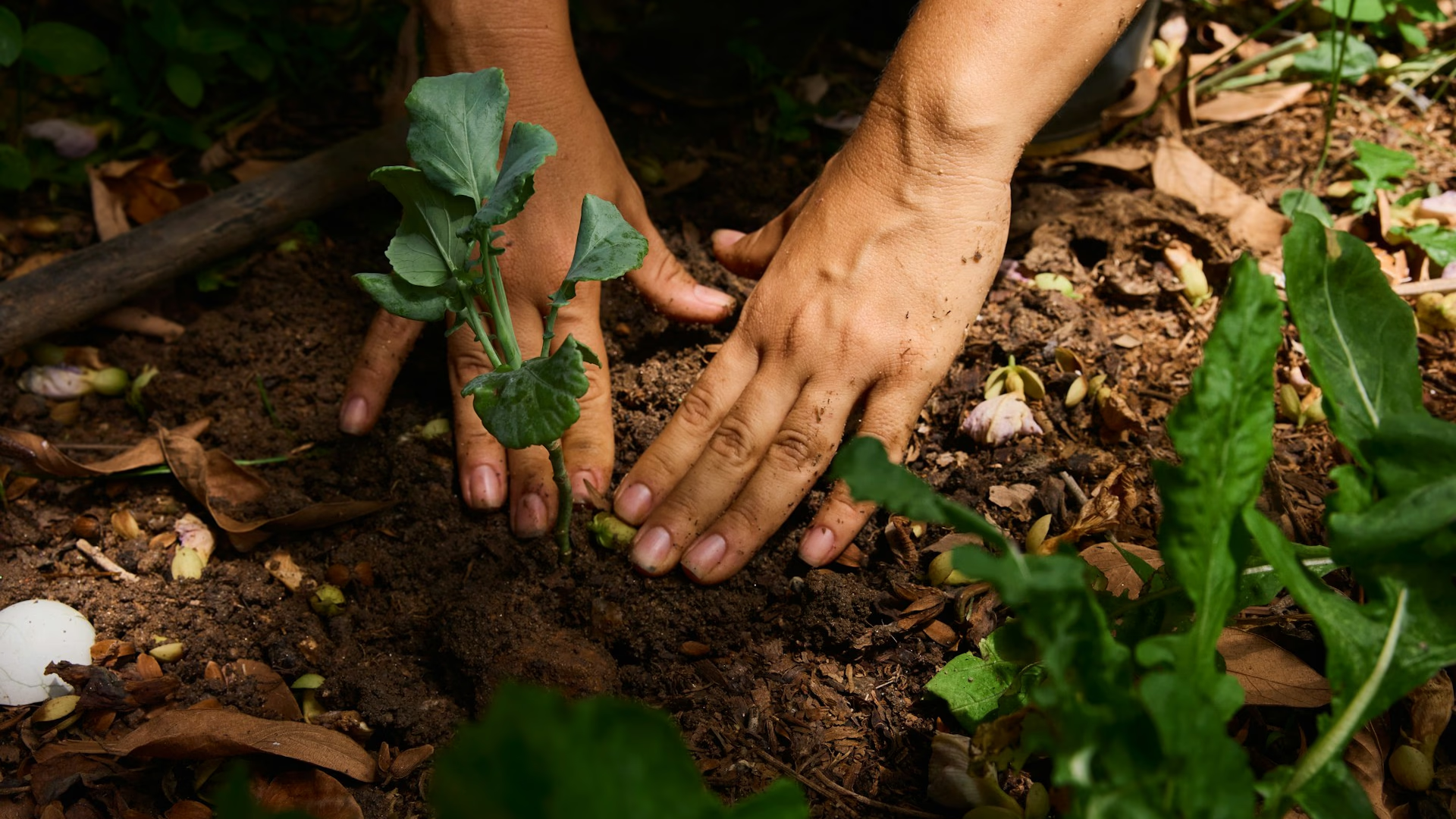
“When we plant trees, we plant the seeds of peace and hope.”
— Wangari Maathai, Nobel Peace Prize Acceptance Speech (2004)
Wangari Maathai was not speaking in abstractions when she accepted the Nobel Peace Prize in 2004. She had spent decades on the ground in Kenya, organizing rural women to plant trees, restore degraded land, and reclaim their own agency in the process. By the time she stood in Oslo, the Green Belt Movement she founded had planted over 30 million trees across Africa.
The Nobel committee’s decision to award the Peace Prize to an environmentalist was itself a statement, one that Maathai had been making her entire career: that the health of the earth and the dignity of its people are inseparable. Deforestation in Kenya had fueled poverty, displacement, and conflict. Planting trees was never just an ecological act. It was a political one.
When she offered these words, she was giving voice to something she had already proven true through lived experience. Trees meant food security, clean water, and a reason for communities to work together toward a shared future. Peace, in her understanding, was not merely the absence of war. It was something that had to be grown, tended, and passed on.
The simplicity of the image she chose is part of its power. A seed, a tree, a hope. She trusted that the connection needed no elaboration.