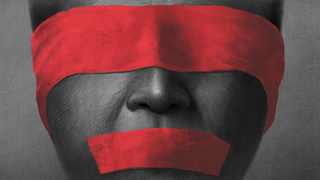
“Stories can break the dignity of a people. But stories can also repair that broken dignity.”
— Chimamanda Ngozi Adichie, TED: Ideas Worth Spreading (2009)
Chimamanda Ngozi Adichie is one of the most important literary voices of her generation. Born in Nigeria and shaped by two worlds, she has spent her career writing novels and giving talks that challenge how people are seen, and how they see themselves. Her 2006 novel Half of a Yellow Sun brought the Biafran War to a global readership. Her TED talk We Should All Be Feminists became a cultural touchstone. She knows, from both personal experience and historical study, what it means for a group of people to have their story told by someone else.
This quote comes from her 2009 TED talk, The Danger of a Single Story, one of the most-watched talks in TED’s history. In it, she describes how a single, repeated narrative about a people can flatten their humanity, reducing complexity to caricature. She had felt this herself, arriving in the United States and encountering assumptions about Africa that had been shaped by decades of one-sided storytelling.
What makes this particular line so enduring is its balance. She does not simply indict harmful narratives. She holds open a door. The same instrument that diminishes can restore. Stories are not inherently destructive or redemptive. They are powerful, and that power depends entirely on whose hands hold them and whose lives they choose to illuminate.