“I’ll tell you what freedom is to me: no fear. I mean really, no fear!”
— Nina Simone, Interview referenced in American Songwriter and multiple outlets (1968)
Nina Simone was not someone who spoke in abstractions. Known as the High Priestess of Soul, she spent her career turning pain into music and music into protest. Songs like “Mississippi Goddam” and “Feeling Good” were not just performances. They were confrontations, delivered by a woman who understood exactly what was at stake in America during the civil rights era.
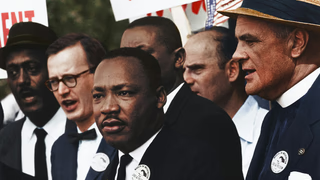
When she said these words in 1968, the country was fracturing. Martin Luther King Jr. would be assassinated that same year. The movement Simone had poured herself into was being met with violence, surveillance, and exhaustion. She had already paid professional costs for her activism, watching doors close as she refused to stay quiet.
Against that backdrop, her definition of freedom carries real weight. She does not reach for the political or the legal. She reaches for something more intimate and more radical: the inner state of a person who has stopped being afraid. No fear of consequences, no fear of power, no fear of what speaking the truth might cost.
The repetition matters. “I mean really, no fear.” She is not being poetic. She is being precise, almost insisting that the listener understand she means it completely. For someone who lived as she did, that kind of fearlessness was not a given. It was something earned, or longed for, or both.