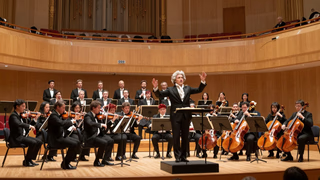
“Well in the music world age doesn’t mean anything. So I can share the same feeling with other generations, young or old. It’s timeless. That’s real happiness to me.”
— Ryuichi Sakamoto, 52-insights.com interview (2017)
Ryuichi Sakamoto spent decades doing something quietly radical: dissolving boundaries. Between East and West, between electronic and acoustic, between the avant-garde and the deeply felt. As a founding member of Yellow Magic Orchestra and later as a composer for films like Merry Christmas Mr. Lawrence and The Last Emperor, he built a body of work that never belonged to a single era or audience.
This quote comes from a 2017 interview, a period when Sakamoto was returning to music after a serious battle with throat cancer. He had stepped away, recovered, and come back to composing with a renewed sense of what mattered. That context gives these words a particular weight. He is not speaking abstractly about music theory or artistic legacy. He is describing something personal: the feeling of sitting down with a piece of music and finding that the person next to you, regardless of their age, is feeling the same thing.
For Sakamoto, this was not a small observation. It was a definition of happiness. Not fame, not critical recognition, but that quiet, borderless moment of shared resonance. Music as a space where generations stop being separate.
He passed away in 2023, leaving behind work that continues to find new listeners. Which is, perhaps, exactly what he meant.